

Anaphylaxis Management in Dental Practice: 2026 Clinical & GDC Guide

Did you know that up to 20% of anaphylactic reactions occur without any visible skin features like rashes or swelling? For a dental team, this hidden danger makes the pressure of a medical emergency even more intense. It's completely natural to feel a sense of anxiety about identifying rapid-onset symptoms or worrying whether your adrenaline dosages are correct for different age groups. Staying compliant with GDC standards and being prepared for a medical emergency audit shouldn't feel like a source of constant stress.
This guide is designed to help you master anaphylaxis management in dental practice, giving you the tools to act with absolute certainty when every second counts. You'll gain a clear understanding of how to apply the ABCDE assessment within the unique constraints of a dental surgery. We will walk you through the 2026 clinical protocols, including the mandatory "Big 7" emergency drugs and the precise adrenaline requirements to ensure your practice remains safe, compliant, and ready for any crisis.
Key Takeaways
- Learn how to identify the signs of a systemic hypersensitivity reaction within seconds of drug administration to ensure immediate intervention.
- Master the clinical application of the ABCDE assessment to streamline your anaphylaxis management in dental practice during high-pressure scenarios.
- Gain clarity on the 2026 adrenaline (1:1000) dosage requirements for adults and children to ensure safe and accurate intramuscular delivery.
- Understand the "Flat and Raised" positioning rule and the specific clinical exceptions where keeping a patient upright is vital for respiratory support.
- Ensure your team meets GDC standards by fulfilling the "highly recommended" annual CPD requirements for medical emergency training.
Recognising Anaphylaxis in the Dental Setting
Anaphylaxis is a severe, life-threatening, generalised or systemic hypersensitivity reaction that requires an immediate, disciplined response. In the context of a dental surgery, the "rapid onset" factor is particularly critical. Unlike food allergies that might take time to digest, the substances we use in dentistry are often injected or applied directly to vascular mucosal surfaces. This means symptoms can manifest within seconds or minutes of drug administration. Effective anaphylaxis management in dental practice begins with the ability to distinguish between a localized allergic reaction and a systemic emergency. While a minor skin rash is concerning, true anaphylaxis involves life-threatening compromises to the airway, breathing, or circulation.
It's a common misconception that skin changes always accompany a reaction. Research indicates that up to 20% of anaphylactic cases occur without any visible skin features like urticaria or angioedema. This makes clinical vigilance essential. You can find a comprehensive overview of anaphylaxis for a deeper look at the underlying biological mechanisms, but at the chairside, your focus must remain on the patient's immediate physiological stability. Maintaining clinical focus during such a high-stakes event is challenging. The psychological impact on the team can lead to panic, which is why a structured approach is your best tool for staying calm and effective.
Common Dental Causative Agents in 2026
Clinical Signs and Pathophysiology
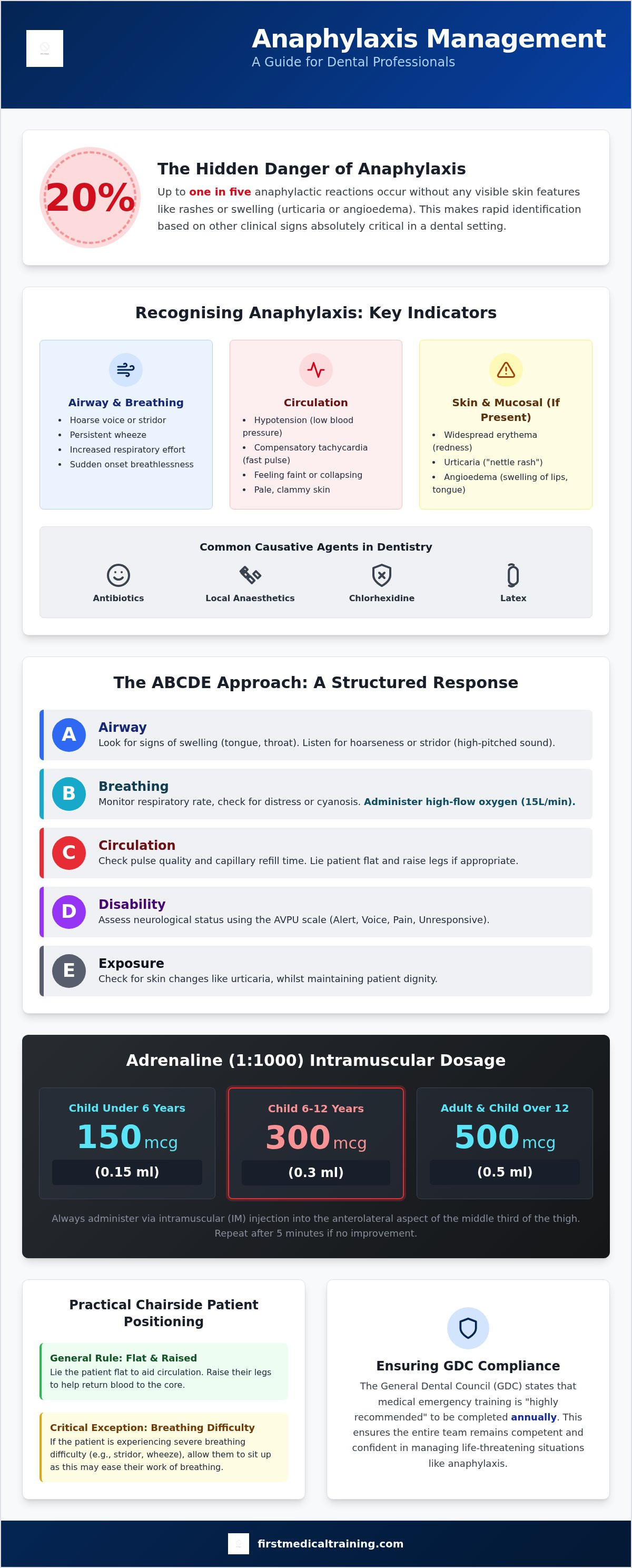
- Airway and Breathing: Look for laryngeal oedema evidenced by a high-pitched inspiratory sound (stridor) or a change in voice. Severe bronchospasm will present as a persistent wheeze and increased respiratory effort.
- Circulation: Anaphylaxis causes massive vasodilation. This leads to hypotension and a compensatory tachycardia. If untreated, this quickly transitions to cardiac arrest.
- Skin and Mucosal changes: When present, these include widespread erythema, "nettle rash" (urticaria), and significant swelling of the lips, tongue, or eyelids (angioedema).
The transition from a stable patient to one in respiratory or circulatory collapse can happen in the blink of an eye. Understanding these triggers and signs ensures that anaphylaxis management in dental practice is proactive rather than reactive. By recognising the early warning signals, you can initiate the life-saving protocols described in the following sections before the situation becomes irreversible.
The ABCDE Approach to Anaphylaxis Management
The ABCDE approach is the gold standard for clinical assessment in UK dentistry, providing a systematic framework to identify and treat life-threatening problems in order of priority. When a patient's condition rapidly declines, this structured method prevents the team from becoming overwhelmed by the chaos of the moment. Effective anaphylaxis management in dental practice requires a disciplined evaluation of Airway, Breathing, Circulation, Disability, and Exposure to ensure no critical symptom is overlooked.
Assessment begins with the Airway; look for signs of swelling in the tongue or throat and listen for hoarseness or stridor. For Breathing, monitor the respiratory rate and look for signs of distress or cyanosis. Administering high-flow oxygen at 15 litres per minute using a non-rebreathe mask is a vital step for any patient showing respiratory compromise. Circulation is evaluated by checking pulse quality and capillary refill time whilst the patient is reclined. Disability involves using the AVPU scale (Alert, Voice, Pain, Unresponsive) to monitor neurological status, whilst Exposure requires a focused check for skin changes like urticaria, ensuring patient dignity is maintained throughout the process.
Applying ABCDE Chairside
The first rule of any emergency is the immediate cessation of all dental procedures. You cannot manage a systemic crisis whilst continuing with clinical treatment. Role allocation must be clear and immediate; one person should be designated to call 999 whilst another fetches the emergency drugs and AED. This "pit crew" model allows the lead clinician to remain at the patient's side to maintain the airway. Referencing a contemporary guide on the Clinical Management of Anaphylaxis can help your team refine these roles during regular practice drills.
Monitoring Deterioration
Clinical assessment is not a one-time event. You must perform a full ABCDE reassessment every five minutes whilst waiting for paramedics to arrive. It's essential to document all findings and the exact timing of drug administration to provide an accurate timeline for the handover. Because syncope accounts for over 50% of dental emergencies, integrating syncope management dental training into your protocols is vital to help the team differentiate between a simple faint and a true anaphylactic collapse. Refreshing these skills through accredited medical emergency training ensures that your team can act with quiet confidence when it matters most.
Emergency Drug Protocols: Adrenaline and Equipment
Adrenaline (1:1000) is the most critical component of your emergency drug kit. It acts as the first-line treatment for any life-threatening airway, breathing, or circulation problem during an anaphylactic event. In 2026, clinical guidelines firmly prioritise the intramuscular (IM) injection over all other routes. The anterolateral thigh is the preferred site because it provides the most rapid absorption into the systemic circulation, which is vital when a patient's blood pressure is crashing. Using the IM route ensures that peak plasma concentrations are reached significantly faster than with subcutaneous injections.
Precise dosing is non-negotiable and depends entirely on the patient's age. For adults and children over 12 years, the standard dose is 500 micrograms (0.5 mL). Children aged 6 to 12 require 300 micrograms (0.3 mL), whilst those aged 6 months to 6 years should receive 150 micrograms (0.15 mL). If the patient doesn't show signs of clinical improvement after the initial injection, you must be prepared to administer a repeat dose after five minutes. This rapid intervention is a core element of the UK Anaphylaxis Guidelines for Dentistry, ensuring the patient receives physiological support before paramedics arrive.
Effective anaphylaxis management in dental practice also relies on the correct use of medical emergency equipment dental practice standards require. High-flow oxygen (15L/min) should be administered immediately via a non-rebreathe mask to all patients experiencing respiratory or circulatory distress. If the patient has persistent wheezing after the initial adrenaline dose, a salbutamol inhaler used with a spacer device is the appropriate secondary intervention to help open the lower airways.
Managing the Emergency Drug Kit
Every UK dental surgery is legally required to stock Adrenaline 1:1000. Choosing between ampoules and auto-injectors often depends on your team's training level; whilst ampoules are more cost-effective, auto-injectors can reduce the risk of dosing errors during a high-stress crisis. Regardless of your choice, a robust monthly audit is essential to ensure all drugs are within their expiry dates. This practice is a fundamental pillar of dental practice emergency preparedness and prevents the nightmare scenario of reaching for an expired ampoule in a life-or-death situation.
Ancillary Equipment
Beyond the essential drugs, your kit must include functional ancillary equipment to support the patient's recovery. Pulse oximetry is a useful tool for monitoring oxygen saturation, but remember it can be unreliable during circulatory collapse when peripheral perfusion is poor. Portable suction is equally vital to ensure the airway remains clear if the patient vomits, which is a common side effect of systemic distress. Having these tools organised and ready to use is what separates a prepared team from a reactive one.
Practical Chairside Response and Patient Positioning
Correct positioning is a fundamental yet frequently overlooked aspect of anaphylaxis management in dental practice. As soon as a systemic reaction is suspected, the default action is the "Flat and Raised" rule. You must position the patient supine and elevate their legs to aid venous return to the heart. This simple manoeuvre can prevent a rapid transition into circulatory collapse. However, clinical judgement is paramount; if a patient is experiencing severe respiratory distress, forced supine positioning may worsen their breathing. In these specific instances, allow the patient to remain in a semi-recumbent or upright position to ease their respiratory effort.
Should the patient become unconscious but continue to breathe spontaneously, you must move them into the recovery position. This ensures the airway remains patent and protected from aspiration. If the situation deteriorates further and the patient requires basic life support, you cannot perform effective chest compressions on a dental chair. The surface is too cushioned to allow for the necessary depth of compressions. In this event, the team must safely transition the patient to the floor immediately to begin CPR whilst awaiting the ambulance crew.
Managing the Dental Chair Environment
A dental surgery is a cramped environment filled with sharp instruments and aerosols. The moment a crisis begins, the dental nurse should clear the workspace by moving the bracket table and spittoon away from the patient. You must adjust the headrest to ensure it isn't causing neck flexion, which could compromise the airway. Modern dental chairs can be cumbersome; ensure you know how to bypass the electronic controls to flatten the chair manually if power fails. Creating 360-degree access around the chair allows the entire team to assist without obstructing the lead clinician.
The Handover Protocol
Your responsibility doesn't end when the paramedics arrive. A structured handover using the SBAR (Situation, Background, Assessment, Recommendation) method ensures that the emergency services receive clear, concise information. You should hand over any empty adrenaline ampoules or used auto-injectors, as this provides the paramedics with definitive proof of the dosages administered. Maintaining accurate, contemporaneous notes is vital for the patient’s clinical record and your own professional protection. Practising these workflows during a Medical Emergencies in a Dental Practice Course ensures that your team can execute these movements smoothly under pressure.
Ensuring GDC Compliance through Annual Training
The General Dental Council (GDC) classifies medical emergencies as a "highly recommended" topic for continuing professional development. This designation means that all registrants, including dentists, dental nurses, and hygienists, are expected to keep their skills current through regular, high-quality learning. For effective anaphylaxis management in dental practice, the GDC standards suggest annual updates to ensure that life-saving protocols remain fresh. Meeting these requirements is not just about ticking a box for your CPD cycle; it's about maintaining a level of clinical readiness that protects both your patients and your professional registration.
Verifiable CPD must meet strict criteria, including clear learning outcomes and a robust quality assurance process. Whilst online modules can provide a theoretical foundation, they often fall short when it comes to preparing a team for the visceral stress of a real-world crisis. First Medical Training Ltd specialises in in-practice sessions that allow your team to rehearse emergency scenarios in your actual surgery environment. This hands-on approach is the most effective way to identify potential bottlenecks in your local protocols and ensure that every piece of emergency equipment is exactly where it should be when a crisis occurs.
Organising Your Team Training
A truly effective emergency response relies on a "Pit Crew" model where every staff member knows their specific role. This includes receptionists and non-clinical staff, who are often responsible for calling 999 or directing paramedics to the correct room. By involving the whole team in your annual training, you create a culture of safety and collective responsibility. Customising these sessions to your specific patient demographics ensures the training is relevant to the daily realities of your practice. You can easily meet the GDC CPD requirements for medical emergencies by scheduling a dedicated in-practice session that covers the 2026 clinical standards.
Post-Emergency Support
The period following a serious medical emergency can be emotionally taxing for the entire team. A structured debrief is essential to manage the psychological aftermath and to discuss what went well and what could be improved. You must also remain aware of your regulatory reporting requirements; serious incidents involving anaphylaxis management in dental practice may need to be reported to the Care Quality Commission (CQC) or other relevant bodies. Having a mentor like First Medical Training Ltd ensures you have the documentation and support needed to navigate these professional obligations with confidence. Contact First Medical Training Ltd today to book your 2026 medical emergency refresher and ensure your team is prepared for any crisis.
Strengthening Your Practice’s Clinical Readiness
Mastering anaphylaxis management in dental practice is about more than just knowing the theory; it’s about the ability to act with precision during those critical first minutes of a systemic reaction. By refining your ABCDE assessment skills and ensuring every team member is confident with adrenaline dosages and patient positioning, you move from a state of apprehension to one of professional certainty. These technical skills, combined with a robust emergency drug audit, form the backbone of a safe and compliant dental surgery.
Since 2006, First Medical Training has acted as a trusted mentor to dental teams across the UK. We provide expert, in-practice instruction that transforms regulatory requirements into practical, life-saving skills. Our sessions offer verifiable GDC-compliant CPD and provide national UK coverage, ensuring your whole team can train together in the environment where they actually work. This hands-on approach is the most effective way to build the "pit crew" mentality required for a successful emergency response.
Don't leave your emergency response to chance. Book your In-Practice Medical Emergencies Training today to empower your team and ensure your practice remains a safe environment for every patient. You have the dedication to care; we are here to provide the confidence to act.
Frequently Asked Questions
What is the correct dose of adrenaline for anaphylaxis in a dental practice?
The correct intramuscular dose for adults and children over 12 years is 500 micrograms (0.5 mL) of 1:1000 adrenaline. For children aged 6 to 12 years, the dose is 300 micrograms (0.3 mL), whilst children aged 6 months to 6 years require 150 micrograms (0.15 mL). These doses are a core part of anaphylaxis management in dental practice and should be repeated after 5 minutes if symptoms persist. Always inject into the anterolateral thigh.
Is it mandatory for dental practices to have adrenaline in their emergency kit?
Yes, it is a mandatory requirement for all UK dental practices to stock adrenaline 1:1000 in their emergency drugs kit. This is one of the "Big 7" essential medications required for GDC compliance. You should have at least two ampoules or auto-injectors available. This allows your team to administer a second dose if the patient's condition doesn't improve after the initial five minutes.
How often should a dental team undergo anaphylaxis training for GDC compliance?
To meet GDC standards, dental teams should undergo medical emergency training at least once every year. Medical emergencies, including anaphylaxis management in dental practice, are a "highly recommended" topic under the GDC’s Enhanced CPD scheme. Annual updates ensure your team remains confident in executing rapid-response protocols. Regular practice also helps you familiarise yourself with the specific layout and equipment within your own surgery.
Can a dental nurse administer adrenaline in an emergency?
Yes, a dental nurse can legally administer adrenaline in a life-threatening emergency. UK law and the Resuscitation Council UK support the administration of adrenaline by any trained individual when it is used to save a life during anaphylaxis. This allows the dentist to focus on maintaining the patient's airway or performing other life-saving assessments. Every staff member should be trained to use the emergency kit.
What is the difference between an allergic reaction and anaphylaxis?
Anaphylaxis is a systemic, life-threatening emergency that involves the airway, breathing, or circulation. A minor allergic reaction is usually confined to the skin, presenting as a localized rash or swelling without systemic distress. If a patient develops a hoarse voice, persistent wheeze, or signs of shock, you must treat it as anaphylaxis. Early recognition is the key to preventing a total physiological collapse.
Should I use an EpiPen or a needle and syringe for adrenaline in the surgery?
The Resuscitation Council UK recommends that healthcare professionals use adrenaline ampoules with a needle and syringe rather than auto-injectors. Whilst auto-injectors are useful for laypeople, ampoules are more cost-effective and allow for flexible dosing across all age groups. Using ampoules also ensures that the team maintains the clinical skill of drawing up medication. This is the professional standard for a controlled surgery environment.
Do I need to report an anaphylactic incident to the GDC or CQC?
You must notify the Care Quality Commission (CQC) of any serious incident that occurs during clinical care. This is a requirement under Regulation 18 regarding notifications of other incidents. Whilst you don't normally report directly to the GDC, you must maintain detailed clinical notes. These records provide an accurate timeline of the event and the interventions performed by your team during the emergency.
How should I position a patient in the dental chair during anaphylaxis?
You should position the patient flat on their back with their legs raised to assist blood flow to the heart. This "Flat and Raised" rule is the standard for managing the circulatory collapse associated with anaphylaxis. However, if the patient is struggling to breathe, allow them to sit in a semi-recumbent position. Lying a patient flat when they have severe respiratory distress can worsen their condition.