

Medical Emergencies in a Dental Practice Course: The Definitive Guide to Compliance and Clinical Confidence

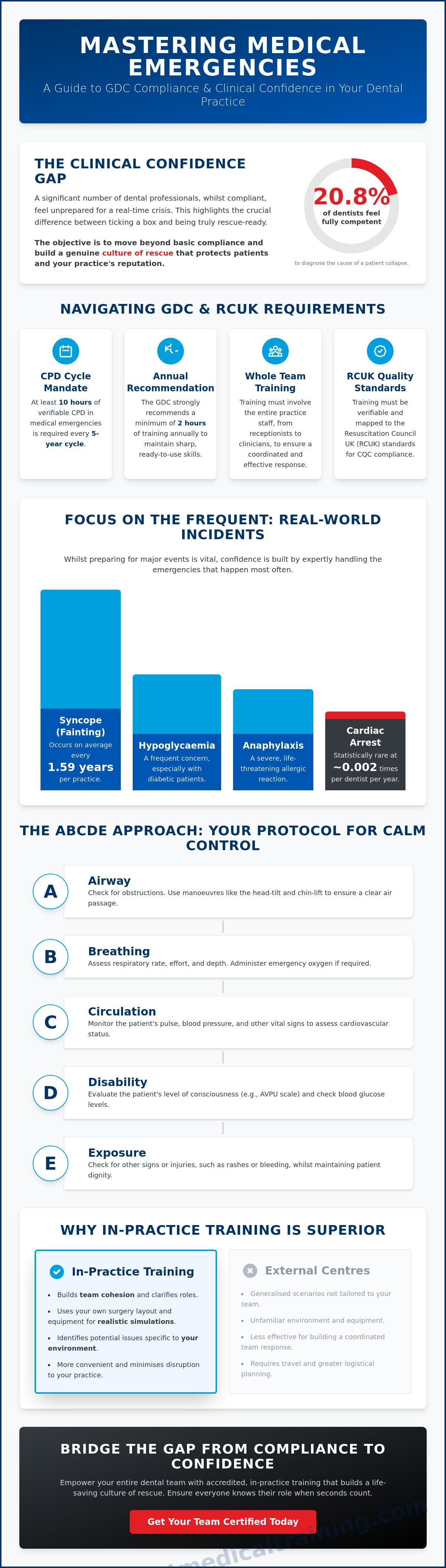
Did you know that only 20.8% of dentists feel truly competent to diagnose the cause of a patient collapse? This striking figure highlights the gap between basic compliance and the clinical confidence required during a high-pressure incident. Choosing a comprehensive medical emergencies in dental practice course isn't just about meeting your GDC obligations; it's about building a culture of rescue that protects your patients and your professional reputation.
We understand the anxiety that stems from worrying about team performance during a real crisis or the pressure of an upcoming CQC inspection. This definitive guide will empower you to master the protocols and GDC requirements needed to lead your surgery through any emergency with steady reliability. You'll gain a clear understanding of the latest Resuscitation Council UK standards and essential equipment lists. We'll also show you how to coordinate training that ensures every staff member knows exactly how to act whilst earning vital verifiable CPD hours.
Key Takeaways
- Understand the specific GDC mandates for verifiable CPD, including the recommendation for at least two hours of annual training.
- Learn how to implement the systematic ABCDE approach to identify and manage common crises such as syncope and anaphylaxis.
- Discover why an in-practice medical emergencies in dental practice course is superior for building team cohesion through realistic simulations in your own surgery.
- Maximise your training value by reviewing practice protocols and checking drug expiry dates before your annual update session begins.
- Bridge the gap between regulatory compliance and clinical confidence with a structured, whole-team response strategy that ensures every member knows their role.
Navigating GDC Requirements for Medical Emergency CPD
The General Dental Council (GDC) classifies medical emergencies as a core, "highly recommended" topic, placing it at the very heart of your professional development. Completing a medical emergencies in dental practice course isn't just a box-ticking exercise for your portfolio; it's a fundamental safety requirement. The GDC suggests that all registrants complete at least 10 hours of verifiable CPD in this area every five-year cycle. To maintain peak performance, they also strongly recommend at least two hours of training annually. This cadence ensures that life-saving skills remain sharp and ready for immediate deployment when seconds count.
Understanding what constitutes a medical emergency in a clinical setting is vital for every team member. While major events like cardiac arrest are statistically rare in dental surgeries, occurring roughly 0.002 times per dentist per year, common incidents like syncope or hypoglycaemia happen much more frequently. The Resuscitation Council UK (RCUK) provides the framework for these training protocols through their "Quality Standards: Primary dental care." These standards ensure that your practice's response aligns with current medical best practices, providing a reliable bridge between theory and real-world application.
Verifiable CPD and Quality Standards
Under the Enhanced CPD scheme, training must provide clear learning outcomes and a certificate of completion to be considered "verifiable." For a medical emergencies in dental practice course to satisfy the CQC during an inspection, it should be mapped directly to the RCUK guidelines. This includes practical elements like Basic Life Support (BLS) and the use of an Automated External Defibrillator (AED). High-quality training provides the documentary evidence needed to prove your team is competent, compliant, and capable of managing a crisis with steady reliability.
Who in the Dental Team Needs Training?
A crisis doesn't distinguish between job titles. A patient might collapse in the waiting room just as easily as in the dental chair. Therefore, the GDC expects the entire team, from receptionists to clinicians, to be involved. Receptionists are often the first to spot early signs of distress, whilst dental nurses and hygienists play critical roles in assisting the dentist with emergency drugs and equipment. Training the whole staff together fosters a cohesive environment where everyone knows their specific role. It's about collective responsibility and ensuring the practice meets its legal and ethical obligation to provide a safe environment for every patient who walks through the door.
For established clinics like Padden Dental, this level of preparedness is a cornerstone of their commitment to providing high-quality restorative and cosmetic care in a secure setting.
Core Curriculum: Mastering the ABCDE Approach and Protocols
A structured response is the vital difference between chaos and controlled rescue. Whilst many practitioners can list the contents of an emergency drug kit, fewer feel truly comfortable applying those tools under the intense pressure of a patient collapse. A high-quality medical emergencies in dental practice course moves beyond simple theory, focusing instead on a rehearsed, team-centred response. This approach ensures that every staff member, regardless of their role, can contribute effectively to evidence-based emergency management within the surgery environment.
The curriculum centres on the ABCDE assessment, a systematic sequence designed to identify and treat life-threatening problems in order of priority. By following this protocol, you don't need to immediately diagnose the exact cause of a collapse; you simply need to stabilise the patient's vital functions. This methodology is particularly effective for managing the most common dental crises, such as syncope, which occurs on average every 1.59 years per practice, or more acute events like anaphylaxis and cardiac arrest.
The ABCDE Rapid Assessment Sequence
Airway comes first. You'll learn to identify obstructions and use basic manoeuvres, such as the head-tilt chin-lift, to ensure a patent passage. In the Breathing phase, the focus shifts to assessing respiratory rate and effort. This is where the correct administration of emergency oxygen becomes critical. Moving through Circulation, Disability, and Exposure, the team works together to monitor pulse, blood glucose levels, and consciousness. This logical progression prevents the "tunnel vision" that often occurs during high-stress incidents, ensuring no critical step is missed whilst waiting for the ambulance to arrive.
Emergency Drugs and Equipment Management
Confidence in using the emergency drugs kit is built through familiarity and repetition. Your training should cover the British National Formulary (BNF) recommended drugs, including adrenaline for anaphylaxis, aspirin for myocardial infarction, and salbutamol for asthma. It's not just about knowing the dosages; it's about organising the kit for rapid access. We recommend a layout that mirrors your practice's specific protocols, ensuring that even the most junior team member can find the correct medication in seconds. If you're looking to refresh these practical skills, choosing an accredited provider for your medical emergencies training can make all the difference in team readiness.
Finally, the Automated External Defibrillator (AED) remains the most critical piece of equipment for cardiac events. Modern courses demystify the AED, proving that it's a safe, intuitive tool that any staff member can operate. When combined with effective chest compressions, the AED significantly increases the chances of survival, turning your dental surgery into a safe environment for both patients and staff.
Choosing the Right Training: In-Practice vs. External Centres
Choosing the right environment for your medical emergencies in dental practice course is a decision that impacts far more than just your CPD log. Whilst external training centres provide a focused space, they often fail to replicate the unique physical and psychological nuances of your own surgery. True clinical confidence comes from physical rehearsal in the spaces where you actually work. "Theatre of the mind", where staff simply imagine where the emergency kit is located, often fails when adrenaline levels spike during a real crisis. By training in-situ, your team learns the physical layout, identifies potential bottlenecks, and develops a genuine sense of cohesion that centre-based training simply cannot match.
It's also essential to distinguish between basic life support (BLS) and a comprehensive medical emergencies in dental practice course. BLS focuses primarily on chest compressions and AED use. A full dental-specific course, however, integrates these skills into the broader ABCDE framework discussed earlier. This includes the management of dental-specific crises, such as local anaesthetic toxicity or post-extraction bleeding, and the practical administration of the drugs found in your BNF-recommended kit. This bespoke approach ensures the training is relevant to your daily clinical reality.
Just as specialised recovery care from Lymph in Motion by Criselda White is essential for patients after major surgical procedures, having a tailored response for dental complications is vital for maintaining a high standard of patient safety.
The Power of In-Practice Simulation
We use in-practice sessions to identify "blind spots" in your emergency response plan. For example, can the AED be reached quickly from the furthest treatment room? Who is designated as the "runner" to call 999 whilst others begin the primary survey? Testing your own equipment is equally vital. It ensures every staff member knows exactly how to operate the practice's specific oxygen flowmeter or where the suction unit's spare parts are kept. These small details are often overlooked in external centres but are critical during a real patient collapse.
Accreditation and Instructor Expertise
Selecting a training provider requires careful due diligence. Look for instructors who possess deep experience in the healthcare sector and hold full professional indemnity insurance. They must understand the specific constraints of the dental environment, such as managing an airway whilst a patient is reclined in a dental chair. Most importantly, ensure the curriculum is strictly aligned with the latest Resuscitation Council UK guidelines. This alignment guarantees that your practice remains fully compliant with GDC standards and is ready to provide evidence of high-quality training during a CQC inspection.
Preparing Your Team for a Successful Training Day
A successful medical emergencies in dental practice course depends as much on what happens before the instructor arrives as what happens during the session itself. To maximise the value of your annual update, treat the day as a strategic rehearsal rather than a passive lecture. Preparation begins with a thorough audit of your practice’s current readiness. Review your internal emergency protocols and, crucially, check the expiry dates on all items in your emergency drugs kit. CQC inspections frequently identify out-of-date adrenaline or glucagon as a major failure point; identifying these gaps before training allows your team to discuss the replacement process and familiarise themselves with the new stock.
Creating a supportive environment is equally important. Many staff members, particularly non-clinical personnel, feel a degree of performance anxiety regarding practical testing or "being put on the spot." It is vital to foster an open, "no-blame" culture. The goal of simulation is to identify system flaws, not to highlight individual failings. When a team feels psychologically safe, they are more likely to ask the "silly" questions that prevent real-world errors. This atmosphere of steady reliability ensures that when a patient collapse does occur, the team remembers their training as a positive, empowering experience rather than a source of stress.
Practice Checklist for Training Day
To ensure the day runs smoothly, the Practice Manager should oversee a simple logistical checklist. Ensure all emergency equipment, including oxygen cylinders and the AED, is available for the instructor to review. You will need a clear floor space for practical CPR demonstrations and manikin work. Finally, plan for a short debrief session immediately after the course. This allows the team to discuss internal improvements, such as moving the location of the emergency kit or updating the staff rota to ensure a designated "first responder" is always on-site. To secure a date for your team’s next session, you can book your medical emergencies in a dental practice course to ensure full compliance and peace of mind.
Addressing the "Human Factors" in Emergencies
Clinical skill is only half the battle; the other half is managing the "human factors" that arise during a crisis. High-stress situations can lead to "tunnel vision" or a breakdown in team communication. We teach the SBAR technique (Situation, Background, Assessment, Recommendation) to provide a structured framework for clear communication, especially when handing over to emergency services. This method ensures that critical information is conveyed accurately and concisely. By building the confidence of non-clinical staff to handle tasks like time-keeping or managing the waiting room, you allow the clinical team to remain focused on the ABCDE assessment and patient stabilisation.
First Medical Training: Accredited Excellence for Your Dental Team
With over 20 years of experience delivering specialised dental emergency training, First Medical Training has established itself as a trusted partner for practices across the UK. We understand that compliance is a priority, but our mission goes further. We provide a bespoke medical emergencies in dental practice course designed to transform regulatory requirements into genuine clinical confidence. By delivering training within your own surgery, we ensure every session is practical, relevant, and focused on the real-world application of life-saving skills. Our approach acts as a bridge between rigorous GDC standards and the practical realities of a busy dental environment.
Our role is that of a seasoned mentor, guiding your team through the complexities of emergency response with steady reliability. We don't believe in cold, overly clinical instruction. Instead, we opt for a supportive and empowering atmosphere that builds your team's belief in their own ability to act when it matters most. This focus on the human element of care ensures that the training sticks, creating a culture of preparedness that lasts long after the instructor has left the building.
Our Approach to Dental Medical Emergencies
Our instructors are not just teachers; they are active medical professionals who deal with emergencies in their daily lives. This background allows them to provide a reassuring and authoritative perspective that demystifies medical protocols. They foster a supportive atmosphere that empowers every team member, from the lead clinician to the newest receptionist. We prioritise the efficient delivery of information, ensuring that your verifiable CPD certificates are issued promptly after the course. This keeps your professional records up to date without delay and provides the certainty required for CQC inspections.
Securing Your Training Date
Finding time for whole-team training can be difficult in a busy surgery. We offer flexible booking options to help you secure a date that fits your practice schedule without compromising patient care. Our comprehensive service also includes the supply of essential equipment and the option to integrate AED training or LifeVac anti-choking device demonstrations into your day. For practices looking to support their staff's holistic health, we also provide Mental Health First Aid for Dental Practices. This all-encompassing approach ensures your surgery is a safe, prepared, and resilient environment for both staff and patients.
Book your Medical Emergencies in a Dental Practice course today and take the final step toward complete clinical confidence and regulatory peace of mind.
Building a Future of Clinical Certainty
Mastering the ABCDE approach and fostering a "no-blame" culture transforms your team from a group of individuals into a cohesive rescue unit. The key to managing a patient collapse effectively lies in rehearsed, practical simulation within your own surgery environment. By aligning your training with Resuscitation Council UK Quality Standards, you don't just meet GDC requirements; you ensure that every staff member possesses the muscle memory to act decisively under pressure.
First Medical Training has been a trusted partner in dental education since 2006. With two decades of specialist experience, we provide more than just a certificate. We offer a comprehensive medical emergencies in dental practice course that is fully bespoke to your practice layout and equipment. As a trusted supplier of LifeVac anti-choking devices and AEDs, we provide the specific tools and the clinical knowledge needed to maintain a safe environment for your community.
Don't leave your compliance or your patient safety to chance. Book your GDC-compliant Medical Emergencies training with First Medical Training today to secure your annual update. We are ready to help you bridge the gap between regulatory standards and real-world clinical excellence with steady, reassuring expertise.
Frequently Asked Questions
Is the Medical Emergencies in a Dental Practice course a legal requirement?
Yes, it is a professional requirement for all GDC registrants. The General Dental Council states in their Scope of Practice that every dental professional must be trained and competent in managing medical emergencies. Providing evidence of this training is also a critical component of meeting Care Quality Commission (CQC) standards during inspections.
How often does the dental team need to update their medical emergency training?
The GDC recommends that you complete at least two hours of medical emergencies CPD every year. This annual update is the industry standard for maintaining the clinical skills and "muscle memory" needed to act quickly during a crisis. It ensures your team stays current with the latest Resuscitation Council UK quality standards.
What emergency drugs must be present in a UK dental practice?
Your emergency drug kit must align with British National Formulary (BNF) guidelines. Essential drugs include adrenaline (1:1000), aspirin, glucagon, glyceryl trinitrate spray, midazolam, oral glucose, oxygen, and salbutamol. Having these drugs on-site is a mandatory requirement for any practice staffed by dentists, hygienists, or therapists.
Does this course count towards GDC verifiable CPD hours?
Yes, our medical emergencies in dental practice course provides verifiable CPD hours that meet all GDC Enhanced CPD requirements. Every participant receives a certificate that clearly states the learning outcomes and the number of hours completed. This documentation is vital for your professional portfolio and for proving compliance during regulatory audits.
Can the training be held at our own dental surgery?
We specialise in delivering training directly at your own dental surgery. Rehearsing in your actual clinical environment helps identify potential bottlenecks and ensures every staff member knows the exact location of the emergency kit and AED. This in-practice approach builds far more team cohesion than attending a generic external centre.
What is the difference between BLS and the Medical Emergencies course?
Basic Life Support (BLS) focuses specifically on chest compressions and defibrillation for cardiac arrest. In contrast, a comprehensive medical emergencies in dental practice course covers the full ABCDE assessment. This includes managing common incidents like syncope (fainting), which is the most frequent emergency in UK surgeries, as well as anaphylaxis, asthma, and hypoglycaemia.
What happens if a staff member misses the annual training session?
Any staff member who misses the annual update must complete a catch-up session as soon as possible to maintain their competence. The GDC expects the entire team to be trained together to ensure a coordinated response. If someone is absent, they may need to attend an external session or an individual top-up to remain compliant.
Do we need to provide our own equipment for the training day?
We provide all the necessary training equipment, including manikins and trainer AEDs. However, we also recommend reviewing your practice's own emergency kit and oxygen flowmeters during the session. This ensures your staff are familiar with the specific equipment they would use in a real crisis, rather than just training on generic tools.