

Choking Prevention Device UK: A Practical Buying Guide

A suction-based choking device may be a backup, but it is not a substitute for trained first aid. During a dental emergency, finding or preparing equipment must not delay the recognised response. Keep that distinction in mind when assessing a choking prevention device UK practices may consider.
Product claims can sound reassuring, but regulatory status and clinical guidance answer different questions. Resuscitation Council UK makes no recommendation for or against suction-based devices, citing a lack of high-quality evidence. Any decision should sit alongside staff preparation, clear procedures and careful checks of the device and its documentation.
This guide explains what a device can and cannot do, how to assess its suitability for a dental setting, and what to check about authenticity, intended use, instructions and maintenance. It also explains how a device fits into a prepared response, where recognised choking first aid and emergency escalation take priority. First Medical Training Ltd supplies the LifeVac anti-choking device and specialist training for dental and healthcare teams, and has operated since 2006.
Key Takeaways
- Assess whether a choking prevention device UK dental teams are considering suits their setting, rather than relying on product claims alone.
- Check the manufacturer’s instructions, intended use, maintenance guidance and device-specific regulatory and marking information before deciding.
- Prioritise recognised choking first aid and emergency escalation. Supplementary equipment cannot assess the situation or coordinate the response.
- Assign responsibility for storage, access and checks, and include the device’s role in the practice’s emergency procedures.
- First Medical Training supplies LifeVac. Review its documentation alongside staff preparation before deciding whether it fits your practice.
What is a choking prevention device, and what role can it play?
The phrase “choking prevention device” can be misleading. A suction-based anti-choking device is equipment intended to assist with airway clearance during a choking emergency. It does not prevent every choking incident, identify the cause of an obstruction or replace a trained responder. For general background on choking, including foreign body airway obstruction, see Choking. For clinical response decisions, use Resuscitation Council UK (RCUK) guidance.
Consider a device as a possible supplementary option, not the centre of your response plan. In a dental practice, its suitability depends on the setting, the manufacturer’s current instructions, staff preparation and professional guidance. Don’t infer how a particular model works, who it is suitable for or when to use it from general descriptions of suction devices. Check the instructions for the exact device before considering it for your team.
How does an anti-choking suction device work?
“Suction-based” describes a general category, not a complete instruction for use. The specific mechanism, intended use, limitations and maintenance requirements must come from the manufacturer’s current instructions for that model. Don’t assume descriptions of one device apply to another, or rely on an informal demonstration or product claim in place of those instructions.
Before choosing a choking prevention device in the UK, check that staff can find and understand its instructions, and that its proposed role is clear in your practice procedures. RCUK makes no recommendation for or against suction-based airway clearance devices, citing a lack of high-quality evidence. Careful evaluation and realistic expectations are therefore essential.
Is a choking device a replacement for first aid?
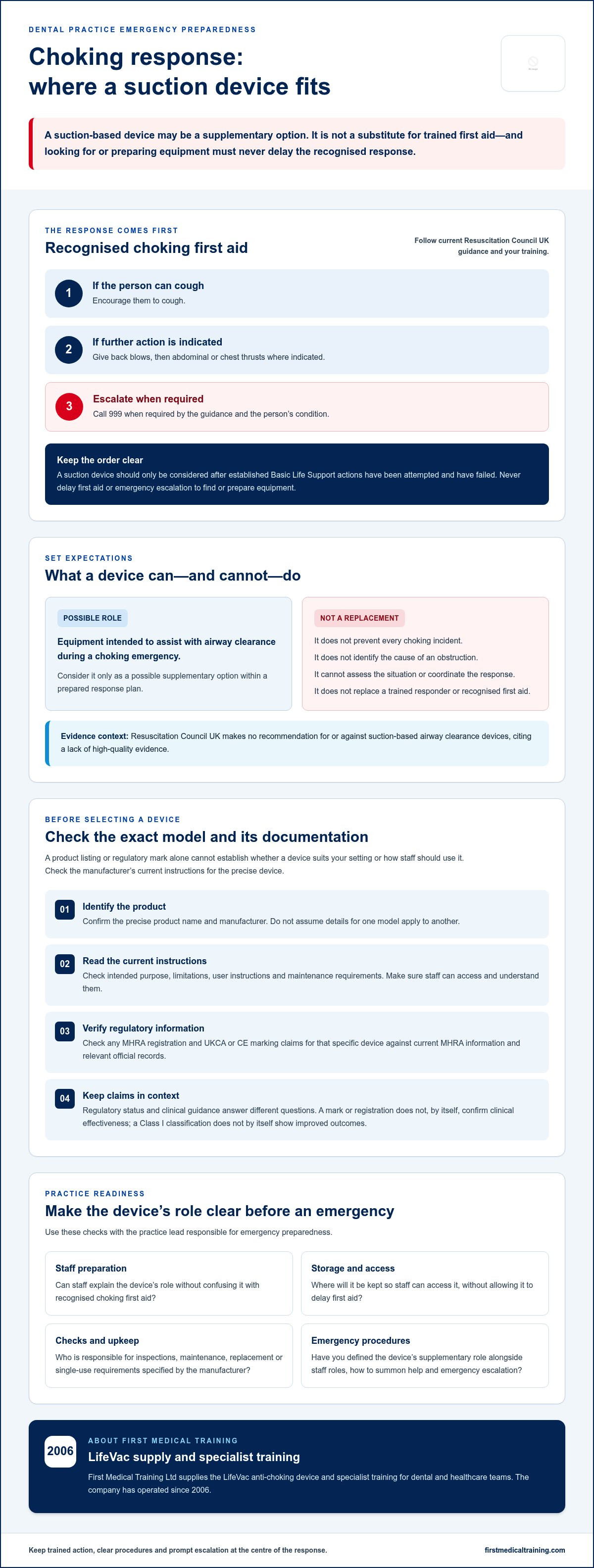
No. Follow current RCUK choking guidance and your training. The recognised response includes encouraging a person who can cough to do so, then giving back blows and, where indicated, abdominal or chest thrusts. Call 999 when required by the guidance and the person’s condition. Suction devices should only be considered after established Basic Life Support actions have been attempted and have failed. Never delay first aid or emergency escalation to find or prepare equipment.
Staff need to know their roles, how to summon help and what action to take while emergency services are on the way. A device cannot make those decisions, communicate with colleagues or ensure the correct response is followed. Keep equipment secondary to trained action, clear procedures and prompt escalation.
How to assess a choking prevention device in the UK
Assess the exact device, its documentation and its place in your practice’s emergency arrangements. A product listing or regulatory mark alone cannot tell you whether a device suits your setting or how staff should use it. When considering a choking prevention device UK buyers should check claims against current authoritative information and the manufacturer’s instructions, rather than relying on advertising.
Which documentation and claims should you check?
Start with the precise product name and manufacturer. Obtain the current instructions for use and check that they clearly explain the device’s intended purpose, limitations, user instructions and maintenance. Make sure staff can access the instructions when needed, not just during the purchasing process.
Next, check any MHRA registration and UKCA or CE marking claims for that specific device against current MHRA information and relevant official records. Don’t assume a mark or registration confirms clinical effectiveness. The MHRA’s role is regulatory; Resuscitation Council UK provides clinical guidance. A Class I classification also does not, by itself, show that a device improves outcomes. Check the wording carefully and avoid repeating claims you cannot verify.
What should you ask before choosing a device?
Use this checklist with the practice lead responsible for emergency preparedness:
- Intended use: Is the device intended for your setting and the users you expect to have available?
- Instructions: Are the instructions current, readable and clear about when and how the device may be used, including its limitations?
- Training: What familiarisation or training does the manufacturer recommend? Can staff explain the device’s role without confusing it with recognised choking first aid?
- Storage and checks: Where will it be kept for access, and what inspection, replacement or single-use requirements do the instructions specify?
- Governance: Who will maintain the documentation, brief staff and review the device’s place in the practice’s emergency procedures?
The MHRA has warned about counterfeit and unbranded anti-choking devices. Buy through a reputable source, check that the product and seller details match the manufacturer’s information, and verify the regulatory claims. If documentation is missing, unclear or inconsistent, pause the purchase and seek clarification.
Record your decision and the checks behind it. If your team is reviewing its wider emergency preparation, find information about dental medical emergencies training from First Medical Training.
Choking device or trained first response: how should you compare them?
These are not competing options. Trained staff provide the response; supplementary equipment may be considered as part of it if it fits current guidance, the manufacturer’s instructions and your practice’s clinical governance. Use Resuscitation Council UK guidance to inform your approach. Don’t rank equipment against first aid or assume a device will produce a particular outcome.
| Response element | What it contributes | What to prepare |
|---|---|---|
| Staff response | Recognising the situation, assessing the person and following current choking first-aid guidance. | Keep staff training current and clarify who leads and who assists. |
| Emergency escalation | Calling 999 when indicated, communicating relevant information and coordinating the team while help is on its way. | Agree how to summon help and who communicates with emergency services. |
| Supplementary equipment | May be an equipment option to assess as part of the practice’s response. It cannot assess the person, call for help or coordinate colleagues. | Check the manufacturer’s instructions, accessibility and place in the emergency plan. |
What can trained staff provide that equipment cannot?
People make the assessment and decisions. Staff can recognise a choking emergency, apply their training, communicate clearly and follow agreed roles. For example, one team member can lead while another summons help and brings specified equipment, if the practice plan assigns those roles. Training supports preparation, but it cannot guarantee a clinical outcome. Use a dental practice emergency preparedness checklist to review how responsibilities and equipment are organised.
How should a device fit into a practice response?
Treat a choking prevention device UK practices are considering as one possible equipment decision, not as a response plan in itself. If your practice selects one, make sure staff know where it is, how to access the current instructions and how its use fits with recognised guidance. Review the arrangements under your clinical governance and applicable professional guidance, including relevant GDC expectations. A medical emergencies in dental practice course guide can support your wider review of team preparedness.
Practise the sequence and team roles using your documented procedures. Make clear that equipment must not distract from immediate first aid or delay emergency escalation. This keeps the focus on a prepared team, with any device considered only as part of an organised response.
How to introduce a choking device into a dental practice
Introducing equipment takes more than choosing a storage place. Decide how it fits into your practice’s emergency arrangements, who will oversee it and how staff will stay familiar with its intended role. This sequence can help make the decision clear and reviewable.
- Review current guidance. Check the latest Resuscitation Council UK choking guidance and identify how any proposed equipment fits alongside recognised first aid. Don’t let a device alter or delay the established response.
- Assess your setting. Consider your practice layout, who may need to access the equipment and how staff would summon help. Record why the device is, or is not, appropriate for your practice.
- Check product documentation. Obtain the current manufacturer’s instructions and confirm the intended use, limitations, storage conditions and checks specified for the exact device.
- Brief the team. Make sure relevant staff know where the instructions and equipment are, who is responsible for each action and how the device fits into the documented dental emergency response plan.
Assign responsibility for maintaining access to the instructions, checking the device as directed by the manufacturer and arranging any required replacement. Record these responsibilities and your decision-making. Review them if guidance, manufacturer instructions, staffing or the practice layout changes.
How should staff prepare before an incident?
Keep the current instructions where staff can find them quickly. Provide role-appropriate familiarisation in line with manufacturer guidance and practice policy, and distinguish this from clinical training. A device demonstration alone does not prepare staff to assess a choking emergency or deliver first aid. Reinforce that the team must follow its training and current recognised guidance.
How should the practice review readiness?
Include equipment arrangements in your emergency plan. Check that staff can locate the device and its instructions, then review storage and condition according to the manufacturer’s current directions. During a practice review or debrief, note practical gaps, such as unclear responsibilities or an obstructed access route, and assign actions to address them. These checks support preparation, but cannot guarantee a particular response or outcome.
To strengthen your team’s preparation for medical emergencies, explore dental medical emergencies training from First Medical Training.
Choosing LifeVac through First Medical Training
First Medical Training supplies LifeVac as its named anti-choking device offering. Assess it as equipment within your practice’s established emergency arrangements, not as a guaranteed solution or replacement for a trained first response. Before deciding, review current guidance, your practice procedures and the documentation for the specific device.
What should buyers verify about LifeVac?
First Medical Training describes LifeVac as an MHRA-registered Class I medical device with UKCA/CE marking compliance. Check these product-specific claims against current device documentation and authoritative MHRA information before relying on or repeating them. Regulatory status and marking relate to market requirements; they are not proof of clinical effectiveness.
Ask for the manufacturer’s current instructions and confirm the precise intended use, limitations, user guidance and maintenance requirements. Check that the product name and manufacturer details match across the device, instructions and supporting documentation. Don’t assume it is suitable for every patient or compatible with every clinical procedure. If instructions or claims are unclear, seek clarification from the supplier before purchase.
For a choking prevention device UK dental teams are assessing, the key question is not simply whether it is available. Consider whether staff who may need to access it can understand its documented role, and whether it can be incorporated without distracting from recognised first aid or delaying emergency escalation. Equipment familiarisation should support, not replace, appropriate clinical training.
What is the next step for your dental team?
Start with your documented dental emergency response plan. Review current Resuscitation Council UK guidance, decide whether the equipment fits your setting, and identify who will check the instructions, brief staff and oversee storage and checks. Keep the decision under review if the manufacturer’s instructions, professional guidance or practice arrangements change.
If you have a question about the product, its documentation or its place in your team’s preparation, discuss it with an appropriately qualified professional or the supplier. First Medical Training has provided specialised education for healthcare and dental teams since 2006. You can view First Medical Training’s equipment and training information as part of your assessment.
Make your equipment decision part of a prepared response
A choking prevention device UK dental teams consider should be assessed as supplementary equipment, not a replacement for recognised first aid, staff training or prompt emergency escalation. Check the manufacturer’s current instructions, confirm any device-specific MHRA and UKCA/CE claims, and agree how the equipment would fit into your practice’s documented response plan.
First Medical Training supplies the LifeVac anti-choking device. Assess it against your setting and procedures without assuming that regulatory status proves clinical effectiveness or that one device suits every situation.
Before deciding, review current Resuscitation Council UK guidance, clarify who will brief staff and oversee equipment checks, and record the reasons for your choice. To review the available equipment and training information, visit First Medical Training’s equipment and training information.
A clear plan and a prepared team help you approach emergency equipment decisions with care and confidence.
Frequently Asked Questions
What is a choking prevention device?
A choking prevention device usually refers to equipment intended to assist with airway clearance during a choking emergency, rather than prevent choking from happening. Suction-based devices are a category of anti-choking equipment, but instructions and intended use vary by product. Check the manufacturer’s current instructions for the exact device. Treat it as a possible supplement to a prepared response, not as a substitute for recognised first aid or emergency escalation.
Is a choking device a replacement for back blows or abdominal thrusts?
No. Follow current Resuscitation Council UK (RCUK) guidance and your training. A suction device must not delay recognised first aid, including back blows and abdominal thrusts or chest thrusts where indicated. RCUK makes no recommendation for or against suction-based airway clearance devices, citing a lack of high-quality evidence. These devices should only be considered after established first-aid actions have been attempted and have failed.
Are anti-choking devices approved for use in the UK?
Some anti-choking devices may be placed on the UK market when they meet applicable medical device requirements and have the required conformity marking. Class I devices rely on the manufacturer’s declaration of conformity. Check the specific product’s current MHRA registration and UKCA or CE marking claims against authoritative records. A device’s regulatory status concerns market requirements; it does not mean RCUK recommends it or prove clinical effectiveness.
Can a dental practice keep a choking prevention device?
A dental practice can assess whether such equipment is suitable for its setting, but should make the decision through its risk assessment and clinical governance arrangements. Consider the device’s intended use, manufacturer’s instructions, staff familiarity, storage and place in the documented emergency response plan. CQC has no specific policy on suction anti-choking devices; equipment in a practice must still be suitable for its intended purpose and used properly under applicable requirements.
How do you choose a choking prevention device for a dental practice?
For a choking prevention device UK dental teams should first identify the exact product and manufacturer, then review current instructions, intended use, limitations and maintenance guidance. Check device-specific MHRA registration and UKCA or CE claims using authoritative records, and buy from a reputable source to reduce the risk of counterfeit or unbranded equipment. Finally, decide whether it fits your practice procedures and how staff will access instructions and receive familiarisation.
Does owning a choking device mean staff do not need training?
No. Equipment cannot recognise an emergency, assess the person, assign team roles or summon help. Staff need to follow their training and current recognised choking guidance, and understand how any device fits into the practice response. Familiarisation with the manufacturer’s instructions is not a replacement for first-aid training. Rehearse communication and responsibilities through your practice procedures, and make sure equipment does not distract from immediate first aid or emergency escalation.
What should a practice check before using an anti-choking device?
Before use, staff should follow current training, recognised guidance and the manufacturer’s instructions for that exact device. Check its intended use, limitations and any stated conditions for use; don’t assume it is suitable for every patient or situation. Ensure emergency escalation is not delayed. Practices should also have confirmed that the device is genuine, accessible and stored and maintained as directed. If the instructions are unclear, seek clarification rather than guessing.