

Dealing with a Needle Stick Injury in Dental Practice: A Step-by-Step UK Guide

A used dental needle punctures your glove during clean-up. What you do next matters, but you don’t need to assess the risk alone. Dealing with a needle stick injury in dental practice starts with prompt first aid, immediate reporting and urgent professional advice.
It’s understandable to feel worried about blood-borne viruses or unsure who to tell. Act calmly: encourage the wound to bleed gently under running water, wash it with soap and water without scrubbing, then dry it and cover it. Don’t suck the wound. Tell the designated person in your practice straight away and seek urgent medical advice so the exposure can be assessed. Some exposures may require post-exposure prophylaxis (PEP), so don’t delay getting advice.
This guide sets out the response step by step, from first aid and risk assessment to escalation, documentation and follow-up. It also explains how to review your Dental emergency response plan, clarify team roles and reduce the chance of another injury.
Key Takeaways
- Know how to pause work safely, alert a colleague and follow your practice protocol after a sharps injury.
- Understand why the size of a wound alone can’t determine exposure risk, and which details help guide assessment.
- Learn how professional advice informs decisions about testing, treatment and follow-up after an injury.
- Use incident reviews to identify practical prevention measures and improve safe sharps handling.
- Prepare your team with clear roles, reporting steps and escalation arrangements for dealing with a needle stick injury in dental practice.
Needlestick injury in dental practice: immediate steps
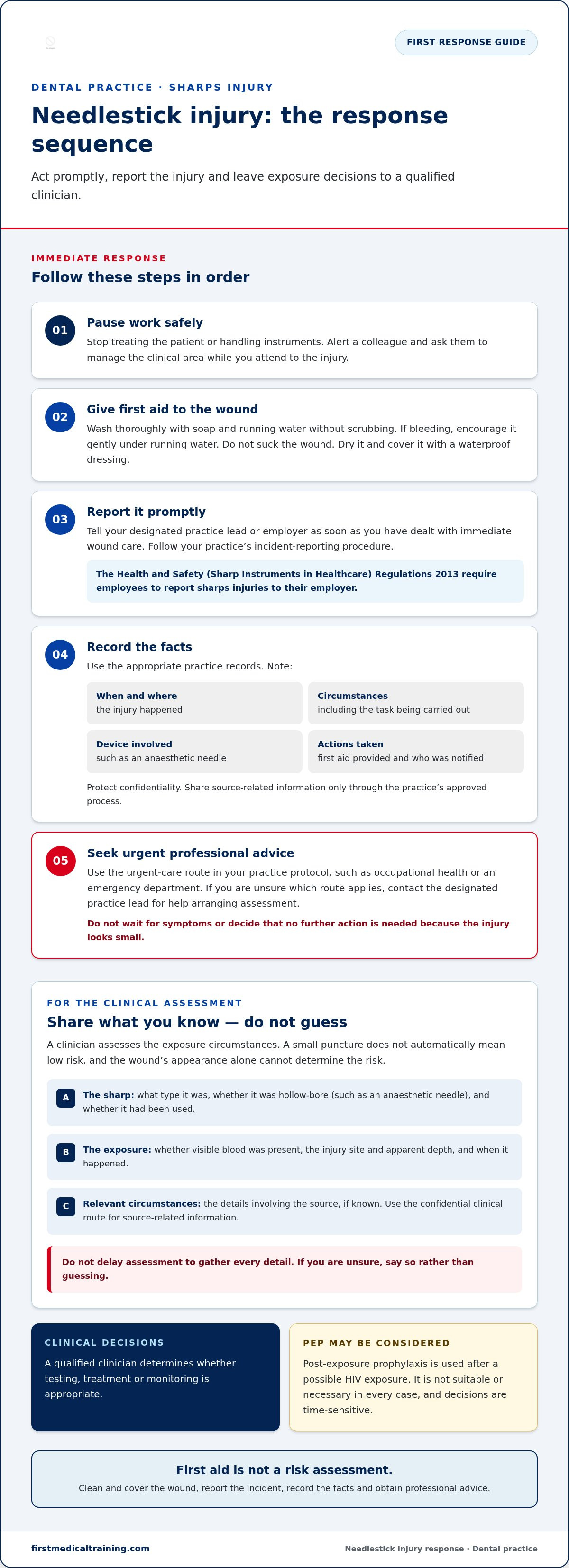
Stop work safely, alert a colleague and follow your practice protocol. Don’t continue treating a patient or handling instruments while distracted by the injury. Ask a colleague to manage the clinical area while you attend to the wound and arrange prompt reporting.
Immediate first aid after a sharps injury
Act promptly, even if the puncture looks minor. Wash the wound thoroughly with soap and running water, without scrubbing. If it’s bleeding, encourage it to bleed gently under running water. Don’t suck the wound. Once it’s clean, dry it and cover it with a waterproof dressing.
These are first-aid steps, not a risk assessment. A dressing doesn’t establish whether an exposure could transmit infection, and a small puncture shouldn’t be used to decide whether further advice is needed. For general background on potential health risks, read this overview of Needlestick injury. It isn’t a substitute for clinical guidance.
Seek urgent professional advice through the route set out in your practice protocol. A qualified clinician can assess the exposure and advise whether testing, treatment or monitoring is appropriate. Don’t wait for symptoms or assume that no further action is needed because the injury appears small. Decisions about post-exposure care can be time-sensitive.
Who to tell and what to record
Notify your designated practice lead or employer as soon as you’ve dealt with immediate wound care. The Health and Safety (Sharp Instruments in Healthcare) Regulations 2013 require employees to report sharps injuries to their employer. Follow your practice’s incident-reporting procedure as well as seeking medical advice.
Record the details promptly and factually, using the appropriate practice records. Include:
- When and where the injury happened.
- The circumstances, including the task being carried out.
- The device involved, such as an anaesthetic needle or another sharp.
- The immediate first aid provided and who was notified.
Protect the confidentiality of everyone involved. Record source-related information only through the practice’s approved process. Don’t discuss identifiable details with colleagues who aren’t involved in managing the incident.
Keep the sequence clear: provide first aid, report the injury, document what happened and obtain professional assessment. These steps are a practical starting point for dealing with a needle stick injury in dental practice. Leave decisions about exposure risk and follow-up to an appropriate healthcare professional.
Assessing exposure risk after a dental needlestick injury
A small puncture doesn’t automatically mean the exposure is low risk, and a larger-looking wound doesn’t establish that infection has occurred. Risk depends on the circumstances of the injury and the clinical assessment. After first aid and reporting, arrange prompt advice from a qualified clinician rather than trying to judge the risk yourself.
The clinician will consider the type of sharp and how it was used, the injury, whether blood was present and the circumstances involving the source, if known. These details help inform decisions about testing, treatment or monitoring. They can’t predict an individual outcome on their own.
Which details help a clinician assess the exposure?
Share what you know, but don’t delay assessment to gather every detail. Note whether the sharp was hollow-bore, such as an anaesthetic needle, whether it had been used and whether visible blood was present. Describe the injury site, apparent depth and time it happened. If you’re unsure about a detail, say so rather than guessing.
Keep the information factual and follow the practice’s confidential reporting process. If information about the source is relevant, provide it through the appropriate clinical route. The Health and Safety Executive guidance explains the workplace context for sharps injuries, but an individual exposure still needs professional assessment.
When to seek urgent professional advice
Seek advice promptly after a potential blood-borne virus exposure, even if the wound seems superficial or you feel well. Use the urgent-care pathway in your practice protocol, such as your occupational health service or an emergency department. If you’re unsure which route applies, contact the designated practice lead immediately for help arranging urgent assessment. Don’t wait for a routine appointment or decide whether treatment is needed based only on how the injury looks.
The clinician will consider your circumstances and determine whether source information, baseline testing, post-exposure prophylaxis (PEP) or other steps are appropriate. PEP is medication used after a possible HIV exposure, but it isn’t suitable or necessary in every case. Decisions about it are time-sensitive, so seek clinical advice without delay and follow the instructions you’re given for any subsequent monitoring.
Clear escalation is easier when the team has practised who to notify and how to communicate the incident. Dental emergency CPD training can help your team rehearse roles and escalation as part of its wider response plan, supporting a consistent approach to dental emergency preparedness.
Testing, treatment and follow-up after a needlestick injury
After an exposure assessment, follow the plan agreed with the clinician. Testing and follow-up aren’t the same for every needlestick injury. They depend on the exposure details, relevant source information and your health history. Feeling well immediately after an injury doesn’t rule out the need for assessment: some infections may not cause immediate symptoms, and only a clinician can advise which checks are appropriate.
How clinicians decide what follow-up is needed
The clinician may review the device and injury details, any available information about the source, your vaccination and health history, and any medicines or relevant conditions. They’ll use this information to decide whether baseline blood tests are appropriate and whether further testing or monitoring is needed. Baseline tests provide a starting point for comparison; on their own, they don’t confirm or exclude an infection from a recent exposure.
Source testing, if considered, must follow appropriate consent and local procedures. Don’t seek or share another person’s health information informally. The clinician will explain what information can be used and how it may affect decisions about your care. They’ll also advise whether treatment, including post-exposure prophylaxis (PEP), is appropriate. Don’t start, stop or change treatment without professional advice.
Follow the clinician’s instructions about appointments and results, even if you feel completely well. Ask who will contact you, how results will be communicated and what to do if you miss an appointment or have questions. Don’t rely on a fixed testing timetable found online: the appropriate plan depends on the exposure and current clinical guidance.
Supporting the injured team member
Choose a named practice contact to coordinate practical arrangements and confidential communication. This person can help the team member access agreed appointments, understand who is responsible for follow-up and know where to raise concerns. Limit discussion to people who need the information to support care and manage the incident.
Record agreed actions securely under the practice’s incident-reporting procedures. Include follow-up responsibilities and relevant dates or instructions, but keep clinical details confidential and share them only through appropriate channels. Encourage the team member to attend appointments and follow the clinician’s advice. Offer calm, non-judgemental support: an exposure can be stressful while assessments and results are pending.
Good follow-up is part of dealing with a needle stick injury in dental practice, not an optional extra. Clear communication helps prevent missed steps while leaving clinical decisions with the healthcare professional responsible for the assessment.
Preventing repeat sharps injuries in a dental practice
Once the immediate response and follow-up are under way, review what happened. The aim is to identify which parts of the task, environment or process could be improved, not to assign blame. A calm, open review encourages staff to report incidents and helps the practice turn experience into practical changes.
Reviewing the incident and safe working practices
Use the incident record to examine the sequence of events. Was the sharp being handled during treatment, passed between colleagues or awaiting disposal? Consider whether the workflow, equipment, work area or staff briefing contributed. Agree specific actions, assign responsibility and record when the changes will be reviewed.
Revisit the practice’s approved sharps procedures with the team. The Health and Safety (Sharp Instruments in Healthcare) Regulations 2013 set out workplace measures for preventing sharps injuries. These include using safer sharps where reasonably practicable, placing secure, clearly marked sharps containers close to the work area and avoiding needle recapping, subject to the regulations’ stated exception. Follow current HSE guidance on needlestick injuries and your practice policies. Don’t improvise handling or disposal methods.
Check that sharps containers are accessible where they’re needed and that the team understands the approved disposal process. If an incident happened during room turnaround, review how used sharps are managed at that stage. A change to a handover, equipment placement or staff briefing may address a contributing factor, but no single measure can prevent every injury.
Building a clear practice response pathway
Prevention and response belong in the same system. Name the person responsible for receiving reports and coordinating next steps, and make sure staff know who covers the role when that person is unavailable. Keep reporting instructions, urgent assessment routes and documentation procedures easy for the whole team to find.
Set these arrangements out in your written Dental emergency response plan. Rehearse the sequence: who supports the injured colleague, who contacts the designated lead and who records the incident. Review the plan after an incident or a relevant change to procedures, then practise it with the team so responsibilities are familiar before an injury occurs. The dental practice emergency preparedness checklist can help you review wider preparedness alongside sharps arrangements.
Use dental emergency CPD to practise team communication, escalation and clear role allocation. First Medical Training delivers Medical Emergencies in a Dental Practice training to help teams prepare for a consistent response. A rehearsed pathway supports calm action when dealing with a needle stick injury in dental practice.
Prepare your dental team for a sharps injury response
A written procedure is only useful if everyone knows how to follow it. Set aside time to practise the sharps injury response, so staff can act promptly without confusion about who is responsible for each step. Focus the exercise on reporting, support, escalation and documentation rather than repeating general medical emergency procedures.
Turn the response pathway into team practice
Use your practice’s own layout, reporting arrangements and Dental emergency response plan. Rehearse a realistic scenario and confirm that team members know how to:
- Alert the designated lead and report the incident promptly.
- Support the injured colleague while another team member maintains safe oversight of the clinical area.
- Record key details and help coordinate professional assessment and follow-up.
After the exercise, ask what was clear and what caused hesitation. Was the reporting contact easy to identify? Could staff find the incident procedure? Use the answers to update briefings and address learning needs. Debrief without blame, and include sharps response practice in routine training reviews, especially when roles or procedures change.
Choose relevant dental emergency CPD
Dental-focused CPD can help your team revisit structured emergency responses, communication and escalation in a setting relevant to practice. First Medical Training Ltd has provided specialised education for the healthcare and dental sectors since 2006. Its accredited CPD training follows Resuscitation Council UK guidelines and aligns with General Dental Council expectations.
Explore the medical emergencies in dental practice course to see how dental emergency education can support team preparedness. For information about continuing professional development expectations, refer to current GDC guidance and consider how relevant learning fits your team’s development needs.
Connect learning to action: update the written plan, clarify responsibilities and practise the reporting and escalation pathway. A prepared team is better placed to respond consistently when dealing with a needle stick injury in dental practice. Explore dental medical emergency training to support your team’s ongoing CPD.
Make your practice response clear and ready
Prompt first aid and reporting are the starting points after a sharps injury. Seek professional assessment without delay, and let a qualified clinician guide decisions about testing, treatment and follow-up. A small-looking wound or feeling well straight afterwards doesn’t replace that assessment.
Then review what happened. Identify practical changes to safe handling, disposal, team briefings or workflow, and update your Dental emergency response plan. Rehearse who reports the incident, supports the injured colleague and records actions. Clear roles help your team respond consistently and learn from incidents without blame.
Dental-focused CPD can help you practise escalation and team communication within a wider medical emergency response. First Medical Training Ltd has operated since 2006, providing accredited CPD that follows Resuscitation Council UK guidelines and aligns with General Dental Council expectations. Explore dental medical emergency training and take a practical step towards a prepared, confident team.
Frequently Asked Questions
What should I do immediately after a needle stick injury in a dental practice?
Stop work safely, alert a colleague and follow your practice protocol. Encourage the wound to bleed gently under running water, wash it thoroughly with soap and running water without scrubbing, then dry it and cover it with a waterproof dressing. Don’t suck the wound. Notify the designated practice lead promptly and seek urgent professional advice. A clinician can assess the exposure and advise whether further care or follow-up is needed.
Should I squeeze a needlestick wound?
Don’t forcefully squeeze or scrub the wound. If it’s bleeding, encourage it to bleed gently under running water, then wash it with soap and running water. Don’t suck the wound; this isn’t a safe way to clean it. Dry the area and cover it with a waterproof dressing. Contact your designated practice lead and seek professional advice promptly, even if the puncture looks minor.
Can a small needle stick injury transmit a blood-borne virus?
It’s possible, but the size of the wound alone can’t establish the level of risk or predict whether infection will occur. A clinician will assess details such as the device, whether it was used or visibly contaminated, the injury and any relevant source information. Don’t judge the risk based on appearance. Report the injury and obtain prompt professional assessment so the next steps reflect your circumstances.
How soon should I seek medical advice after a dental needlestick injury?
Seek professional advice urgently after a potential blood-borne virus exposure. Follow your practice’s escalation procedure, which may direct you to occupational health or an emergency department. Don’t wait for symptoms or delay while trying to find every detail about the incident. A clinician will assess your circumstances and decide whether testing, treatment or monitoring is appropriate. Some post-exposure decisions are time-sensitive, so act promptly.
Should the source patient be tested after a needlestick injury?
Source testing may be considered by the clinician, but it must follow appropriate consent and local procedures. Don’t approach the patient informally for health information or arrange testing yourself. Share relevant details through the practice’s approved confidential process. The clinician will determine what source information can be used and whether it affects the injured team member’s assessment or follow-up. Seek assessment promptly even if source information is unavailable.
Do I need to report a needlestick injury if I feel well?
Yes. Report the injury to your employer or designated practice lead even if you feel well and the wound appears small. The Health and Safety (Sharp Instruments in Healthcare) Regulations 2013 require employees to report sharps injuries to their employer. Follow the practice’s incident-recording process and obtain professional advice. Reporting to your employer is separate from whether the incident meets the criteria for a report to the HSE under RIDDOR.
How can a dental practice prevent needlestick injuries?
Review incidents without blame and use the findings to improve work practices, equipment or team briefings. Follow approved sharps procedures, use safer sharps where reasonably practicable and keep secure, clearly marked sharps containers close to the work area. Avoid recapping needles unless the permitted exception applies and suitable controls are used. Make reporting and escalation steps clear, then practise them with the team and include them in the practice response plan. To strengthen your team’s wider emergency response, explore First Medical Training’s Medical Emergencies in a Dental Practice course.