

Managing Staff Burnout in a Dental Practice Through Team Support

What if managing staff burnout in a dental practice starts with changing how the team works together, as well as providing individual support? Work-related stress can affect concentration, mood and energy. Persistent exhaustion and detachment may signal that a team member needs more than a short break.
Dental teams can draw on professional support. Mental Health First Aid can help colleagues recognise distress and respond supportively, while the Dentists’ Health Support Trust offers independent support for dental professionals. Concerns about confidentiality or professional embarrassment can make it harder to seek help, so a calm, open response in the workplace matters.
This article explains how leadership, communication and workload management can address stress at its source, and where staff can find further support. It also explores how team wellbeing connects with morale and patient care, and how training can help practices create a more supportive working environment.
Key Takeaways
- Use professional mental health resources and employee assistance programmes to help staff access support when they need it.
- Look for persistent exhaustion, reduced motivation and detachment, and consider which workplace pressures may be contributing.
- Support staff through regular leadership check-ins, clear responsibilities and opportunities for professional development.
- Make team conversations practical: raise concerns early and agree shared solutions, such as redistributing tasks or adjusting schedules.
- Pay attention to how staff wellbeing affects morale, practice systems and the quality of patient care.
1. Are there professional resources available to help dentists manage burnout?
Yes. Dental staff can access workplace support through an employee assistance programme, occupational health or mental health resources. A practice can also provide Mental Health First Aid to help colleagues recognise distress and respond supportively.
For independent support, the Dentists’ Health Support Trust is a registered charity run by dentists for dentists. Its independence from employers and regulators may matter to dental professionals concerned about confidentiality or professional embarrassment.
Start with a private conversation between the staff member and an appropriate manager, if that feels safe. Ask what is affecting their work and what support would help. Agree practical steps, such as adjusting responsibilities, redistributing repetitive tasks or scheduling regular breaks. Record agreed actions appropriately and arrange a follow-up conversation.
Possible adjustments include more predictable hours, temporary workload changes, protected time for appointments and extra support with demanding tasks. Occupational health can help assess how health concerns interact with work and suggest suitable adjustments. An employee assistance programme can support a team member in crisis. These options meet different needs, so tailor the response to the person’s circumstances.
Burnout can affect physical and mental health. Signs may include persistent fatigue, headaches, poor sleep, mood changes and difficulty concentrating. A staff member may also feel detached from patients or lose a sense of achievement. These experiences deserve attention, particularly if they continue after a busy period or a specific work problem has passed.
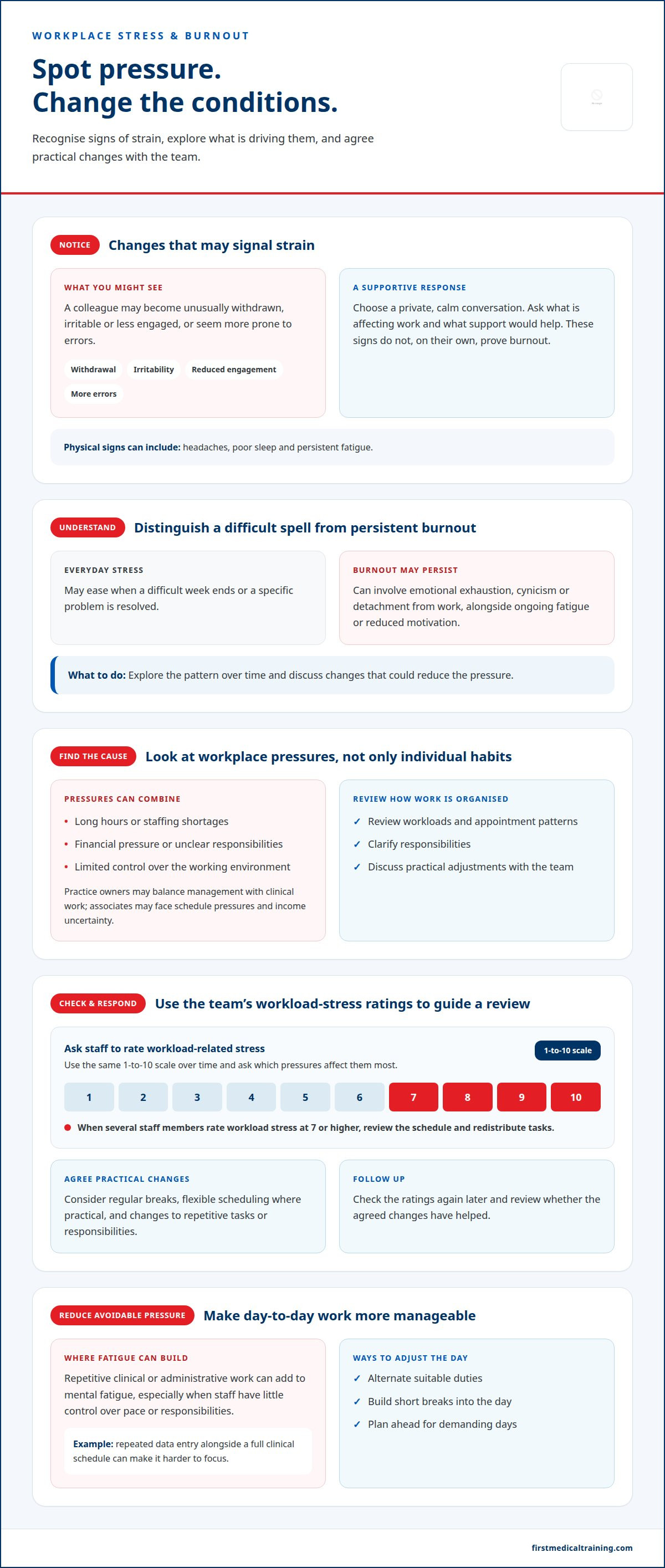
Repetitive clinical or administrative tasks can add to mental fatigue, especially when staff have little control over their pace or responsibilities. For example, repeated data entry alongside a full clinical schedule can make it harder to focus. Review task allocation, alternate suitable duties and build short breaks into the day. These changes can reduce avoidable pressure without treating burnout as an individual failing.
Persistent stress can contribute to longer-term mental health concerns. Encourage early support, including a discussion with a healthcare professional when symptoms affect daily life. Counselling or other mental health support may help someone explore coping strategies and work-related pressures. Keep conversations private and do not ask a colleague to disclose more than they wish.
In the UK, workplace support can include occupational health and an employee assistance programme. The Dentists’ Health Support Trust offers independent support for dental professionals, and NHS care may also be relevant when someone needs help with their health. Check-ins, clear responsibilities and agreed adjustments give the team practical ways to support a member experiencing stress.
2. Workplace stress and burnout in dental teams
Stress can build when long hours, staffing shortages, financial pressure and unclear responsibilities combine. Dental professionals may also have limited control over their working environment. Practice owners face management demands alongside clinical responsibilities, while associates may feel pressure from schedules and income uncertainty. Identify the pressures at play rather than treating stress as inevitable. Managing staff burnout in a dental practice starts with recognising these workplace causes.
Start by identifying pressures within the practice and how they affect staff. Review workloads, clarify responsibilities and discuss practical adjustments with the team. Consider workplace conditions as well as individual wellbeing, so support can address the source of pressure where possible.
Watch for changes in behaviour. A colleague who becomes unusually withdrawn, irritable, less engaged or more prone to errors may be struggling. Physical symptoms can include headaches, poor sleep and persistent fatigue. These signs do not prove burnout, but a private, supportive conversation can help identify whether work pressures need attention.
Everyday stress may ease when a difficult week ends or a specific problem is resolved. Burnout tends to persist and may involve emotional exhaustion, cynicism or detachment from work. If an employee describes ongoing fatigue and reduced motivation, explore the pattern over time and discuss changes that could reduce the pressure.
Measure whether prevention steps are helping by using the same simple indicators over time. Invite staff to rate workload-related stress on a 1-to-10 scale, ask which pressures affect them most, and review the responses with the team. When several staff members rate workload stress at 7 or higher, review the schedule and redistribute tasks. Track whether agreed changes improve those ratings at later check-ins.
Stress management works best when it improves daily conditions, not just individual habits. Managers can review appointment patterns, make space for regular breaks and discuss flexible scheduling where practical. Staff can break overwhelming tasks into manageable steps and plan ahead for demanding days. Yoga, stretching or light exercise may also support physical and mental wellbeing.
Financial issues can contribute to stress for practice owners and dental professionals. Overheads, income uncertainty and scheduling pressures can affect decisions across the team. Review financial and diary systems together, then identify operational changes that ease avoidable pressure without transferring it to colleagues. This makes managing staff burnout in a dental practice part of routine practice management.
Wellness programmes should respond to the causes staff identify. If repetitive administrative work is draining concentration, for example, review task allocation and allow suitable variety. If long hours are the concern, examine workload distribution and work-life balance. Regular feedback gives managers a practical way to assess whether changes are helping.
3. Supportive leadership and professional development
Supportive leadership makes staff wellbeing part of everyday practice. Schedule regular one-to-one check-ins, listen for concerns about workload and agree a practical action with each team member. For example, a manager could clarify who handles urgent patient queries when the receptionist is already supporting a waiting room. Follow up on the decision rather than leaving the colleague to resolve the issue alone.
Dental work also involves emotional labour. A team member may need to remain calm while supporting an anxious patient, even during a challenging appointment. After a difficult interaction, offer a private check-in, acknowledge the emotional effort and ask what would help before the next patient. After a complaint or clinical incident, listen without blame, identify immediate support needs and agree on follow-up.
Professional development gives staff a constructive way to build confidence and progress. Ask each person which skill they want to strengthen, then identify suitable learning or supervised practice. A dental nurse who wants to take on new responsibilities, for instance, may benefit from a clear development plan and regular feedback. Set specific goals, review progress and recognise achievements.
Peer support can make difficult experiences easier to discuss. Pair colleagues for informal check-ins, or set aside time during a team meeting to share practical strategies. One colleague might suggest changing how appointment information is handed over, while another could offer a different approach to an anxious patient. Keep participation supportive, not compulsory, and ensure personal disclosures do not become workplace gossip.
Managers can build wellbeing into team routines. Ask staff what helps them recover after demanding work, then consider options such as protected breaks, stretching or access to mental health resources. Recognise achievements, including a well-managed handover or positive patient feedback. Specific acknowledgements show which behaviours support the team and help staff feel their effort is valued.
When a patient complaint causes worry, respond promptly and give the staff member space to explain what happened. Separate fact-finding from personal judgement, then discuss any learning or support needed. If the colleague remains distressed, arrange another private conversation and help them access suitable professional support. Clear follow-up helps prevent the individual from feeling isolated with the incident.
A supportive culture depends on consistent leadership, not a single wellbeing activity. Set clear responsibilities, invite staff to raise concerns early and explain what happens next. Review agreed actions during subsequent check-ins. When managers model respectful communication and make time for development, peer support and open discussion become part of how the practice works.
4. Coworker communication and shared problem-solving
Give team conversations a clear purpose: identify what is affecting the workload and agree on a practical response. A short morning huddle can flag a fully booked clinic, a late-running appointment or a colleague covering an unexpected absence. Keep the discussion focused on priorities, handovers and support needed that day. Staff can raise difficult issues early, before pressure spreads across the practice.
Use regular check-ins for concerns that need more than a quick operational update. A weekly meeting lasting 20 minutes gives employees time to discuss recurring pressures and review previous actions. Ask each person what is working, what is difficult, and what change might help. Record agreed actions, assign responsibility and revisit progress at the next meeting.
Make it comfortable for staff to speak honestly. Managers can maintain an open-door approach while also offering private conversations for sensitive matters. Listen without interrupting, clarify the concern and avoid dismissing it as a normal part of dentistry. If conflict arises between colleagues, address it promptly and focus on specific behaviour, its effect on the team and a workable way forward.
Shared problem-solving turns a general concern into a change the team can test. If repeated late finishes are affecting staff, review appointment flow and handover arrangements together. If one person carries too many administrative tasks, discuss whether suitable duties can be redistributed. Agree who will put each change into practice, then ask affected colleagues whether it has improved the workload.
Team connection matters beyond solving immediate problems. Welcoming a new starter, sharing a break or recognising a well-managed clinic day can help employees feel included. Team-building activities can create opportunities to work together outside routine duties; for instance, corporate workshop providers such as Latterguru.dk demonstrate how guided laughter exercises can ease workplace tension and re-energise a team. Keep activities accessible and voluntary, and choose formats that suit different schedules and comfort levels.
Keep huddles brief and useful. A morning discussion of no more than 5 minutes can cover staffing changes, clinical priorities and the help colleagues need. Avoid using this time to raise complex disagreements or sensitive personal concerns. Move those conversations to an appropriate private setting, where everyone involved can explain the issue without pressure from the waiting room or the next appointment.
Close each discussion with a clear summary. State the agreed action, who is responsible and when the team will review it. For example, if a schedule change is intended to ease pressure on a particular role, ask that employee for feedback at the next check-in. This makes communication practical: raise a concern, agree on a response and assess whether it helped.
Use the same approach when an unexpected challenge affects the whole team. After a disruption, such as a staff absence or a difficult clinic session, invite colleagues to identify what worked and what caused strain. Focus on learning, not blame. Shared feedback helps the practice adjust routines and shows employees that their experience can shape decisions.
5. Effects on patient care, practice management, and staff morale
Burnout can affect how reliably a dental team manages routine work. Persistent fatigue may make it harder to concentrate during a handover, keep records current or respond calmly when appointments run late. These pressures can affect colleagues as well as the staff member experiencing them, particularly when responsibilities shift without discussion.
Patient care depends on coordinated work across the practice. Staff morale matters to the patient experience, alongside clinical systems. If employees feel exhausted or unsupported, review whether workload, breaks and communication arrangements are contributing.
Difficult patient interactions can add emotional pressure. A complaint may prompt anxiety about job security, a GDC referral or criticism from loved ones. Dentists and other team members may replay the exchange after the appointment, making it harder to focus on later tasks. Managers should respond promptly, listen to the staff member’s account and explain the next steps clearly.
After a complaint, separate support from any formal review. First ask what the staff member needs immediately, such as a short pause or help with the next appointment. Then explain how the concern will be handled and who will provide updates. This gives the employee a clear route through an uncertain situation without assuming the complaint reflects poor practice.
Practice systems can reduce pressure or make it worse. Poor diary maintenance, unclear responsibilities and staffing gaps may lead to repeated last-minute changes. Review appointment patterns, handovers and task allocation to find avoidable pinch points. If a team member is absent, locum cover can provide a safety net, while effective systems help the practice function when an owner is away.
Retention problems also affect continuity. When an experienced employee leaves, remaining staff may need to cover unfamiliar duties during recruitment and induction. That extra workload can place further strain on morale. Discuss retention concerns early and use staff feedback to identify whether scheduling, management systems or communication need attention.
Practices may face disruption, reduced capacity and added pressure on colleagues covering work when staff experience burnout. Dentists who provide care should also have adequate sickness insurance.
Wellness programmes should address the pressures staff actually report. If missed breaks are a concern, review the diary and protect time to pause. If difficult interactions affect confidence, arrange a supportive debrief. Track staff feedback, absence patterns and turnover over time to see whether changes are addressing the causes of low morale.
Explore practical support for dental teams as part of a wider plan to protect staff wellbeing and patient care.
First Medical Training Ltd: Medical Emergencies in a Dental Practice Course
First Medical Training Ltd offers the Medical Emergencies in a Dental Practice – CPD Training course to help dental teams prepare for clinical emergencies. This training supports clear roles and coordinated responses, which can reduce uncertainty during demanding situations. Mental Health First Aid for Dental Practices can help colleagues recognise distress and offer appropriate initial support. It complements, rather than replaces, professional mental health care.
Choose training that addresses your practice’s needs, such as emergency response preparation, immediate life support or mental health awareness. Dental Immediate Life Support (ILS) Training for Professionals can strengthen team readiness for urgent clinical situations. Training does not replace workload changes, supportive management or individual treatment when needed. Contact First Medical Training Ltd to discuss which course best fits your team’s priorities.
Build a practical next step
A steady approach to managing staff burnout in a dental practice starts with turning concern into a clear plan. Choose one workplace pressure to address, agree who will lead the change and set a time to review its effect. Small, consistent adjustments can make staff wellbeing part of everyday practice, rather than something addressed only when someone reaches crisis point.
Training can support teams as they build confidence in their roles. First Medical Training Ltd offers the Medical Emergencies in a Dental Practice Course, Dental Immediate Life Support (ILS) Training and Emergency First Aid at Work Course (EFAW) – 1 Day. Select an option that fits your team’s development needs and complements the wider support you provide.
Take the next step at a pace that suits your practice. Contact First Medical Training Ltd to discuss relevant training for your team. A thoughtful plan can help create a more supportive workplace and give staff a stronger foundation for caring for patients.
Frequently Asked Questions
Are there professional resources available to help dentists manage burnout?
Yes. Dental professionals can seek support through workplace occupational health, an employee assistance programme, or the Dentists’ Health Support Trust. These routes serve different needs: occupational health can consider how work and health interact, while a support programme may offer confidential help. Mental Health First Aid can help colleagues recognise distress and respond supportively, but it does not replace counselling or clinical care when those are needed.
Can burnout affect the quality of patient care at my practice?
Burnout can affect the conditions that support safe, attentive care. Persistent exhaustion, for example, may make it harder to concentrate during a handover or keep pace with a changing clinic schedule. If staff appear rushed or disengaged, review whether workload, staffing or communication arrangements are contributing. Addressing these pressures can support consistent teamwork and patients’ experience of the practice.
What is the difference between everyday stress and true burnout?
Everyday stress often eases after a demanding appointment or busy period has passed. Burnout is more persistent and may involve continuing exhaustion, cynicism or detachment from work. A team member, for example, may recover after a difficult clinic day but remain depleted and disengaged during ordinary workdays. Consider how long the changes last and whether rest or resolving a specific problem brings relief.
What practical steps can help prevent burnout in a busy dental practice?
Start by identifying a pressure the practice can change, rather than treating stress as unavoidable. The practice might clarify who handles urgent calls, rotate suitable administrative tasks or review a handover that repeatedly causes delays. Agree on an action with the affected employees and revisit it at a later check-in. Add access to mental health resources where appropriate, and make sure staff know how to use them.
What are the signs of burnout among dental practice staff?
Possible signs include ongoing fatigue, poor sleep, headaches, reduced motivation, irritability and detachment from work. You may also notice a change in a colleague’s concentration or engagement with routine duties. These signs can have different causes, so avoid labelling someone. Ask privately how they are coping, listen to their concerns and discuss workplace support or professional help if their wellbeing is affected.
How can dental practice managers assess staff wellbeing and burnout risk?
Use regular private check-ins and invite staff to describe workload pressures in their own words. A simple stress rating can help identify patterns; if several team members rate workload stress at 7 or higher on a 1-to-10 scale, review the schedule and task distribution. Look at feedback alongside changes in absence or retention, and ask whether agreed adjustments have made daily work more manageable.
What practical steps can dental practices take to reduce staff burnout?
Make responsibilities clear, address conflict promptly and give employees a reliable way to raise concerns. If a team member repeatedly stays late to finish records, examine the workflow and whether tasks can be shared or completed at another point in the day. Recognise specific contributions, not just major achievements. If stress continues, discuss suitable adjustments and help the staff member access professional support.
How can workload, appointment schedules and breaks be managed to prevent burnout?
Review the diary for recurring bottlenecks, late finishes and appointments that leave too little time for essential tasks. Distribute duties fairly, account for staff availability and plan cover for predictable absences. Protect breaks in the schedule and agree what happens when urgent work interrupts them. Ask employees whether changes ease the pressure, then adjust arrangements if the same problem continues.