

Mental Health First Aid: 2026 Dental Surgery Wellbeing Guide

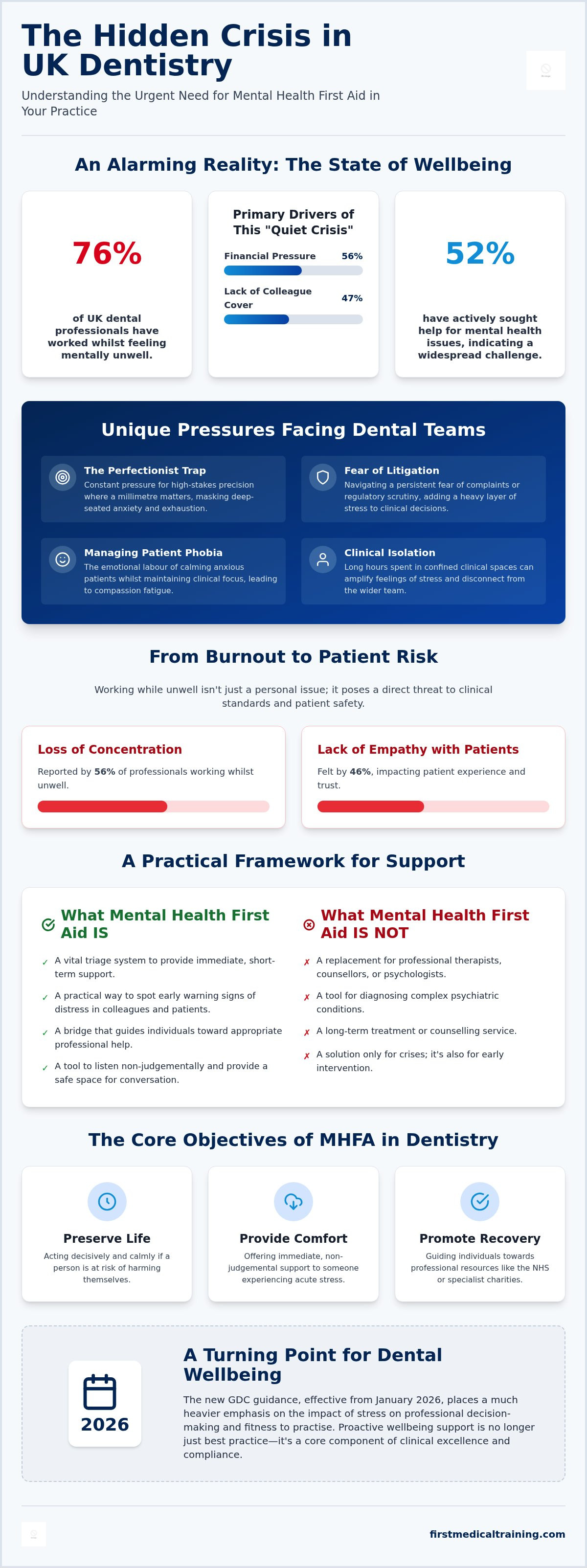
Did you know that 76% of UK dental professionals admit to working whilst mentally unwell, often due to financial pressure or a lack of cover? In an industry where clinical precision is paramount, the weight of managing dental phobia and meeting rigorous GDC standards can push even the most dedicated clinicians toward burnout. It's an exhausting reality that many practitioners have simply accepted as part of the daily grind for too long.
We understand that the pressure to perform whilst maintaining a calm environment for patients is immense. However, prioritising wellbeing isn't just a "nice to have" anymore; it's a critical component of clinical safety and team retention. This guide explores how implementing mental health first aid for dental teams can transform your surgery into a more resilient and supportive environment. You'll discover practical, specialised strategies to protect your staff from chronic stress and support anxious patients with genuine confidence. We'll also clarify the January 2026 GDC guidance on wellbeing and show you how to turn these recommendations into a compliant culture that benefits every member of your practice.
Key Takeaways
- Understand how mental health first aid for dental teams acts as a vital triage system to identify and support colleagues or patients in distress before a crisis occurs.
- Learn to recognise the specific behavioural and physical indicators of burnout triggered by the high-stakes, perfectionist environment of modern clinical dentistry.
- Discover the practical steps to appoint a designated Mental Health First Aider and integrate effective wellbeing pathways into your practice policy.
- Gain clarity on the latest 2026 GDC guidance regarding professional wellbeing and how specialised training ensures your surgery remains compliant.
- Improve patient satisfaction and clinical safety by managing 'dental phobia' through a more empathetic and psychologically informed team approach.
What is Mental Health First Aid for Dental Teams?
In a busy dental surgery, mental health first aid is a practical framework that allows staff to identify, understand, and respond to signs of mental ill-health amongst colleagues and patients. It isn't about diagnosing complex psychiatric conditions or providing long-term counselling. Instead, think of it as the psychological equivalent of physical first aid. It's a triage system designed to provide immediate, short-term support until professional help is accessed or the crisis passes. Implementing mental health first aid for dental teams ensures that no one has to struggle in silence whilst managing a full day of clinical appointments.
It's crucial to distinguish between professional therapy and surgery-based intervention. A Mental Health First Aider isn't a replacement for a psychologist. Their role is to spot the early warning signs of distress, listen without judgement, and guide the individual toward appropriate healthcare centres. In a high-pressure environment, this role is often best suited to a senior nurse or practice manager who has a broad view of the team's daily interactions and can intervene before a situation escalates into chronic burnout.
General office-based training often fails to account for the unique stressors of dentistry. Clinicians and their support staff deal with high-stakes precision work, the constant threat of litigation, and the emotional labour of managing patient phobia. Understanding What is Mental Health First Aid? helps clarify that it's about providing a safety net. For a dental team, this means recognising how clinical perfectionism can mask deep-seated anxiety or exhaustion.
The Core Objectives of MHFA in Dentistry
The primary goals of this training are straightforward but vital for maintaining a safe practice environment:
- Preserving life: Acting decisively and calmly if a person is at risk of harming themselves.
- Providing comfort: Offering immediate support to a colleague experiencing acute stress or a panic attack.
- Promoting recovery: Guiding individuals towards professional resources, whether through the NHS, private occupational health, or specialist dental charities.
Why 2026 is a Turning Point for Dental Wellbeing
As we move through 2026, the industry faces significant challenges that make mental health support a necessity rather than an optional extra. New GDC guidance regarding fitness to practise, which came into effect on 6 January 2026, places a much heavier emphasis on the impact of stress on professional decision-making. With the Dentistry Census 2024 showing that 52% of UK dental professionals have sought help for mental health issues, the trend is clear. Practices that prioritise mental health first aid for dental teams are seeing better staff retention and improved patient safety. Wellbeing is now a pillar of clinical excellence, ensuring the whole team remains resilient amidst rising NHS pressures and patient expectations.
The Unique Pressures Facing Modern Dental Teams
The dental surgery is a unique environment where clinical perfectionism meets high-intensity patient interaction. Unlike general office roles, dental professionals work within confined clinical spaces for long hours; this physical isolation often amplifies feelings of stress. The "perfectionist trap" is a constant pressure. Clinicians face high-stakes procedures where a millimetre's difference matters, all whilst navigating a persistent fear of litigation or regulatory scrutiny. This "always-on" culture is further burdened by heavy administrative duties and mandatory CPD requirements that frequently bleed into personal time.
Staff Burnout and the 'Quiet Crisis'
Burnout in the surgery is often a silent progression. A June 2025 survey by Dental Protection revealed that 76% of UK dental professionals have continued to work despite suffering from mental health issues. The primary drivers include financial concerns (56%) and the feeling that there is no one else to cover their workload (47%). This creates a "quiet crisis" where staff suffer without seeking support. The impact on clinical standards is clear; 56% of those working while unwell reported a loss of concentration, whilst 46% felt a lack of empathy with patients. This isn't just a wellbeing issue; it's a direct threat to patient safety. Recognising compassion fatigue in nurses and hygienists is a core part of Mental Health First Aid for dental teams. It allows for timely intervention before errors occur. Investing in a Mental Health First Aid for Dental Practices course helps mitigate the high cost of staff turnover and sickness.
Managing Patient Anxiety and Distress
Identifying distress in a clinical environment requires a keen eye for subtle deviations from a colleague's baseline behaviour. In the high-pressure world of dentistry, signs of struggle aren't always loud or dramatic. Often, they manifest as a slow erosion of professional enthusiasm or physical vitality. Recognising these indicators early is a core skill within mental health first aid for dental teams, allowing for intervention before a situation impacts patient safety or staff retention.
Physical indicators are frequently the first red flags. You might notice a colleague suffering from unexplained fatigue, a sudden decline in their professional appearance, or a spike in frequent minor illnesses. Behavioural shifts follow closely. A usually meticulous nurse might start making uncharacteristic clinical errors, or a lead clinician could become increasingly irritable or withdraw from team socialising. Emotional cues often surface during discussions about the rota; listen for expressions of hopelessness or a sense of being perpetually overwhelmed by the workload. We must also remain vigilant regarding patient-specific signs. Extreme avoidance behaviour or a full panic attack in the waiting room suggests the patient needs more than just a standard clinical approach; they require immediate psychological triage.
The Importance of Early Intervention
Waiting for a total crisis is a failing strategy that leads to avoidable clinical mistakes and team breakdown. Early intervention preserves the surgery's operational rhythm and protects the wellbeing of the individual. You can initiate a non-judgmental conversation during a quiet lunch break or a morning huddle by simply asking how a colleague is coping with the current schedule. Active listening is the practice of fully concentrating on, understanding, and responding to a speaker whilst withholding personal judgement or the urge to immediately "fix" the problem. This simple act of validation can often de-escalate rising stress levels before they reach a breaking point.
Creating a 'Safe Space' for Staff Communication
High-achieving clinicians often fall into the trap of believing they must remain bulletproof at all times. This mindset creates a stigma that prevents staff from seeking help. To counter this, regular 1-to-1 meetings should be used to identify simmering issues before they boil over. It's effective to integrate these wellbeing checks into your broader dental practice emergency preparedness framework. By treating mental health with the same structured gravity as any other clinical emergency, you normalise the conversation. This approach ensures that mental health first aid for dental teams becomes a seamless part of your practice’s 2026 compliance and safety culture.
How to Implement Mental Health First Aid in Your Practice
Implementing mental health first aid for dental teams requires a structured approach that respects the rigid timing of a clinical day. The first step involves appointing a designated Mental Health First Aider. This individual, often a senior nurse or practice manager, acts as the primary point of contact for colleagues in distress. Once appointed, you must update your Practice Wellbeing Policy to include clear, confidential pathways for support. This ensures that when a crisis occurs, the response is as organised as a medical emergency protocol.
Integration is the key to longevity. You should incorporate brief mental health "check-ins" into your morning huddles; this normalises the conversation before the first patient arrives. Beyond daily checks, it's vital to provide staff with access to accredited training, such as the Mental Health First Aid for Dental Practices course. Finally, you should regularly audit the emotional climate of the team. Just as you audit clinical records or infection control, assessing team morale helps you identify patterns of stress before they lead to staff turnover. With our 20-year heritage in dental education, we recommend treating these steps as a natural evolution of your surgery's safety culture.
Meeting Professional Standards and GDC Requirements
The General Dental Council's updated guidance, which came into effect on 6 January 2026, emphasises the role of wellbeing in professional decision-making. High-quality MHFA training contributes directly to your GDC CPD requirements for medical emergencies by preparing the team for psychological crises. Under "Standard 1," dental professionals must put patients' interests first. A team that is mentally exhausted or suffering from compassion fatigue cannot meet this standard effectively. Verifiable training ensures your practice meets these 2026 clinical standards whilst building a resilient workforce that can handle the pressures of modern dentistry.
Practical Resources for the Staff Room
Selecting a training provider is a critical decision for any practice manager. First Medical Training has remained at the forefront of dental-specific medical education since 2006. We understand that a generic approach to wellbeing doesn't suffice in a high-intensity clinical setting. Our specialised curriculum for mental health first aid for dental teams is built entirely through the lens of daily surgery life. We address the specific nuances that general providers often overlook, ensuring the training is relevant to every member of your multi-disciplinary team.
Our 20-year heritage in the sector allows us to act as a steady, reliable partner in your professional development. We offer a holistic training solution that covers the full spectrum of practice safety. This ranges from syncope management dental training and immediate life support to psychological triage. We also recognise the logistical challenges of running a busy surgery. Our flexible delivery options are designed to fit around your clinical hours, minimising patient disruption whilst ensuring your staff receive accredited, high-quality instruction that meets 2026 standards.
Expert Tutors with Real-World Dental Experience
Our instructors aren't just classroom theorists. They possess real-world experience within the healthcare sector and understand the unique pressures of the dental chair and the reception desk. We prioritise pragmatic, actionable skills over abstract theory. This approach builds your team's confidence to act decisively during a crisis, whether it's a physical medical emergency or a psychological one. You'll join thousands of dental professionals who have trusted us with their verifiable CPD since 2006, benefiting from a training style that is both serious about regulatory standards and passionate about the human element of care.
Take the Next Step for Your Team's Wellbeing
A resilient team is more than just a compliance requirement; it's a productive, safe, and happy workforce. When you invest in mental health first aid for dental teams, you're protecting your staff from the long-term effects of burnout and compassion fatigue. This creates a more supportive culture that directly improves patient satisfaction and clinical outcomes. We invite you to enquire today about our bespoke in-practice training sessions, which we can tailor to the specific needs of your surgery. Book your Mental Health First Aid for Dental Practices course here to ensure your team is fully prepared for the challenges of 2026.
Building a Resilient Future for Your Surgery
Prioritising the psychological safety of your staff is no longer a secondary concern; it's a fundamental pillar of clinical excellence and 2026 GDC compliance. We've explored how identifying early warning signs and implementing a structured triage system can prevent chronic burnout and improve patient care. By fostering a culture where wellbeing is discussed as openly as clinical protocols, you ensure your practice remains a stable and supportive environment for everyone involved.
First Medical Training has been dedicated to training UK dental professionals since 2006. Our specialist instructors use their healthcare backgrounds to deliver pragmatic, GDC-compliant verifiable CPD that actually works in a busy surgery. Investing in mental health first aid for dental teams is the most effective way to protect your colleagues and maintain the high standards your patients expect. Take the first step toward a more resilient workplace today.
Secure your dental team's wellbeing with our accredited MHFA training.
You have the power to transform your practice culture. With the right tools and training, your team can face the challenges of modern dentistry with renewed confidence and steady reliability.
Frequently Asked Questions
Is Mental Health First Aid training mandatory for GDC registration?
No, MHFA is not currently a mandatory requirement for GDC registration in the same way as medical emergencies or infection control. However, the GDC’s updated 2026 guidance emphasises that practitioners have a professional duty to manage their own wellbeing to ensure patient safety. Many forward-thinking practices now view this training as an essential component of their clinical governance and staff retention strategies, ensuring the team remains resilient under pressure.
How long does a Mental Health First Aid course for dental teams take?
A full Mental Health First Aider certification typically involves 15 to 16 hours of live learning, often delivered over two days to allow for deep practical engagement. For practices seeking a foundational overview, half-day awareness sessions are available, providing approximately 4 hours of training. The longer format is recommended for designated leads, as it offers a comprehensive framework for responding to acute psychological distress within the surgery environment.
What is the difference between MHFA and a general wellbeing workshop?
MHFA is a structured triage framework designed for crisis intervention, whilst a wellbeing workshop typically focuses on general self-care and lifestyle habits. Think of MHFA as the psychological equivalent of physical first aid; it provides the specific skills to identify signs of mental ill-health and guide individuals toward professional healthcare centres. It is a pragmatic, clinical approach to safety rather than a general discussion on workplace morale.
Can a dental receptionist be the designated Mental Health First Aider?
Yes, a dental receptionist is often an excellent choice for this role. As the primary point of contact for both staff and patients, they are uniquely positioned to notice changes in behaviour or signs of distress in the waiting room. The role requires empathy and strong communication skills rather than clinical seniority, making it accessible to any member of the multi-disciplinary team who completes the accredited training.
How often should MHFA training be refreshed for dental staff?
We recommend refreshing your MHFA training every three years to maintain clinical confidence and stay updated with the latest support protocols. Just as you would update your ILS or medical emergencies training, regular mental health refreshers ensure that your response remains effective and safe. This cycle aligns with broader 2026 health and safety recommendations, ensuring that support pathways within your practice remain robust and reliable for all staff.
Does the course cover patient anxiety as well as staff burnout?
Yes, the curriculum specifically covers techniques for managing patient distress and dental phobia. Whilst protecting staff from burnout is a core objective, mental health first aid for dental teams also provides tools to de-escalate anxiety in the clinical chair. This ensures that the surgery remains a calm environment, improving patient satisfaction scores and allowing the clinical team to focus on delivering high-quality treatment without unnecessary interruptions.
What happens if a staff member needs professional help beyond our training?
The primary role of a Mental Health First Aider is to provide immediate support and then signpost the individual toward professional help. This might include a GP, private counselling, or specialist dental charities like the Dentists’ Health Support Trust. Our training teaches you how to maintain professional boundaries, ensuring you provide a vital bridge to expert care without attempting to diagnose or treat complex psychiatric conditions yourself.
Is this training verifiable CPD for my 2026 requirements?
Yes, this training provides verifiable CPD that counts toward your GDC requirements. A full certification course typically offers 15 to 16 hours of verifiable CPD, whilst a half-day awareness session provides around 4 hours. Using mental health first aid for dental teams as part of your development plan demonstrates a clear commitment to the GDC’s 2026 standards regarding professional wellbeing, clinical excellence, and patient safety.