

The Comprehensive Dental Practice CQC Inspection Checklist for 2026

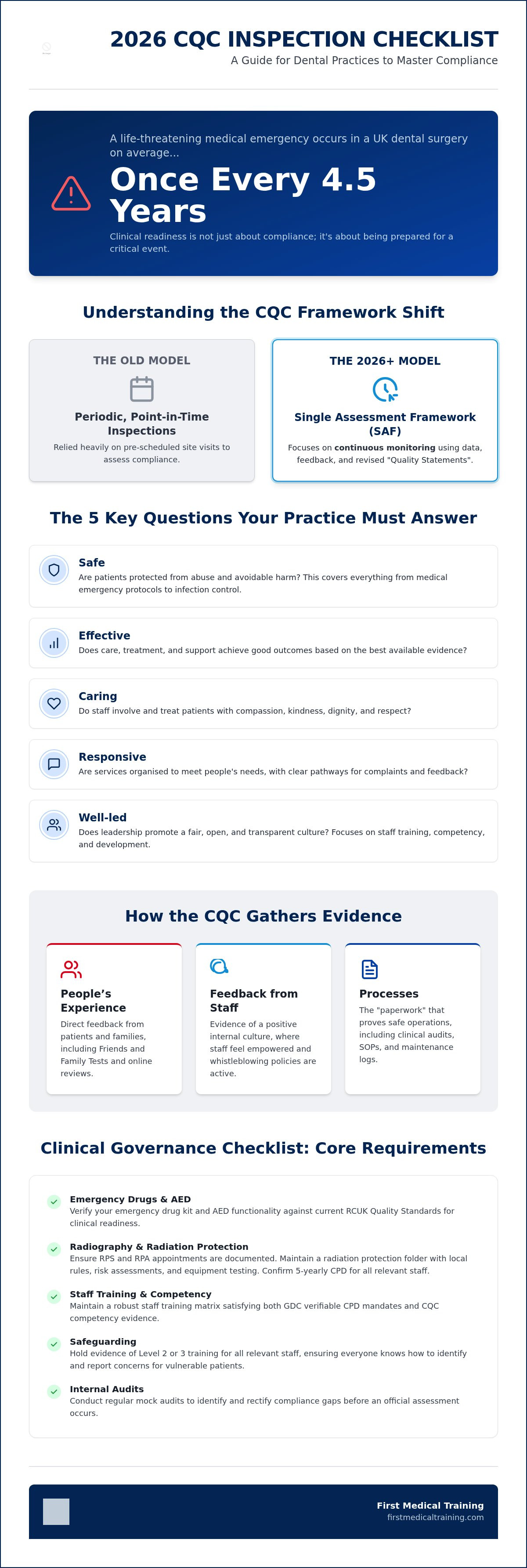
Did you know that the average UK dental practitioner will face a life-threatening medical emergency in their surgery approximately once every four and a half years? This statistic, sourced from our 2026 industry data, underscores why clinical compliance is far more than a simple box-ticking exercise. It's the thin line between a controlled, professional response and a chaotic crisis. We understand that the shift toward the CQC's new Primary Care and Community Services framework has caused significant anxiety amongst practice managers. You might feel uncertain about how to evidence staff competency or worry that a single out-of-date emergency drug could jeopardise your entire rating.
We agree that keeping pace with evolving regulations whilst providing exceptional patient care is a monumental task. That's why we've developed this comprehensive 2026 dental practice cqc inspection checklist. Our promise is simple: we'll help you master the updated assessment criteria with a clinical-first approach that ensures your practice remains compliant, safe, and ready for any inspection. We'll preview the essential emergency equipment requirements, explain the latest GDC CPD mandates, and provide a structured roadmap to achieving an "Outstanding" result with total peace of mind.
Key Takeaways
- Navigate the transition from the Single Assessment Framework to the new "Primary Care and Community Services" model used for 2026 inspections.
- Verify your emergency drug kit and AED functionality against current RCUK Quality Standards to ensure clinical readiness.
- Utilise our detailed dental practice cqc inspection checklist to organise your evidence for IPC, radiography, and clinical governance.
- Learn how to maintain a robust staff training matrix that satisfies both GDC verifiable CPD mandates and CQC competency requirements.
- Master the logistics of conducting internal mock audits to identify and rectify compliance gaps before an official assessment occurs.
Understanding the CQC Single Assessment Framework in 2026
The regulatory landscape for dental surgeries has undergone a significant transformation. The Care Quality Commission has moved away from traditional, periodic inspections in favour of the Single Assessment Framework (SAF). This model focuses on continuous monitoring rather than a single point in time. For practice managers, this means your dental practice cqc inspection checklist must be a living document, integrated into your daily operations. Understanding the CQC and the legislative requirements of the Health and Social Care Act 2008 is essential for any provider aiming to maintain high standards of clinical governance.
In 2026, the CQC no longer relies solely on site visits to judge a practice. They use a combination of data, statutory notifications, and patient feedback to assess performance. The old Key Lines of Enquiry (KLOEs) have been replaced by "Quality Statements" and "I Statements". These statements represent the standards that providers must meet and the experiences patients should expect. Staying "Inspection Ready" is no longer about a frantic week of filing before an inspector arrives; it's about evidencing your commitment to safety every single day.
The 5 Key Questions for Dental Surgeries
The CQC continues to base its assessments on five fundamental questions. Each practice must prove it is:
- Safe: Patients are protected from abuse and avoidable harm. This includes having robust protocols for medical emergencies and infection control.
- Effective: Care, treatment, and support achieve good outcomes and promote a high quality of life based on the best available evidence.
- Caring: Staff involve and treat patients with compassion, kindness, dignity, and respect.
- Responsive: Services are organised so they meet people's needs, including clear pathways for complaints and feedback.
- Well-led: The leadership promotes a fair, open, and transparent culture. This domain focuses heavily on staff training, competency, and professional development. To explore how to strengthen your clinic's management, you can learn more about Inspired Leadership and their transformational journeys.
Evidence Categories the CQC Will Scrutinise
To provide a rating, the CQC looks at specific evidence categories. A robust dental practice cqc inspection checklist helps you categorise this evidence logically for an assessor. They prioritise three main areas:
- People’s experience: This includes direct feedback from patients and their families, often gathered through the Friends and Family Test or online reviews.
- Feedback from staff and leaders: Inspectors look at the internal culture. They want to see that staff feel empowered to speak up and that whistleblowing policies are active and understood.
- Processes: This covers your clinical audits, standard operating procedures (SOPs), and maintenance logs. It's the "paperwork" that proves your practice functions safely behind the scenes.
Safe and Effective: The Clinical Governance Checklist
The "Safe" and "Effective" domains of the CQC framework require meticulous attention to detail. An effective dental practice cqc inspection checklist begins with clinical governance. This ensures your practice isn't just surviving, but thriving under scrutiny. Inspectors look for clear evidence that you are adhering to the General Dental Council (GDC) standards, specifically concerning patient safety and professional conduct.
Radiography and radiation protection require specific evidence of Radiation Protection Supervisor (RPS) and Radiation Protection Advisor (RPA) appointments. You must maintain a current radiation protection folder containing your local rules, risk assessments, and evidence of equipment testing. Inspectors expect to see that all staff involved in taking radiographs have completed their five-yearly CPD requirement in this area. Similarly, clinical records must be accurate, secure, and fully compliant with GDPR. Notes should be made contemporaneously, reflecting the treatment provided and the consent obtained. Safeguarding is another pillar of this assessment. You must hold evidence of Level 2 or 3 training for all relevant staff members, ensuring everyone knows how to identify and report concerns regarding vulnerable patients.
Infection Control and Decontamination
Infection Prevention and Control (IPC) is often the most scrutinised area during a visit. Compliance with HTM 01-05 is essential. You must maintain daily and weekly autoclave validation logs to prove your sterilisation processes are functioning correctly. It's not enough to perform the tests; you must record them diligently. Staff immunisation records, particularly for Hepatitis B, must be up to date and accessible. Sharps safety protocols should be clearly displayed, and the use of safer sharps should be the norm across the practice. Providing clear evidence of these protocols demonstrates a culture of safety amongst your team.
Equipment Maintenance and Calibration
Your equipment must be safe and fit for purpose. This requires a comprehensive inventory of all clinical items, including their last service dates. Pressure vessel certification for compressors and autoclaves is a legal necessity that inspectors will check. Similarly, Portable Appliance Testing (PAT) logs for all electrical items must be current. If an inspector finds a piece of kit without a valid calibration sticker, it raises questions about your wider safety culture. Consistent record-keeping ensures you are always prepared. If you're looking to bolster your team's readiness for high-stakes scenarios, enrolling them in a medical emergencies in dental practice course is a proactive way to evidence your commitment to patient safety.
The Medical Emergencies Checklist: Compliance in a Crisis
A CQC inspector's visit often culminates in a rigorous examination of your emergency response capabilities. This isn't merely about having a box in the cupboard; it's about proving your team can act decisively when seconds count. Your dental practice cqc inspection checklist must prioritise the verification of all life-saving equipment and medication. It's vital to check the functionality of your Automated External Defibrillator (AED) and maintain clear logs of its self-test status. Similarly, your oxygen supply requires a weekly audit to ensure the cylinder has sufficient capacity, the flow rate is functional, and masks are available for both adults and children.
A truly robust emergency kit goes beyond the bare minimum. Incorporating a LifeVac anti-choking device provides an additional layer of protection for patients in respiratory distress, especially when traditional methods might be contraindicated. Every member of the team should know exactly where this kit is stored. Accessibility is key. If your emergency equipment isn't reachable within seconds, your protocol is flawed. Clear signage and a well-rehearsed "Emergency Protocol" that defines specific roles, such as who calls 999 and who manages the airway, is essential for compliance.
Essential Emergency Drugs and Equipment
You must verify the presence and expiry dates of the specific drugs mandated by the Resuscitation Council UK. This includes Adrenaline (1:1000), Aspirin (300mg), Glucagon, Glyceryl Trinitrate (GTN) spray, buccal Midazolam, and Salbutamol. Alongside these, ensure you have self-inflating bags with reservoirs in both adult and paediatric sizes. Portable suction with a range of tips is also a requirement. To tie these elements together, your practice should have a formal cardiac arrest management in dental practice policy that staff can recite and follow under pressure.
Emergency Scenario Drills and Recording
Evidence is the currency of the CQC. It's not enough to say you're prepared; you must prove it through documentation. Your dental practice cqc inspection checklist should include a schedule for quarterly medical emergency "mock drills". These sessions should involve the whole team, from the principal dentist to the receptionist. Detailed logs of these drills, along with debriefs from any actual emergencies, demonstrate a culture of continuous learning. Inspectors look for these records to see how you've identified weaknesses and improved your response times or clinical techniques.
Staff Competency and CPD: Evidencing Professional Standards
The "Well-led" domain hinges on a single, critical question: how do you know your staff are competent? For a CQC inspector, the answer must be visible and immediate. Compiling a Staff Training Matrix is the most effective way to provide this clarity. This document should act as the heartbeat of your dental practice cqc inspection checklist, offering a birds-eye view of every team member's compliance status. It allows you to spot expiring certificates before they become a liability, ensuring that your practice remains safe and fully operational at all times. Beyond basic compliance, if you are looking to scale your practice or improve operational efficiency, you can learn more about 10X Dental Partners.
Professional standards are maintained through consistent, verifiable learning. In 2026, the GDC requires dentists to complete 100 hours of verifiable CPD over a five-year cycle, whilst dental nurses and technicians must complete 50 hours. Within these totals, medical emergencies remain a high-priority topic. The recommendation is at least 10 hours per cycle, with a strong suggestion of at least two hours of annual training. Keeping your medical emergencies in dental practice course certificates organised and ready for review demonstrates a proactive approach to patient safety that inspectors highly value.
Your training schedule must cover several non-negotiable areas to satisfy the dental practice cqc inspection checklist. Basic Life Support (BLS) is the foundation, but many practices now opt for Dental Immediate Life Support (ILS) Training to provide a higher standard of care. This advanced training is particularly relevant for practices providing sedation or handling complex cases. You must also stay current with GDC CPD requirements for medical emergencies, ensuring every staff member, including non-clinical roles, understands their part in a crisis. Safeguarding training at Level 2 or 3 is equally essential, proving your team can protect vulnerable patients effectively.
Evidencing Professional Development
Documentation is just as important as the training itself. Each staff member should maintain an individual CPD folder containing verifiable certificates and reflective accounts of their learning. Inspectors also look for robust induction records for new starters. These records must prove that a new hire has been oriented in "Safe" and "Effective" protocols from their first day. Regular appraisals should link individual growth to practice-wide quality improvements, showing a clear path from training to better patient outcomes. To ensure your team meets every standard, explore our accredited first aid courses today.
Finally, consider the broader impact of team wellbeing. Incorporating mental health first aid for dental teams into your development plan is a powerful way to strengthen the "Well-led" domain. It shows the CQC that you value staff welfare as much as clinical output, fostering a supportive culture that directly improves the patient experience.
Final Preparations: Mock Audits and Inspection Day Logistics
Finalising your dental practice cqc inspection checklist is a significant milestone, but the final hurdle involves translating that paperwork into practice. A successful inspection day relies on your team's ability to demonstrate compliance under pressure. It's not just about what you do; it's about how you evidence it. Inspectors don't just look at files; they observe the patient journey from the reception desk to the dental chair. Preparing the team involves more than just reciting facts; it's about building the confidence to answer inspector questions honestly and accurately. When your staff understand the "why" behind the protocols, their confidence shines through.
The Internal Audit Process
An internal mock audit is the most effective way to stress-test your dental practice cqc inspection checklist before the real event occurs. This process should be rigorous and objective, mirroring the approach an external assessor would take. We recommend a three-step approach to this final review:
- Step 1: Cross-reference every policy in your folder with current 2026 legislation to ensure no outdated guidance remains.
- Step 2: Conduct a physical walkthrough of every clinical room to check for out-of-date consumables or uncalibrated equipment.
- Step 3: Review the last six months of staff meeting minutes to find documented evidence of the "Well-led" domain in action.
The organisation of your evidence, whether in a physical CQC folder or a digital repository, must be intuitive. If an inspector asks for a specific risk assessment, you should be able to produce it within seconds. Digital evidence is increasingly popular, but ensure that multiple staff members know how to access the server and navigate the files if the practice manager is occupied. Accessibility is a hallmark of a well-organised practice.
Practical Logistics for Inspection Day
Logistics play a vital role in how the day unfolds. You should designate a specific "CQC Lead", usually the practice manager or principal dentist, to facilitate the visit and act as the primary point of contact. This individual will guide the inspector through the building and ensure they have everything they need. To make the process smoother, consider the following:
- Ensure all staff members are fully briefed on the latest dental practice emergency preparedness protocols.
- Create a clean, quiet, and private space, such as an office or staff room, for the inspector to review documentation undisturbed.
- Have a printed "Welcome Pack" ready that includes your practice leaflet, statement of purpose, and a map of the building.
Ultimately, the goal is to project an image of steady reliability. By the time the inspector arrives, your preparation should be so thorough that the visit feels like a natural extension of your daily commitment to excellence. You've done the hard work; now it's time to let your clinical standards speak for themselves.
Achieving Excellence in Your 2026 CQC Assessment
Navigating the transition to the CQC’s sector-specific framework requires a shift from periodic preparation to a culture of continuous clinical readiness. By integrating our dental practice cqc inspection checklist into your monthly routines, you ensure that every drug, piece of equipment, and staff certificate is always up to date. This proactive approach doesn't just satisfy inspectors; it builds a safer environment for your patients and a more confident, capable team.
As a trusted partner in professional development since 2006, we provide annual training solutions trusted by practices nationwide. Our expert trainers bring real-world clinical experience to every session, ensuring your team is prepared for any crisis. We are accredited by major UK healthcare bodies, giving you total peace of mind that your training meets the highest standards. Book Your GDC-Compliant Medical Emergencies Training Now and lead your practice toward an "Outstanding" rating with confidence. You've done the hard work to build a great practice; now let's ensure it's protected.
Frequently Asked Questions
How often should a dental practice be inspected by the CQC in 2026?
The CQC no longer follows a fixed inspection frequency for every surgery. Under the 2026 framework, they've moved to a continuous assessment model that uses data and statutory notifications to monitor performance. A physical visit will occur if their data suggests a change in risk or if a significant period has passed since your last assessment. Maintaining a dental practice cqc inspection checklist ensures you stay ready for these unpredictable visits.
What are the most common reasons dental practices fail CQC inspections?
Most practices fall short due to inadequate clinical governance or poor record-keeping. Common failures include out-of-date emergency drugs, lack of daily autoclave validation logs, or missing evidence of staff immunisations. Inspectors often find that while training has occurred, the practice cannot produce the verifiable certificates required. Using a dental practice cqc inspection checklist helps managers identify these small but critical gaps in compliance before an inspector arrives.
Is annual medical emergency training a mandatory GDC requirement?
Yes, the GDC identifies medical emergencies as a highly recommended CPD topic for all dental professionals. You should complete at least 10 hours of verifiable CPD in this area every five-year cycle. The GDC strongly recommends that you undertake at least two hours of this training annually. This ensures your team remains sharp and capable of handling a crisis. It's a key requirement that inspectors will look for during any assessment.
Does every member of the dental team need ILS training?
Not every staff member is legally required to hold an ILS certificate. Basic Life Support (BLS) is the standard requirement for the whole team. However, Dental Immediate Life Support (ILS) is highly recommended for clinicians, especially those involved in conscious sedation. It provides a more advanced level of airway management and cardiac arrest response. Many practices choose to train their entire clinical team to ILS standards to ensure a higher level of patient safety.
What emergency drugs must be kept in a UK dental surgery?
You must stock the specific drugs mandated by the Resuscitation Council UK. This list includes Adrenaline (1:1000), Aspirin (300mg), Glucagon, Glyceryl Trinitrate (GTN) spray, buccal Midazolam, and Salbutamol. You also need a portable oxygen cylinder with the correct flow rate and masks. These drugs must be in date and stored in a clearly marked kit. Inspectors will check these expiry dates as a priority during their visit to your surgery.
How does the CQC assess the "Well-led" criteria in a small practice?
In small practices, the CQC assesses "Well-led" through your internal culture and leadership visibility. They look for evidence of regular staff meetings where safety and learning are discussed. A clear staff training matrix and up-to-date policies prove that the leadership is organised. They may also interview staff to ensure they feel supported and understand how to raise concerns. Demonstrating a commitment to team wellbeing and professional development is essential for this domain.
Can the CQC inspect a dental practice without prior notice?
The CQC has the power to inspect any dental practice without prior notice. While many inspections are scheduled with a few days' warning, unannounced visits can occur, especially if there are specific concerns about patient safety or whistleblowing reports. This is why it's vital to remain "Inspection Ready" at all times. Keeping your clinical governance and emergency protocols up to date ensures you can welcome an inspector confidently, regardless of when they arrive.
What is the role of the Registered Manager during a CQC inspection?
The Registered Manager holds the legal responsibility for ensuring the practice meets CQC standards. During an inspection, they act as the primary point of contact and must be able to explain how the practice operates safely. They are responsible for presenting evidence, answering questions about clinical governance, and demonstrating how the practice learns from incidents. Their role is to provide the inspector with confidence that the service is well-managed, safe, and effective.