

GDC Fitness to Practise: A Guide to Compliance and Professional Standards in 2026

A GDC investigation isn't always a sign of poor clinical skill, but it is a clear signal that the gap between your daily habits and regulatory expectations has become too wide to ignore. Most dental professionals feel a sharp spike of anxiety at the mere mention of a gdc fitness to practise concern. It is completely natural to feel overwhelmed by the distinction between a simple clinical error and a serious threat to your professional registration. You are likely already under immense pressure to manage a busy patient list whilst keeping up with the latest verifiable CPD requirements.
We understand that you want to focus on patient care without the constant shadow of regulatory fear. This guide provides a clear roadmap for 2026, helping you understand the latest GDC framework and the common triggers for investigations. You will learn how proactive, high-quality training acts as a shield for your career, giving you the confidence that your compliance status is secure. We will break down the January 2026 guidance updates and show you how to maintain professional standards through practical, structured development that protects both your patients and your livelihood.
Key Takeaways
- Define the multi-dimensional framework of professional standards and the GDC’s primary role in maintaining public safety.
- Identify the common triggers for a gdc fitness to practise concern and understand the "threshold" test used during initial assessments.
- Learn how proactive engagement with accredited CPD, particularly in medical emergencies, serves as vital evidence of your ongoing competence.
- Navigate the investigation process with confidence by understanding the distinct roles of the GDC assessment team and the Investigating Committee.
- Explore how specialised training in mental health first aid can help you manage the personal wellbeing standards required for professional registration.
What is GDC Fitness to Practise?
The General Dental Council exists primarily to protect the public and maintain the integrity of the dental profession. Being "fit to practise" means more than just possessing the clinical dexterity to perform a composite restoration or a root canal. It is a multi-dimensional standard that ensures every registered professional can provide safe, effective care while upholding the reputation of dentistry as a whole. While clinical errors occur in every practice, a gdc fitness to practise concern usually arises when a registrant's conduct, health, or performance falls significantly below the essential standards required to protect patients or public confidence.
Public confidence is the bedrock of the dental profession. If patients do not trust their dental team, they may avoid necessary treatment, which ultimately puts their oral health at risk. This is why the GDC looks beyond the surgery doors. Your actions in your personal life, your honesty in administrative matters, and your physical and mental health all contribute to your professional standing. The GDC distinguishes between a one-off clinical mistake, which can often be managed through local training and reflection, and a fitness to practise concern that suggests a deeper issue with a professional's ability to work safely.
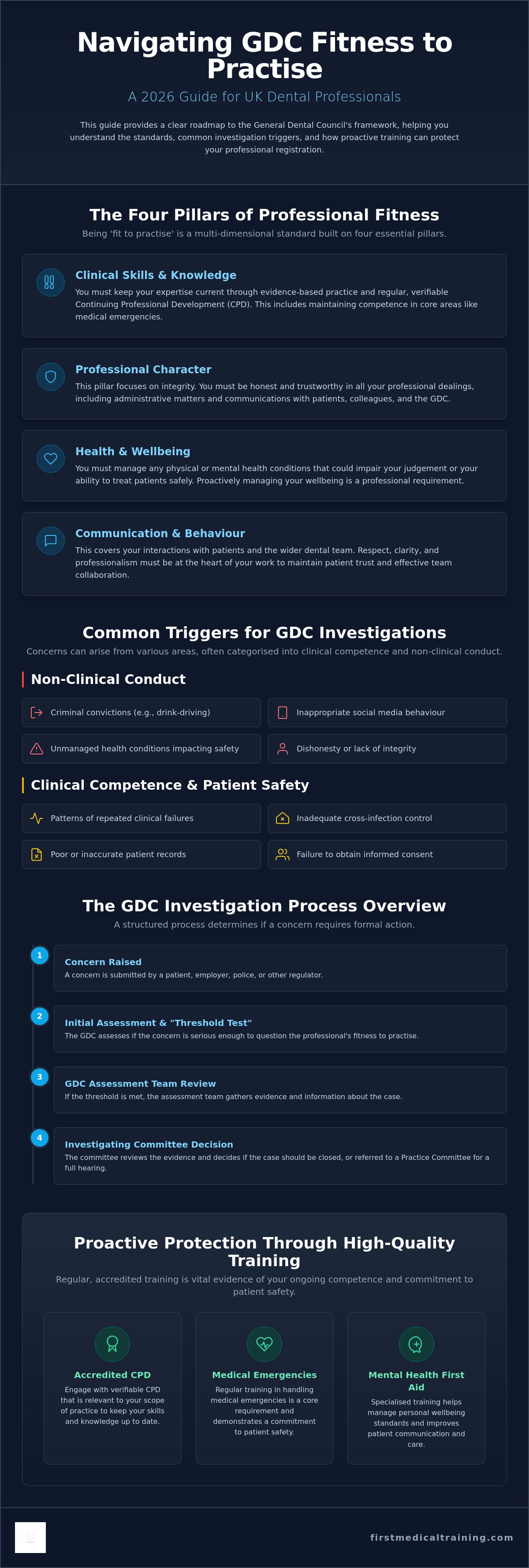
The Four Pillars of Professional Fitness
The framework for 2026 remains built upon four essential pillars. Clinical Skills and Knowledge require you to keep your expertise current through evidence-based practice and regular, verifiable CPD. Professional Character focuses on integrity; you must be honest, even when things go wrong. Health and Wellbeing is a vital pillar that requires you to manage any physical or mental conditions that could impair your judgement or ability to treat patients safely; for those seeking specialist health advice, you can check out Kingsford Medical Services. Finally, Communication and Behaviour covers how you interact with patients and the wider dental team, ensuring respect and clarity remain at the heart of your work.
Who Does the FTP Framework Apply To?
The gdc fitness to practise framework applies to every individual on the register. This includes dentists, dental nurses, hygienists, therapists, technicians, and orthodontic therapists. Even students are expected to adhere to these standards during their training years to prepare for the responsibilities of full registration. Every team member also carries a professional obligation to report concerns if they believe patient safety is at risk. This duty of whistleblowing is not about creating conflict within a practice; it is a collective responsibility to ensure that the standards of the profession remain beyond reproach.
Common Triggers for GDC Investigations
Concerns regarding a registrant's ability to work safely can reach the GDC from several directions. Whilst many cases originate from patient complaints, the council also receives reports from employers, the police, and other healthcare regulators. Before a formal investigation begins, the GDC applies a "threshold test" to determine if the concern is serious enough to call into question a professional's GDC's definition of Fitness to Practise. This initial screening filters out minor grievances, ensuring that resources are focused on matters that truly impact public safety or the reputation of the profession.
Non-clinical conduct often catches professionals off guard. Criminal convictions, even those unrelated to dentistry such as drink-driving, must be reported and can trigger an inquiry. Similarly, inappropriate social media behaviour that brings the profession into disrepute is increasingly common in gdc fitness to practise cases. A significant but often overlooked trigger is the registrant's health. If a mental or physical health condition is left unmanaged and begins to compromise patient safety, it becomes a regulatory matter. Proactively managing your wellbeing through courses like Mental Health First Aid for Dental Practices can help you maintain the high standards of health required for continued registration.
Clinical Competence and Patient Safety
Clinical triggers usually involve more than a single, isolated mistake. The GDC looks for patterns of repeated failures in diagnosis or treatment planning that suggest a fundamental lack of basic competence. Inadequate cross-infection control is another high-priority trigger, as it presents an immediate risk to the public. Additionally, failing to obtain informed consent or maintaining poor patient records can escalate to a full investigation. These are seen as core breaches of the Standards for the Dental Team, as they directly impact the safety and autonomy of the patient.
Conduct, Integrity, and Professional Indemnity
Proactive Compliance: Protecting Your Registration Through Training
Proactive compliance is more than a box-ticking exercise; it's a strategic shield for your career. High-quality CPD serves as tangible evidence of your ongoing commitment to professional standards. When you invest in accredited training, you aren't just gaining skills; you're building a documented history of competence that the GDC values. The Fitness to Practise Statistical Report highlights the reality of regulatory oversight, showing that while many concerns are raised, a professional who can demonstrate active learning and reflection is in a much stronger position. If a clinical incident occurs, your response defines your future. Engaging in reflective practice and immediately seeking targeted training, such as a medical emergencies in dental practice course, shows the GDC that you take patient safety seriously and are capable of self-remediation.
A robust training record acts as a buffer. It proves that you don't wait for a crisis to update your knowledge. In the context of a gdc fitness to practise inquiry, the ability to produce verifiable certificates from reputable providers can be the difference between a simple "no case to answer" decision and a prolonged investigation. This proactive stance ensures that you remain ahead of regulatory shifts and maintain the high level of clinical confidence that patients expect from their dental team.
Emergency Preparedness as a Core Standard
The GDC mandates annual medical emergencies training for a reason. Being prepared for a patient collapse is a fundamental clinical requirement that directly impacts patient outcomes. Your ability to act decisively in a crisis is a primary indicator of your clinical competence. Regular drills and hands-on sessions ensure that your team remains sharp and capable. To ensure your surgery meets the required standards, you should regularly review a dental practice emergency preparedness checklist. This level of readiness protects your patients and provides peace of mind for every member of the staff.
The Role of Enhanced CPD
Aligning your personal development plan with the GDC’s four development outcomes is essential for modern registration. Verifiable CPD certificates are not optional; they are a condition of your continued right to work. You must ensure that your training covers the specific highly regulated areas that the council prioritises. For a detailed breakdown of how to meet these standards in 2026, consult our GDC CPD requirements medical emergencies guide. This structured approach to learning ensures that your gdc fitness to practise remains beyond reproach through consistent, evidence-based professional growth.
The GDC Investigation Process Explained
The gdc fitness to practise process follows a rigid, sequential path designed to ensure fairness for the professional whilst maintaining public safety. It begins with the receipt of a concern, which undergoes an initial assessment by GDC staff. During this phase, the council determines if the complaint falls within its jurisdiction and meets the necessary threshold for investigation. If the concern is deemed serious, the case moves to the Investigating Committee (IC). This stage is critical; case examiners review the evidence to decide if there is a "case to answer". They don't determine guilt at this point, but rather assess whether the evidence is sufficient to justify a full hearing.
While an investigation is ongoing, the Interim Orders Committee (IOC) may intervene. If a registrant's continued practice poses an immediate risk to patients or themselves, the IOC can impose temporary restrictions. These "interim orders" can include a total suspension or specific conditions on your practice for up to 18 months. This measure is protective, not punitive, but it underscores the gravity of the regulatory framework. If the IC determines there is a case to answer, the matter is referred to one of three Practice Committees: the Professional Conduct Committee, the Professional Performance Committee, or the Health Committee.
Possible Outcomes of an FTP Hearing
A Practice Committee hearing is a formal, legalistic event where evidence is presented and witnesses may be called. The panel can reach several conclusions based on the facts of the case. In some instances, they may find no further action is required, and the case is closed. However, if the panel finds that your fitness to practise is impaired, they may issue a formal warning or impose conditions on your registration, such as requiring specific supervision or further training. The most severe sanctions include suspension from the register for a set period or erasure, which is a permanent removal of your right to practise dentistry in the UK.
The Importance of Legal and Professional Support
You should never attempt to navigate an FTP investigation alone. The legal complexities and the potential impact on your career require expert guidance from the outset. Contact your professional indemnity provider or defence organisation immediately upon receiving notice of a concern. Beyond legal advice, the emotional toll of an investigation is significant. Maintaining your mental wellbeing is essential for making clear, rational decisions during this stressful time. To build a more resilient practice environment, you can organise Mental Health First Aid training for your team, ensuring everyone has the tools to support one another during professional challenges.
Maintaining Excellence with First Medical Training Ltd
First Medical Training Ltd has supported the dental sector since 2006, providing the high-level education required to navigate the complexities of modern regulation. We believe that professional excellence is built on a foundation of steady, reliable preparation. By choosing in-practice training, you ensure that every team member, from the lead clinician to the trainee dental nurse, understands their role in maintaining the highest standards. This collective competence is your practice's most effective defence against a gdc fitness to practise concern. When the whole team trains together, communication improves and clinical protocols become second nature.
Our specialised Mental Health First Aid for Dental Practices course addresses a critical aspect of professional fitness mentioned earlier in this guide. As discussed, the "health" pillar of the FTP framework requires registrants to manage their wellbeing effectively to ensure patient safety. We provide the tools to identify stress triggers and support colleagues, fostering a workplace culture that prioritises both patient safety and staff resilience. This proactive approach ensures that you aren't just meeting the minimum requirements, but are actively building a safer, more supportive professional environment; for those interested in exploring further accredited training in health coaching or nutrition, click here.
Verifiable CPD You Can Trust
First Medical Training Ltd aligns every session with the GDC's specific development outcomes to ensure your time is spent productively. Our training doesn't just tick a box; it provides clinical confidence that translates directly to patient care. After completing a session, you'll receive clear, verifiable CPD certificates that are easy to manage within your professional portfolio. We offer tailored solutions for practices across the United Kingdom, bringing our expertise directly to your surgery to minimise disruption to your patient list.
Taking the Next Step in Your Professional Development
As you plan for the year ahead, it's vital to review your annual training requirements for 2026. Ensuring your team is compliant isn't just about meeting a deadline; it's about protecting your registration and your livelihood. Booking a group session allows your entire team to learn together in their own environment, using their own equipment. This hands-on approach is the most effective way to ensure everyone is ready to act in a crisis. You can enrol in our Medical Emergencies course today to secure your practice's professional standing and ensure your gdc fitness to practise remains beyond reproach.
Securing Your Professional Future in 2026
Managing professional registration is no longer just about avoiding errors; it is about demonstrating a continuous commitment to the standards we have explored throughout this guide. The 2026 GDC framework places equal weight on clinical skill, personal conduct, and the health standards that underpin safe practice. By understanding the investigation process and the triggers that lead to it, you can move from a state of regulatory anxiety to one of informed confidence. Each training session and reflective entry you complete serves as a vital brick in your professional defence.
Maintaining your gdc fitness to practise status is a collective effort that benefits the entire surgery. First Medical Training Ltd has been a dedicated partner for the dental sector since 2006. As a specialist dental CPD provider with national UK coverage, we provide the practical tools and accredited knowledge needed to navigate these rigorous requirements. Ensure your team meets GDC standards with our accredited training to secure your registration and focus on what you do best: providing exceptional patient care. You have the skills to excel; let us help you build the compliance shield that protects your career.
Frequently Asked Questions
What does "fit to practise" actually mean in dentistry?
Being fit to practise means you possess the necessary clinical skills, knowledge, character, and health to carry out your duties safely and effectively. It isn't just about clinical success; it's about maintaining the public's trust in the dental profession. If your conduct, performance, or health compromises patient safety or brings the profession into disrepute, your fitness to practise may be questioned.
Can a health issue lead to a GDC fitness to practise investigation?
A health issue can trigger a gdc fitness to practise investigation if it isn't managed effectively and presents a risk to the public. The GDC isn't interested in punishing illness, but it must ensure that every registrant is physically and mentally capable of performing their role without endangering patients. Proactive management and seeking support early are essential for maintaining your registration.
How long does a GDC fitness to practise investigation take?
Investigation timelines vary based on the complexity of the case. While an initial assessment might take a few weeks, a full investigation that reaches a Practice Committee often takes between 12 and 18 months. The GDC aims to resolve cases as quickly as possible whilst ensuring a thorough and fair process for both the registrant and the complainant.
Do I need to report a criminal caution to the GDC?
You must report any criminal caution or conviction to the GDC immediately. This is a mandatory requirement for all registrants. Attempting to hide a caution is often treated more severely than the incident itself, as it raises serious questions about your professional integrity and honesty. Transparency is always the best path when dealing with regulatory bodies.
What is the difference between the GDC Investigating Committee and a Practice Committee?
The Investigating Committee (IC) acts as a filter to decide if there's enough evidence for a full hearing. They review papers in private and decide if there's a "case to answer". In contrast, a Practice Committee holds a formal public hearing where witnesses testify, and a panel decides if your fitness to practise is impaired and what sanction is necessary.
How can CPD help me if I am facing a fitness to practise concern?
Engaging in targeted CPD shows a commitment to remediation and professional growth. If a gdc fitness to practise concern is raised, proving that you've already completed relevant training, such as an ILS or medical emergencies course, demonstrates that you've taken the matter seriously. This proactive approach shows you've identified gaps and reduced any future risk to patients.
Is an FTP hearing the same as a court of law?
An FTP hearing is a formal legal proceeding, but it's different from a criminal court. It operates on the civil standard of proof, meaning the panel decides if an allegation is "more likely than not" to be true. Unlike a criminal court which focuses on guilt and punishment, the FTP hearing focuses primarily on public protection and professional standards.
Can I still work whilst being investigated by the GDC?
You can typically continue to work unless the GDC imposes an interim order. If the council believes there's an immediate risk to the public, the Interim Orders Committee may suspend your registration or place specific conditions on your practice whilst the full investigation is completed. Most registrants continue to work under their normal registration during the evidence-gathering phase.