

How to Use a LifeVac: 2026 Choking Rescue Guide

What if the standard choking protocols aren't enough to clear an airway in those critical seconds? Most dental professionals and first aiders feel a surge of panic when traditional back blows and abdominal thrusts fail. It's a terrifying scenario where the fear of causing harm often competes with the desperate need to act. Learning how to use lifevac device equipment properly provides a vital safety net when conventional methods don't work.
At First Medical Training Ltd, we understand that confidence comes from rigorous preparation. You'll master the life-saving 'Place-Push-Pull' technique and learn exactly how to integrate the LifeVac device into your emergency response protocols. This 2026 guide demystifies the process, covering everything from selecting the correct mask size for different ages to understanding the essential maintenance and replacement rules. By the end of this article, you'll have the clear, step-by-step operational knowledge required to act decisively in a crisis, transforming uncertainty into a professional, life-saving response.
Key Takeaways
- Master the rhythmic 'Place-Push-Pull' technique to ensure a secure seal and effective suction during a choking emergency.
- Learn exactly how to use lifevac device technology as a reliable final tier in your practice's emergency response hierarchy.
- Understand the specific mask adaptations and positioning required for paediatric, elderly, and self-rescue scenarios.
- Identify critical post-rescue protocols, including mandatory 999 calls and the official process for equipment replacement.
- Discover how integrating airway management tools helps your team meet GDC requirements for medical emergency training.
Understanding the LifeVac Device and Initial Assembly
The LifeVac is a non-invasive, non-powered airway clearance device (ACD) designed specifically to rescue a choking victim when standard protocols have proved unsuccessful. Whilst traditional methods like back blows and abdominal thrusts are the primary response, they don't always clear the obstruction. In these high-pressure moments, having a reliable final tier in your emergency kit is essential. First Medical Training supplies genuine LifeVac units as part of professional kits, ensuring that responders have every possible tool at their disposal.
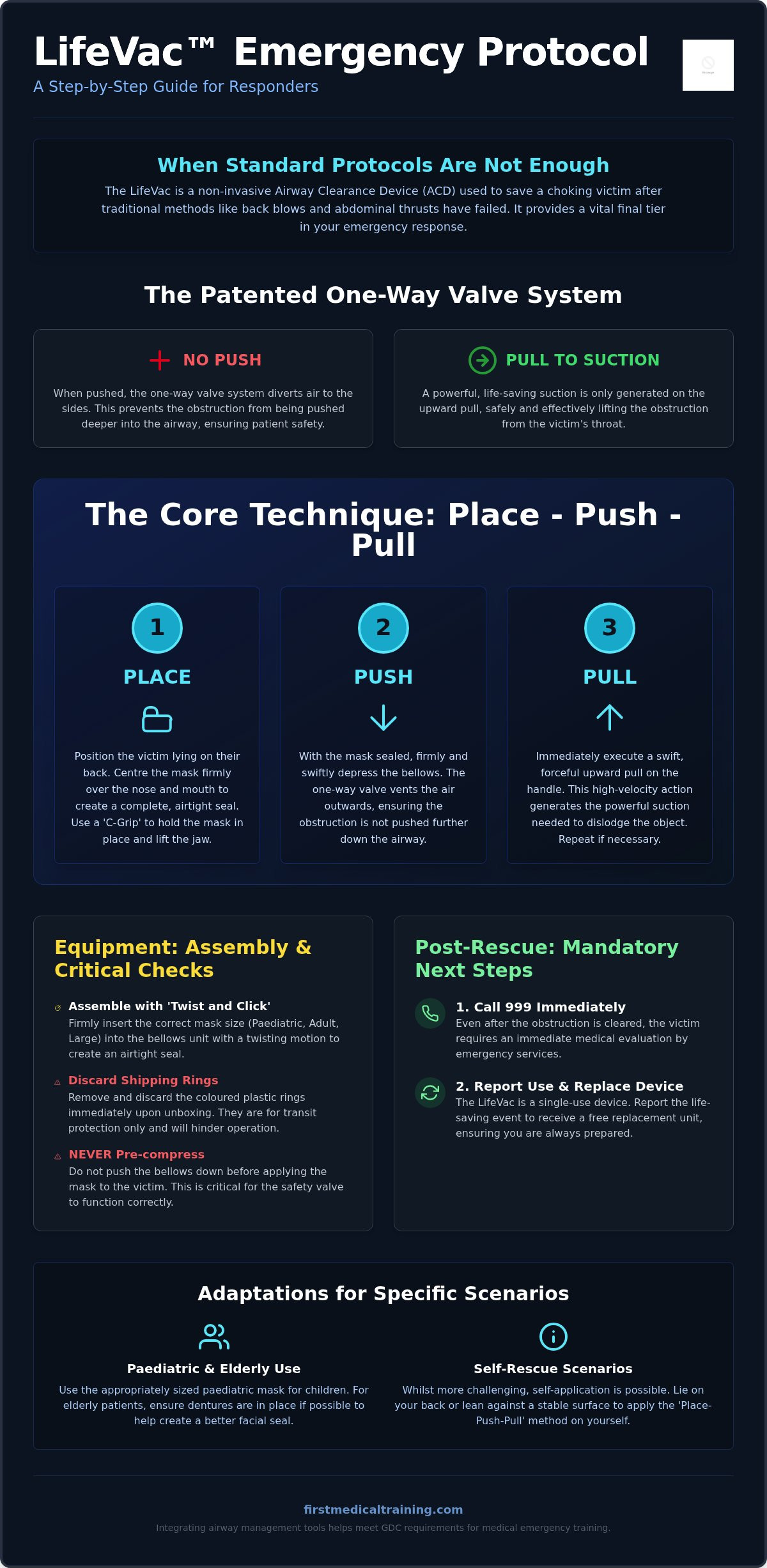
Understanding the physics of the device is crucial for anyone learning how to use lifevac device equipment effectively. Unlike a standard resuscitation mask, the LifeVac features a patented one-way valve system. When the bellows are depressed, the air is forced out through the sides of the valve rather than through the mask. This design ensures that you never inadvertently push the foreign object further down the victim's airway. Suction is only generated during the upward 'pull' phase, creating a powerful vacuum that lifts the obstruction safely.
Unboxing and Component Identification
When you first receive your kit, you'll find the primary bellows unit, a one-way valve, and a selection of mask sizes: paediatric, adult, and large. It's vital to identify these components before an emergency occurs. You must discard the coloured plastic shipping rings immediately; these are only there to protect the unit during transit and will hinder operation during a rescue. Check the expiry dates on the mask seals regularly. Over time, the medical-grade materials can degrade, so maintaining clinical readiness is a core part of your practice's safety audit.
How to Assemble the Unit for Immediate Use
Assembly follows a simple 'Twist and Click' method. Select the appropriate mask size and firmly insert it into the base of the bellows unit with a slight twisting motion. This creates the airtight seal necessary for the vacuum to function. Your LifeVac should be stored where it is easily accessible amongst your other medical emergency equipment. One critical rule to remember: never pre-compress the bellows before the mask is applied to the victim. If you compress it beforehand, you lose the ability to vent air out of the sides, which is the very mechanism that keeps the patient safe. Learning how to use lifevac device components correctly ensures that when seconds count, your equipment works exactly as intended.
The Technique: Executing the Place-Push-Pull Method
When an airway is fully obstructed and traditional methods have failed, your immediate priority is positioning the victim to maximise the device's efficacy. Ideally, the patient should be placed in a supine position, lying flat on their back on a firm surface. This orientation allows gravity to assist in keeping the airway as open as possible whilst providing the stability you need to apply firm pressure. For dental professionals, this may involve reclining the dental chair fully or moving the patient to the floor. Establishing this stable base is an essential step in learning how to use lifevac device technology safely.
The 'Place' phase requires you to centre the mask over the victim’s nose and mouth, ensuring a comprehensive cover. Once the mask is positioned, you move into the 'Push' phase. You must compress the bellows firmly. As established, the internal valve ensures that air vents out the sides, so you aren't pushing the obstruction deeper into the trachea. The final 'Pull' phase is where the rescue occurs. This must be a swift, forceful upward motion. It's not a tentative tug; it requires a deliberate, high-velocity pull to generate the negative pressure necessary to suction the object out of the airway.
Achieving a Perfect Mask Seal
A secure seal is the difference between a successful rescue and a failed attempt. We recommend using the 'C-Grip' technique, where you form a 'C' with your thumb and index finger over the bridge of the mask whilst using your remaining fingers to hook the chin and lift the jaw upwards. This creates a tight vacuum. Facial hair, dentures, or unique facial structures can occasionally break this seal. In these instances, you may need to apply additional downward pressure on the mask rim to maintain the vacuum. A poor seal is the primary reason for ACD failure, so verifying the fit before the 'Pull' phase is vital when mastering how to use lifevac device techniques during a high-pressure rescue.
Rhythm and Repetition
Don't panic if the first 'Pull' doesn't immediately dislodge the debris. If the airway remains blocked, quickly check the mask for any suctioned material, clear it, and repeat the cycle. It's important to maintain a steady, calm behaviour whilst you work through the 'Place-Push-Pull' rhythm. Consistency and speed are your best allies here. Refining these skills through professional first aid courses ensures your team is ready for any eventuality. Continue the cycles until the object is visible in the mask or the victim can breathe independently, always being prepared to transition back to standard BLS if the situation evolves.
Adaptations for Children, Infants, and Self-Use
For pregnant or obese patients, standard choking protocols are often physically impossible to perform effectively. Abdominal thrusts carry a high risk of injury to the foetus or may simply fail due to the rescuer's inability to reach around the victim's torso. In these cases, the LifeVac acts as a critical intervention. Similarly, for elderly patients with fragile bone structures, the device offers a way to clear an airway without the risk of rib fractures or internal bruising often associated with manual thrusts. First Medical Training supplies these devices to ensure that every member of the community, regardless of their physical state, has a viable rescue option.
Paediatric Protocols and Positioning
The paediatric mask is typically intended for use on children weighing over 10kg (approximately 22lbs). When treating a child, you don't need to use the same level of force during the 'push' phase as you would for an adult. The goal is simply to prime the bellows. Ensure the child's head is tilted back slightly to help open the airway before applying the mask. In a nursery or school setting, the transition to the LifeVac should occur immediately if the initial five back blows and five abdominal thrusts fail to clear the obstruction. Speed is the priority, but maintaining a gentle yet firm seal on a smaller face is the key to success.
Self-Administration in an Emergency
If you are alone and find yourself choking, the LifeVac can be used as a self-rescue tool. Learning how to use lifevac device components on yourself requires specific body positioning to ensure the vacuum is effective. You should sit or lean against a wall or the floor to provide the leverage needed to pull the handle forcefully. You'll need to hold the mask firmly against your own face with one hand whilst operating the bellows with the other. It's a challenging manoeuvre, but it's often the only option when help isn't available. You must seek immediate medical attention from 999 or an A&E department following any self-rescue to check for potential airway damage or residual debris.
Post-Rescue Protocols and Device Maintenance
The moment the airway is cleared isn't the end of the emergency. Once you've successfully followed the steps for how to use lifevac device equipment, immediate clinical follow-up is a mandatory requirement. You must call 999 even if the patient appears to be breathing normally and the object has been fully removed. There's always a risk that small fragments of the obstruction have been inhaled into the lungs, potentially leading to aspiration pneumonia. Furthermore, the force of the choking incident itself can cause internal bruising or laryngeal oedema that requires professional medical assessment.
It's vital to remember that the LifeVac is strictly a single-use device. You cannot simply wash the unit and return it to your emergency kit. The high-pressure suction generated during a rescue can compromise the integrity of the one-way valve or the silicone bellows, meaning it might not perform correctly a second time. There's also a significant risk of cross-contamination. To support those who act in a crisis, the manufacturer provides a free replacement unit if you register the 'save' on their website, ensuring your practice stays protected without incurring extra costs.
Clinical Follow-Up and Patient Assessment
After the rescue, monitor the patient's heart rate and respiratory effort whilst waiting for the ambulance. Choking is an intensely traumatic event, so you must also manage the psychological impact on both the victim and the rescuer. Offering reassurance and a quiet space to recover is essential. From a regulatory standpoint, you must document every detail of the incident within your dental practice emergency preparedness logs. Accurate record-keeping is a core part of GDC compliance and helps your team review their performance for future readiness.
Storage and Inspection Routines
Proper storage is the best way to prevent silicone degradation and ensure the device works when needed. Keep your unit in a cool, dry place away from direct sunlight, which can cause the bellows to become brittle or lose elasticity. We recommend adding a monthly check to your surgery's inspection checklists. Look for any visible cracks in the bellows or signs of wear on the mask seals. If your unit is nearing its expiry date or has been deployed, you can purchase a genuine LifeVac replacement kit directly through First Medical Training to maintain your clinical standards.
Integrating LifeVac into Professional Dental Training
Adopting airway clearance technology within a clinical environment requires more than just purchasing the hardware. To be truly effective, the LifeVac must be seamlessly integrated into your existing Basic Life Support (BLS) and Immediate Life Support (ILS) hierarchy. It acts as a critical adjunct, positioned as the final intervention when standard choking protocols fail to dislodge an obstruction. For a dental team, this means ensuring that every member of staff, from the front-of-house receptionists to the senior clinicians, understands the device's location and the specific criteria for its deployment.
Success in a crisis depends on muscle memory and clear communication. During your annual medical emergency refresh, it's essential to conduct hands-on practice with a dedicated training unit. This allows the team to familiarise themselves with the resistance of the bellows and the tactile feedback of the 'Place-Push-Pull' rhythm. Knowing how to use lifevac device equipment in the unique geometry of a dental surgery, where space is often limited, can significantly reduce response times during a real event.
Compliance and GDC Standards
Maintaining high standards of patient safety is a core requirement for GDC registration. Including an anti-choking device in your emergency kit demonstrates a commitment to 'best practice' that is viewed favourably by CQC inspectors and local health boards. You should link your team's device training directly to your GDC CPD requirements for medical emergencies. To ensure consistency, your practice should develop a clear Standard Operating Procedure (SOP). This document should outline the transition from back blows to the LifeVac, ensuring that the clinical team acts as a cohesive unit whilst under pressure.
Booking a Team Training Session
The most effective way to build this competence is through an accredited medical emergencies in dental practice course. These sessions provide the opportunity for practical drills, such as simulating a choking event with a patient reclined in the dental chair. This specific scenario is vital, as it forces the rescuer to manage the patient's head position and the mask seal in a realistic environment. If you're looking to enhance your practice's emergency preparedness, you can contact First Medical Training to organise a bespoke in-practice session. Our instructors provide the expert guidance needed to master how to use lifevac device technology alongside your broader resuscitation skills.
Strengthening Your Practice's Emergency Readiness
Mastering the rhythmic 'Place-Push-Pull' technique ensures you have a reliable final tier of defence when conventional choking protocols fail. By understanding how to use lifevac device technology, you're not just adding a tool to your kit; you're building the clinical confidence required to protect every patient, including those where abdominal thrusts are physically impossible. Integrating this practical knowledge into your annual refresh sessions transforms a theoretical plan into a decisive, life-saving response that protects both your patients and your professional reputation.
First Medical Training has been supplying life-saving equipment since 2006. As specialist dental emergency training providers, we offer GDC-compliant CPD courses designed to meet the rigorous standards of modern clinical practice. Whether you need to equip your surgery with genuine ACD units or upskill your entire team through hands-on drills, we're here to act as your trusted partner in professional resuscitation.
Enquire about LifeVac devices and Emergency Training today to ensure your team is prepared for any airway crisis. You have the power to make a difference when seconds count.
Frequently Asked Questions
Can the LifeVac be used on a person in a dental chair?
Yes, the LifeVac is highly effective for use on patients in a dental chair. Ideally, you should recline the chair fully to place the victim in a supine position. This orientation provides the necessary stability to apply the mask and execute the 'Place-Push-Pull' method. Understanding how to use lifevac device equipment in a clinical setting ensures that your team can respond quickly without needing to move a patient to the floor.
Is there an age or weight limit for using the LifeVac device?
The paediatric mask is specifically designed for children weighing 10kg or more. There is no upper weight or age limit for the adult or large masks. This makes the device a versatile choice for elderly patients or those with physical conditions that make manual thrusts difficult. It's essential to select the correct mask size from your kit to ensure a perfect vacuum seal during the rescue process.
Do I still need to perform back blows if I have a LifeVac?
You must always follow standard UK Resuscitation Council protocols first. This includes five back blows followed by five abdominal thrusts. The LifeVac is intended as a final tier in the emergency response hierarchy, to be used only when traditional manual methods have failed to clear the obstruction. Integrating the device into your existing BLS training ensures a comprehensive safety net for both your patients and staff.
How often should I replace the masks on my LifeVac unit?
You should replace the masks every two to three years or according to the expiry date printed on the packaging. The medical-grade silicone can degrade over time, especially if stored in areas prone to heat or direct sunlight. Regular monthly inspections are vital to check for any loss of elasticity or cracks in the bellows. If you've used the device in an emergency, you must replace the entire unit immediately.
Can the LifeVac cause injury to the ribs or internal organs?
No, the LifeVac is designed to be non-invasive and does not cause the rib fractures or internal bruising often associated with abdominal thrusts. Because the device uses suction rather than physical compression of the torso, it's a much safer alternative for vulnerable patients. This includes the elderly or those with fragile bone structures. It provides an effective way to clear the airway without the risk of causing secondary physical trauma.
What should I do if the object is only partially dislodged?
If the object is only partially dislodged, you must immediately clear any debris from the victim's mouth and the mask before repeating the cycle. Continue the 'Place-Push-Pull' rhythm until the airway is completely clear or the patient can breathe independently. Even if the person seems fine, you must wait for the 999 emergency services to arrive. Professional medics will check for any remaining fragments or secondary complications like aspiration.
Is the LifeVac device recognised by the NHS or Resuscitation Council UK?
The LifeVac is a registered Class I medical device with both CE and UKCA marking. While the Resuscitation Council UK prioritises manual methods like back blows, they acknowledge the role of suction-based airway clearance devices in specific professional environments. Many UK dental practices and care homes now include the device in their emergency kits as a 'best practice' measure. It provides a vital backup when traditional techniques prove unsuccessful.
Can I use the LifeVac on someone who is pregnant or obese?
Yes, the LifeVac is particularly useful for patients who are pregnant or obese. In these cases, performing effective abdominal thrusts is often physically impossible or carries a high risk of injury. Learning how to use lifevac device technology provides a safe, non-invasive way to clear an airway obstruction without needing to reach around the patient's torso. It ensures that every patient in your care has a viable rescue option during a crisis.