

Hypoglycaemia Management in Dental Practice: A Guide for 2026

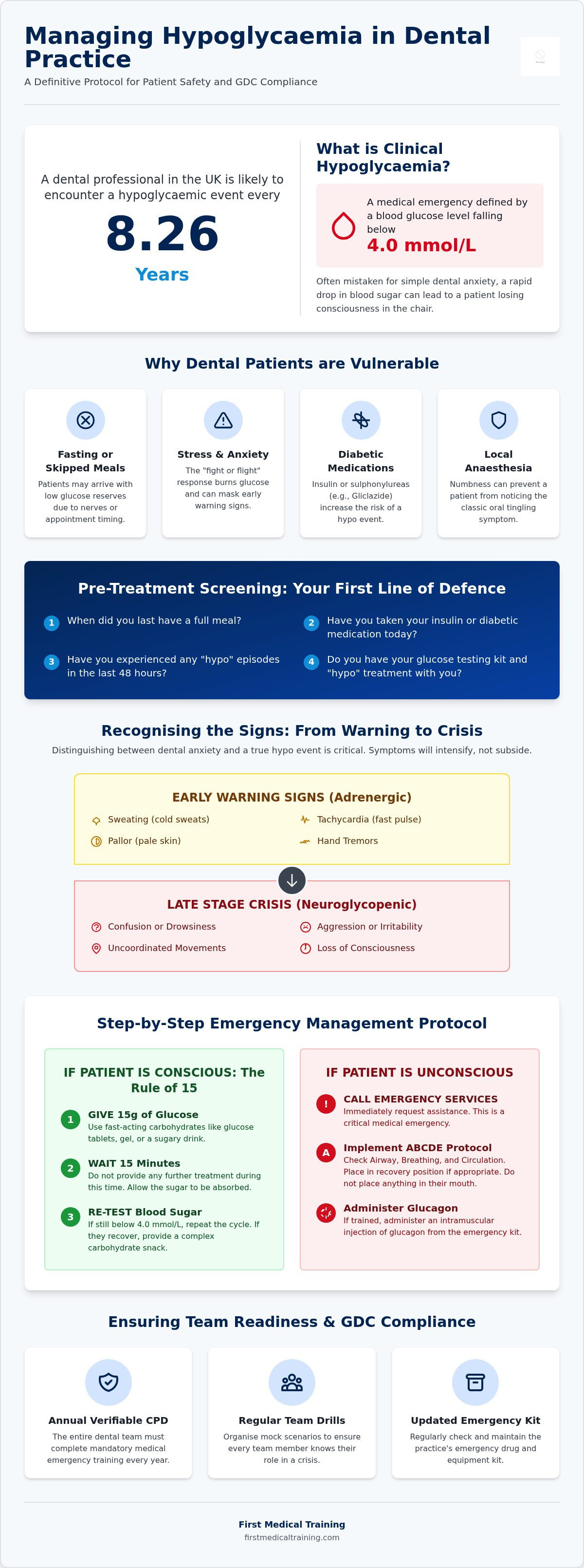
Did you know that a dental professional in the UK is likely to encounter a hypoglycaemic event every 8.26 years? While it might not happen every week, the high-stress environment of a clinical setting makes hypoglycemia management in dental practice a critical skill for every member of the team. It's often difficult to distinguish the early signs of a "hypo" from simple dental anxiety or a common faint, but misjudging the situation can lead to a patient losing consciousness in your chair.
We understand the pressure of ensuring your emergency drug kit is compliant whilst managing a patient in distress. This guide provides a definitive, step-by-step protocol for identifying and treating hypoglycaemia in 2026, helping you maintain patient safety and secure your verifiable CPD. You'll learn how to differentiate between various types of collapse, master the "Rule of 15" for conscious patients, and gain the confidence to administer glucagon if the situation becomes severe. By the end of this article, you'll have a clear roadmap to handle these emergencies with professional authority and GDC-compliant precision.
Key Takeaways
- Identify clinical hypoglycaemia when blood glucose falls below 4.0 mmol/L and understand how dental anxiety can mask or accelerate a dangerous drop.
- Master the distinction between early adrenergic warning signs, such as tachycardia, and late-stage neuroglycopenic symptoms like confusion and aggression.
- Learn to perform a rapid differential diagnosis between syncope and hypoglycaemia to ensure immediate and correct clinical intervention, crucial for effective hypoglycaemia management in dental practice.
- Implement a structured ABCDE management protocol to stabilise the patient and effectively utilise emergency glucose or glucagon in the dental chair.
- Maintain GDC compliance by meeting annual verifiable CPD requirements and organising regular team-based mock drills for medical emergencies.
Understanding Hypoglycaemia in the Dental Setting
Clinical hypoglycaemia is defined as a blood glucose level falling below 4.0 mmol/L. In a surgery environment, this drop can happen rapidly and without much warning. Understanding Hypoglycaemia is essential because patients on specific medications, particularly Type 1 and Type 2 diabetics using insulin or sulphonylureas, are at a significantly higher risk. These medications, such as Gliclazide, stimulate the pancreas to produce insulin regardless of current blood sugar levels. Effective hypoglycemia management in dental practice begins with a robust pre-treatment screening. You should update medical histories at every visit, specifically asking when the patient last ate and if they've taken their medication as prescribed. This simple step identifies vulnerable individuals before they even enter the surgery.
Why Dental Patients are Vulnerable
Many patients arrive for appointments in a fasted state. They might skip breakfast due to nerves or miss lunch for a mid-afternoon slot. This lack of fuel, combined with the "fight or flight" response, creates a metabolic drain. Stress is a heavy metabolic burden. Adrenaline released during dental anxiety can mask the early warning signs of a "hypo," making the eventual collapse appear sudden and more severe. It's common for the body to burn through glucose reserves faster during a difficult extraction or long root canal treatment. If a patient is numb from local anaesthesia, they might not notice the classic tingling in their mouth, which is often one of the first indicators of falling blood sugar. To mitigate these risks, consider the following screening questions:
- When did you last have a full meal?
- Have you taken your insulin or diabetic medication today?
- Have you experienced any "hypo" episodes in the last 48 hours?
- Do you have your glucose testing kit and "hypo" treatment with you?
GDC Standards for Emergency Readiness
The General Dental Council (GDC) is clear about your professional obligations. Every member of the dental team must be capable of responding to a crisis with confidence. This requirement is why completing a medical emergencies in dental practice course is a mandatory part of annual training. It isn't just about the clinician; nurses and receptionists often spot the subtle changes in a patient's behaviour first. Vigilance is your first line of defence. From a legal standpoint, failing to maintain an updated emergency kit or lacking current training can have serious consequences for your registration. Professional hypoglycemia management in dental practice requires a proactive approach where the whole team knows their role before the emergency occurs. You have a duty of care to ensure your practice remains a safe environment for every patient, regardless of their medical complexity.
Recognising Symptoms: Early Signs vs. Late Stage Crisis
Recognising a crisis before it escalates is the cornerstone of effective hypoglycemia management in dental practice. In the early "adrenergic" phase, the body releases adrenaline to counter falling glucose. This produces sweating, pallor, and tachycardia. For a patient already nervous about a procedure, these signs are easily dismissed as routine dental anxiety. However, whilst nerves usually subside once treatment begins, hypoglycaemic symptoms will persist and intensify. Identifying this distinction early prevents the situation from progressing to a life-threatening collapse.
Physical Indicators in the Chair
Monitoring a reclined patient requires a keen eye for subtle physiological shifts. You should observe the forehead for "cold sweats," a classic sign of sympathetic nervous system activation. Unlike the general perspiration of a warm surgery, this is often localised and accompanied by a noticeable hand tremor. The patient might struggle to hold a rinse cup or show uncoordinated movements. Hypoglycaemic unawareness occurs when a long-term diabetic patient no longer experiences the early adrenergic warning signs of a glucose drop, leading directly to severe neuroglycopenic symptoms or collapse. Following ADA guidelines on managing diabetic patients ensures you are looking for the right clinical markers during routine care.
Behavioural Changes to Watch For
As glucose levels continue to fall, the brain enters a state of "neuroglycopenia." This is when the patient’s personality may shift. You might notice sudden irritability or a lack of cooperation during a complex procedure. A patient who was previously chatty may become unusually withdrawn or lethargic, often referred to as a "Quiet Hypo." They might have difficulty concentrating on simple instructions, such as "open wider" or "turn your head."
If left untreated, these symptoms progress to slurred speech and uncharacteristic aggression. This is a critical juncture. The transition from disorientation to semi-consciousness can happen in minutes. Late-stage signs include seizures and a total loss of consciousness. Being able to spot these shifts early is a skill honed through a Medical Emergencies in a Dental Practice Course, where simulation helps you recognise the difference between a difficult patient and a medical emergency. Once consciousness is lost, the management protocol shifts from oral glucose to emergency injections, making early recognition your most valuable tool.
Differential Diagnosis: Hypoglycaemia vs. Syncope
Distinguishing between syncope and a hypoglycaemic event is a common challenge in the clinical environment. Syncope is the most frequent medical emergency in UK primary dental care, but mistaking a hypo for a simple faint is a dangerous error. The onset of syncope is typically rapid, often triggered by a specific stimulus like the sight of a needle. In contrast, hypoglycemia management in dental practice often involves identifying a more gradual decline. A patient might feel progressively "unwell" over several minutes rather than collapsing instantly. If you are ever in doubt, it is always safer to treat for low blood sugar, as administering glucose is harmless in most collapse scenarios, whereas withholding it from a diabetic patient can be fatal.
The physiological markers also differ. When checking the pulse, syncope often presents with a thready, weak, and slow (bradycardic) pulse. Early hypoglycaemia frequently features a full or bounding pulse due to the adrenaline surge. The most definitive clinical difference lies in the recovery phase. A patient experiencing syncope will usually regain consciousness and start feeling better within seconds of the dental chair being reclined. If the patient does not respond to being placed in the supine position, or if their condition continues to deteriorate, you must assume a more serious metabolic cause is at play.
Key Distinguishing Factors
The only way to definitively confirm blood sugar levels is via a Blood Glucose Monitor (BGM). Every dental practice emergency preparedness plan must include a functioning BGM with in-date test strips and lancets. Relying on visual signs alone is insufficient. Whilst syncope may be preceded by a "vasovagal aura" of lightheadedness and nausea, hypoglycaemia presents with the specific adrenergic signs of cold sweats and tremors. Following American Dental Association guidelines on managing hypoglycemia provides a structured framework for these diagnostic hurdles, ensuring your team doesn't waste vital seconds on guesswork.
Managing Diagnostic Uncertainty
When faced with uncertainty, use the "Rule of 15" as both a diagnostic and treatment tool. If the patient is conscious and able to swallow, provide 15g of fast-acting carbohydrate and re-test after 15 minutes. If their blood sugar remains below 4.0 mmol/L or their symptoms don't improve, escalate to your emergency drug kit and call 999 immediately. Prompt action is essential to prevent neurological damage. Once the crisis is resolved, you must document the event in the clinical notes and inform the patient's GP. This ensures the medical team can review the patient's medication and prevent a recurrence during future dental visits.
The Dental Protocol: Step-by-Step Management
Effective hypoglycemia management in dental practice requires immediate, decisive action the moment a crisis is suspected. Your first priority is to stop all dental treatment and clear the mouth of any instruments, cotton wool rolls, or debris. This eliminates the risk of aspiration if the patient’s condition deteriorates. Once the mouth is clear, perform a rapid assessment using the ABCDE approach (Airway, Breathing, Circulation, Disability, Exposure). This structured framework ensures you don't overlook life-threatening airway issues whilst focusing on the metabolic drop. If the patient is conscious and can swallow safely, they should be sat upright to help them manage their own airway during treatment.
Management of the Conscious Patient
For a patient who is awake and cooperative, you must provide 15 to 20g of fast-acting carbohydrate immediately. Practical sources within a UK dental practice include 150ml of a sugary (non-diet) drink or four to five glucose tablets. After administration, wait 15 minutes and re-test their blood sugar levels using your practice monitor. If the reading remains below 4.0 mmol/L, repeat the dose. Once the patient has recovered and their blood sugar is stable, provide a long-acting carbohydrate, such as two digestive biscuits, to prevent a secondary drop. This protocol ensures the patient is stable enough to leave the surgery safely once they've been fully reviewed.
Emergency Response for Unconscious Patients
If the patient loses consciousness or is unable to swallow safely, you must escalate the response instantly. Call 999 and clearly state that you're managing a "Diabetic Emergency." Whilst waiting for the ambulance, place the patient in the recovery position to protect their airway and maintain a clear passage for breathing. The dental nurse should prepare and administer 1mg of Glucagon via intramuscular injection, typically into the mid-thigh or upper arm. Oral glucose must never be administered to an unconscious or semi-conscious patient due to the high risk of airway obstruction and aspiration. Ensure your entire team is prepared for these critical moments by booking a Medical Emergencies in a Dental Practice Course today.
Post-Emergency Care and Referral
Recovery doesn't end when the patient regains consciousness. You must advise the patient not to drive and insist they contact their diabetic specialist or GP for a medication review. Every detail of the event must be recorded in the clinical notes, including the time of onset, the doses of glucose or glucagon administered, and the blood sugar readings. In some cases, a RIDDOR report may be necessary if the event resulted from a workplace injury. It's also professional best practice to review how this protocol aligns with your cardiac arrest management in dental practice procedures. Regular team debriefs after an emergency help identify areas for improvement, ensuring your practice remains a centre of clinical excellence and patient safety.
Ensuring Team Readiness and GDC Compliance
Mastering the clinical steps is only half the battle. True hypoglycemia management in dental practice requires a systemic approach where every staff member knows exactly how to react. Readiness is a collective effort. It isn't enough for the clinician to be competent if the dental nurse cannot locate the Glucagon or the receptionist isn't trained to provide clear information to emergency services. A well-organised practice treats emergency preparedness as a continuous cycle of education and audit rather than a once-a-year box-ticking exercise.
The Annual Training Cycle
The General Dental Council (GDC) requires all registrants to remain up to date with medical emergencies. Current gdc cpd requirements medical emergencies standards recommend at least ten hours of training per five-year cycle, with at least two hours completed annually. Whilst online modules provide foundational theory, in-practice training is far superior. Rehearsing in your actual clinical environment allows the team to identify physical obstacles, such as the distance to the emergency kit or the layout of the recovery area. You should also ensure that new staff members are inducted into your specific emergency protocols on their first day. They shouldn't have to wait for the next annual session to learn where the blood glucose monitor is kept.
Mock drills are the most effective way to build "muscle memory" for the team. Running a surprise "hypo" simulation once a quarter keeps the protocol fresh. These drills should involve the entire team, from the front-of-house staff to the principal dentist. They provide a safe space to make mistakes and refine your response times, ensuring that when a real crisis occurs, the reaction is calm, methodical, and professional.
Emergency Equipment Maintenance
Your emergency drug kit is only useful if the contents are functional and in-date. Assigning a dedicated "Safety Lead" to audit the kit monthly is a professional standard that prevents life-threatening oversights. Glucagon, for example, has a strictly defined shelf life that changes significantly if it isn't stored in a refrigerator. You must also ensure your blood glucose monitor (BGM) is calibrated according to the manufacturer's instructions and that test strips are replaced before they expire. A failed BGM during a crisis can lead to diagnostic paralysis, wasting precious seconds. To ensure your practice meets every regulatory and clinical standard, you can book your team’s Medical Emergencies in a Dental Practice Course today to ensure total compliance.
Finally, recognise the emotional toll an emergency takes on your staff. Managing a hypoglycaemic collapse is stressful. Establishing a supportive mental health first aid dental practice culture ensures that team members can debrief and recover after a crisis. This holistic approach to safety protects your patients, your registration, and your most valuable asset: your people. For patients living with chronic health conditions, you can discover Special Risk Term to learn how they help individuals with pre-existing medical issues secure specialised life insurance.
Securing Patient Safety Through Clinical Readiness
Effective hypoglycemia management in dental practice is about more than just having the right drugs in a kit. It requires a sharp clinical eye to distinguish a metabolic collapse from routine anxiety and the confidence to act when every second counts. By mastering the ABCDE approach and maintaining a rigorous monthly audit of your emergency equipment, you protect both your patients and your professional registration.
True readiness is a team effort that relies on consistent, high-quality education. Our training programmes are fully aligned with GDC and RCUK standards, delivered by professional UK-wide instructors who understand the practical realities of a busy surgery. We provide the verifiable CPD certificates your team needs to meet annual compliance requirements with ease. Don't wait for a real-world crisis to test your practice protocols.
Book Your GDC-Compliant Medical Emergencies Course today and lead your practice with absolute clinical confidence. You already have the dedication to care for your patients; we're here to provide the expert tools and knowledge to ensure their safety in every scenario.
Frequently Asked Questions
What should be in a dental practice emergency kit for hypoglycaemia?
Your emergency kit must include a functioning blood glucose monitor, spare lancets, and in-date test strips. For treatment, you need a minimum of 45g of fast-acting carbohydrate, such as glucose gel or tablets, and a 1mg Glucagon injection kit. These items are essential for effective hypoglycemia management in dental practice and must be checked monthly for expiry. Maintaining this kit ensures your practice remains compliant with RCUK and GDC standards.
How much glucose should I give a patient during a hypo?
You should administer 15g to 20g of fast-acting carbohydrate if the patient is conscious. This is equivalent to four or five Glucotabs or 150ml of a sugary, non-diet drink. This specific dose is known as the "Rule of 15." It provides enough glucose to raise blood sugar levels without causing an excessive spike. Always re-test the patient after 15 minutes to confirm their levels have risen above 4.0 mmol/L.
Can I use a glucagon pen on a patient who is not my regular patient?
Yes, you can and should administer Glucagon to any patient in a life-threatening crisis, regardless of their registration status. In an emergency, your professional duty is to preserve life. Registered dental professionals are trained and authorised to use the emergency drugs in their kit to manage acute medical events. Delaying treatment to verify registration could lead to permanent neurological damage or even death in a severe case.
What is the GDC requirement for medical emergency training?
The GDC mandates that all dental registrants must be trained in dealing with medical emergencies. They recommend completing at least 10 hours of verifiable CPD in this area every five-year cycle, with a minimum of two hours completed each year. This training ensures your team remains competent in hypoglycemia management in dental practice and other common surgery crises, meeting the 2026 clinical standards for UK primary care settings.
How do I tell the difference between a faint and low blood sugar?
A faint (syncope) usually resolves within seconds once the patient is laid flat and their legs are elevated. If the patient remains confused or unconscious after reclining the chair, you must suspect a hypoglycaemic event. Use your blood glucose monitor to confirm the diagnosis immediately. A thready pulse often indicates syncope, whilst a bounding pulse is more common in the early adrenergic stage of hypoglycaemia.
Should I call an ambulance for every hypoglycaemic event in the surgery?
An ambulance is not required for every event if the patient recovers fully and quickly with oral glucose. However, you must call 999 if the patient is unconscious, has a seizure, or fails to respond to the initial glucose dose. If you are ever in doubt about the patient’s stability or if they have no one to escort them home, seeking emergency medical assistance is always the safest clinical decision.
What happens if a patient refuses treatment during a hypo due to confusion?
Confusion and aggression are clinical symptoms of neuroglycopenia, meaning the patient may lack the capacity to make decisions. If their blood sugar is dangerously low, you must act in their best interest to prevent harm. This often involves calling 999 and attempting to administer glucose or glucagon as appropriate. Document the patient's behaviour and your clinical reasoning clearly in the records to support your emergency intervention.