

Creating a Robust Dental Emergency Response Plan: The 2026 UK Compliance Guide

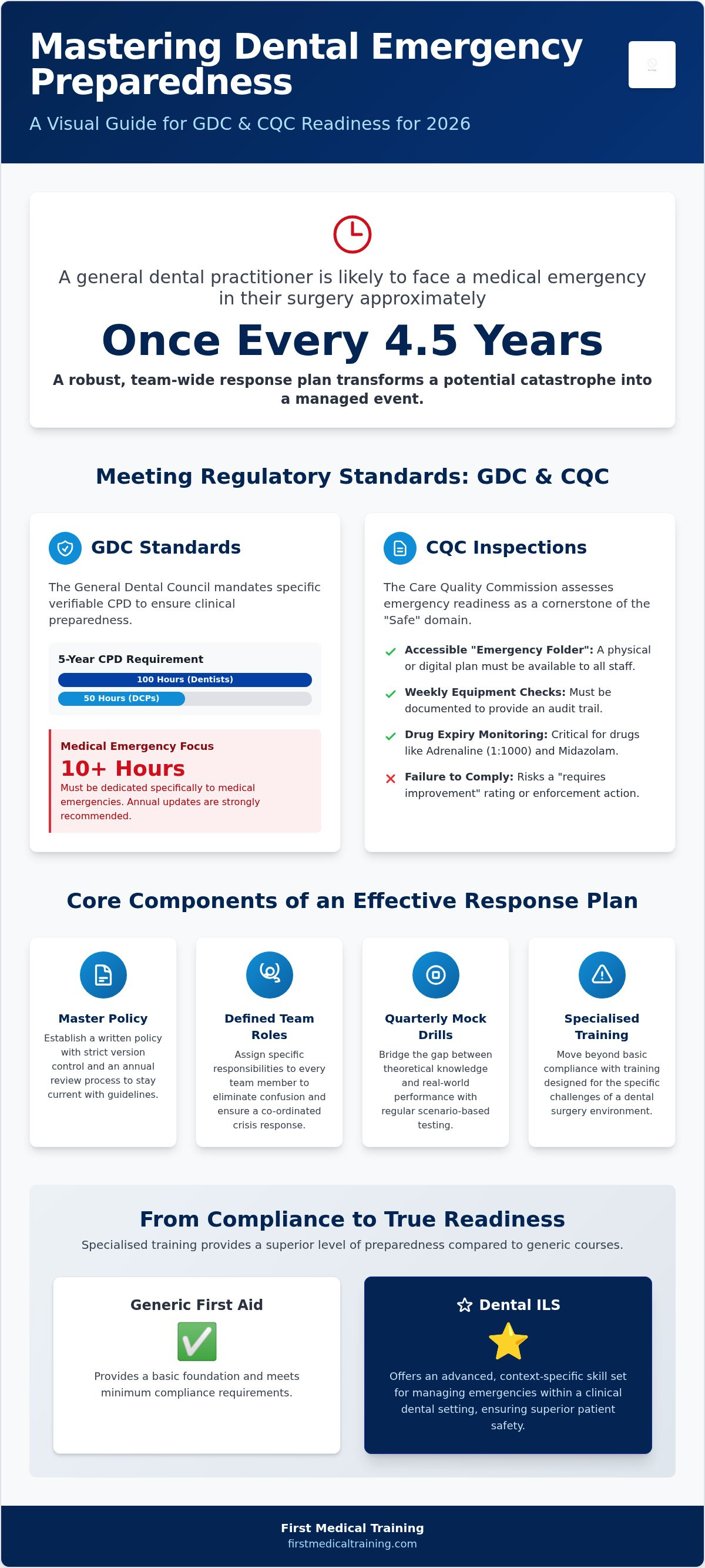
Statistics show that a general dental practitioner is likely to encounter a medical emergency in their surgery approximately once every four and a half years. Whilst that might seem infrequent, the moment a patient collapses, those years of calm can instantly vanish into a blur of panic and uncertainty. To prevent a crisis from becoming a catastrophe, your practice needs more than just a folder on a shelf; it requires a living, breathing dental emergency response plan that every team member understands and can execute without hesitation.
We understand that keeping up with shifting GDC requirements and CQC inspection standards for 2026 can feel like a moving target. It is natural to worry about how your team might perform under pressure or whether your emergency drug kit is truly compliant with the latest July 2026 mandates. This guide will help you master the essentials of emergency preparedness, ensuring your patients remain safe and your practice meets regulatory standards with absolute confidence.
We will explore the mandatory equipment and drugs required for 2026, including the vital role of whole-team training. You will learn how to transform your annual CPD into a structured system where every staff member knows their specific role, moving your surgery from simple compliance to a state of true professional readiness.
Key Takeaways
- Understand the latest 2026 GDC and CQC requirements for verifiable CPD to ensure your practice remains fully compliant during inspections.
- Learn how to build a robust dental emergency response plan that transforms static protocols into a clear, actionable system for the entire team.
- Define specific responsibilities for every staff member to eliminate confusion and ensure a calm, co-ordinated response during a clinical crisis.
- Discover why quarterly mock drills and scenario-based testing are essential for bridging the gap between theoretical knowledge and real-world performance.
- Identify why specialised Dental Immediate Life Support (ILS) training provides a superior level of preparedness compared to generic first aid courses.
Understanding the Regulatory Framework for Dental Emergency Preparedness
A dental emergency response plan is far more than a simple list of phone numbers or a collection of drug expiry dates. It is a comprehensive, written protocol that dictates exactly how your clinical and non-clinical staff should behave when a patient's life is at risk. Having a documented strategy ensures that your practice moves beyond individual knowledge and into a state of collective readiness. When every second counts, a structured plan eliminates the hesitation that often leads to clinical errors or delays in life-saving treatment.
Implementing a formalised plan is a critical step in reducing clinical negligence risks. In the eyes of the law and professional regulators, "knowing what to do" is insufficient if that knowledge hasn't been codified into a practice-wide standard. By defining clear pathways for everything from a simple faint to a full cardiac arrest, you create a safer environment for your patients. Understanding What is a Dental Emergency? is the first step in categorising these risks and ensuring your team can distinguish between urgent clinical needs and life-threatening medical crises.
GDC Standards and Verifiable CPD
The General Dental Council (GDC) maintains strict standards regarding medical emergency preparedness. Dentists are required to complete 100 hours of verifiable CPD every five years; dental care professionals (DCPs) must complete 50 hours. Crucially, at least 10 of these hours must be dedicated specifically to medical emergencies. Whilst the GDC allows these hours to be spread across a cycle, the Resuscitation Council UK and most indemnity providers strongly recommend an annual training update to ensure skills remain sharp.
Staying compliant means more than just ticking a box once a year. Your training must be verifiable and reflect the specific environment of a dental surgery. For a deeper look at how to structure your learning, you can review our guide on GDC CPD requirements for medical emergencies. Following these guidelines ensures that your dental emergency response plan is backed by the latest evidence-based practice and officially recognised certification.
The Legal Necessity of a Written Plan
The Care Quality Commission (CQC) views emergency preparedness as a cornerstone of the "Safe" domain during inspections. Inspectors expect to see a physical or digital "Emergency Folder" that is easily accessible to all staff, including temporary or locum members. This documentation must prove that your equipment is checked weekly and that your emergency drugs, such as Adrenaline (1:1000) and Midazolam, are within their use-by dates. If you cannot produce a written dental emergency response plan during an inspection, you risk a "requires improvement" rating or even enforcement action.
Documentation provides the "audit trail" that proves your practice is well-led. It should include version control to show that protocols are reviewed annually or whenever GDC guidance shifts. This written record protects the practice owner by demonstrating that all reasonable steps were taken to train the team and maintain equipment, providing a robust defence against potential litigation following a clinical incident. Beyond clinical safety, maintaining professional standards in every department is key; many surgeries partner with MedValue for specialised revenue cycle management to ensure their billing and administrative systems remain equally efficient and compliant.
Core Components of an Effective Dental Emergency Response Plan
Every robust dental emergency response plan begins with a master Medical Emergency Policy. This document is the foundation of your practice's safety culture, but it must be more than a static file. To remain compliant, the policy requires strict version control and a formal annual review process. This ensures that any shifts in clinical guidance, such as the updated July 2026 drug protocols, are immediately integrated into your team's workflow. A well-maintained policy provides clear instructions on how to manage the transition from a routine appointment to a life-saving intervention.
Your plan must also align with the British Dental Association guidelines, which emphasise the importance of having both the right tools and the right knowledge. Without a documented structure, even the most advanced equipment is useless in a high-pressure scenario. By centralising your protocols, you ensure that locum staff and new hires can step into their roles with minimal friction.
Essential Emergency Drugs and Equipment
A standardised drug kit is mandatory for every UK surgery. As of July 2026, your kit must include Adrenaline (1:1000) for anaphylaxis, Aspirin (300mg) for cardiac incidents, Glucagon (1mg) for hypoglycaemia, and Midazolam for prolonged seizures. These should be organised in a way that allows for rapid identification; many practices now use colour-coded bags or tiered trays to prevent confusion during a collapse.
Oxygen is equally vital. You must have a medical oxygen cylinder capable of delivering a flow rate of at least 15 litres per minute, equipped with appropriate tubing and non-rebreather masks. Beyond the basics, modern plans now incorporate advanced life-saving technology. Whilst an Automated External Defibrillator (AED) is a standard requirement, many practices are now choosing to include the LifeVac anti-choking device in their primary response kits. This provides a non-invasive solution for airway obstructions when standard back blows or abdominal thrusts fail. Ensuring your team is confident with this emergency equipment is a hallmark of a truly prepared practice.
The Action Plan Document
In a crisis, nobody has time to read a ten-page policy. You should create a one-page "Emergency Quick-Reference" sheet and laminate a copy for every surgery and the reception desk. This sheet acts as the tactical arm of your dental emergency response plan. It should provide immediate, "at-a-glance" instructions for the first three minutes of an emergency before the paramedics arrive.
Crucial details to include on this reference sheet are:
- The exact practice address and postcode for the emergency operator.
- A "What3Words" location for the specific practice entrance to help the ambulance crew find you faster.
- The location of the AED and the primary emergency drug kit.
- Contact numbers for the nearest local hospital A&E department.
Daily and weekly checking protocols are the final piece of the puzzle. Assigning a specific staff member to verify drug expiry dates and oxygen levels ensures that your kit is always ready for use. These checks should be recorded in a logbook that the CQC can inspect, proving that your preparedness is active rather than passive.
Defining Team Roles and Responsibilities During a Crisis
A sophisticated dental emergency response plan is only as effective as the team executing it. In the high-pressure environment of a clinical collapse, the absence of clear leadership leads to "role confusion," where multiple people attempt the same task whilst critical actions are missed. Assigning specific roles during your annual training ensures that every staff member, from the senior associate to the newest apprentice, knows exactly where to stand and what to do when an alarm is raised.
The First Responder is usually the individual who first notices the patient is in distress. Their primary duty is to stay with the patient and provide initial life support whilst vocally alerting the rest of the practice. Once help arrives, the role of Team Leader must be established. Whilst this is traditionally the dentist, it is often beneficial for the clinician to delegate hands-on tasks like chest compressions. This allows them to maintain a "helicopter view" of the situation, making critical decisions about drug administration and monitoring the patient's airway.
The Equipment Officer takes responsibility for the hardware of the rescue. They must immediately fetch the AED, the medical oxygen, and the emergency drug kit. Their role includes preparing the equipment for use, such as attaching the AED pads or setting the oxygen flow rate to the required 15 litres per minute. By having one person dedicated to the kit, you avoid the chaos of multiple hands reaching for the same bag.
The Receptionist’s Role in an Emergency
Non-clinical staff are often the unsung heroes of a successful medical emergency response. As the Communications Officer, the receptionist manages the interface between the practice and the emergency services. This involves making the 999 call and providing concise, accurate information to the operator. They must be prepared to give the practice address, the specific nature of the emergency, and any "What3Words" coordinates you've included in your plan.
Beyond the phone call, the receptionist must manage the "front of house" environment. This includes clearing the waiting room of other patients to maintain the dignity of the person in distress and ensuring the entrance is clear for the ambulance crew. Meeting the paramedics at the door is a simple but vital task; it ensures there is zero delay in the crew reaching the surgery. This level of coordination is what separates a chaotic event from a professional, life-saving intervention.
Managing the Human Element: Stress and Mental Health
The "freeze" response is a natural physiological reaction to extreme stress, but it can be mitigated through rehearsed protocols. A well-structured dental emergency response plan provides a mental safety net that helps staff push through panic. However, the work doesn't end when the ambulance leaves. A clinical crisis can have a lasting impact on the team's confidence and wellbeing, especially if the outcome was distressing.
Post-incident debriefing is essential for staff recovery. It allows the team to talk through the event, identify what went well, and address any feelings of guilt or inadequacy. Investing in mental health first aid for dental teams provides your staff with the tools to support one another after a traumatic event. This human-centric approach ensures that your practice remains resilient, compassionate, and ready to provide care even after the most challenging days.
Implementing Mock Drills and Scenario-Based Testing
Theoretical knowledge often deserts even the most experienced clinicians under pressure. You can read every manual and attend every lecture, but unless your team physically moves through the surgery to fetch equipment and administer care, the response will likely be fragmented. Your dental emergency response plan must be stress-tested through regular mock drills to ensure that the protocols you've written actually work in the unique physical layout of your practice.
Scheduling quarterly "surprise" drills is the gold standard for maintaining readiness. These sessions don't need to be long; a focused fifteen-minute simulation followed by a brief discussion is often more effective than a full day of theory. By varying the time of day and the surgery location, you test the team's ability to react when they are at their busiest. Recording the outcomes of these drills is also a vital compliance task, providing the CQC with clear evidence that your practice is "well-led" and takes patient safety seriously.
How to Run a Successful Mock Emergency
To begin a drill, select a specific scenario and a "patient" (usually a staff member or a manikin). Use a stopwatch to measure the time from the initial alert to the moment the AED is turned on or the oxygen is ready. This data provides an objective measure of your team's performance. During the debrief, look for "bottlenecks" that could cost lives. Is the emergency kit stored behind a heavy door that's difficult to open? Is the oxygen cylinder too heavy for a single staff member to carry safely? Identifying these physical hurdles during a drill allows you to refine your dental emergency response plan before a real crisis occurs.
Scenario-Based Training Examples
High-probability events should form the core of your testing. This includes syncope management, which is the most common emergency you will face. Practising the transition from a seated position to a supine position with legs elevated is essential for preventing a simple faint from escalating. You should also focus on cardiac arrest management, specifically how to perform high-quality compressions in the confined space of a dental chair.
Other scenarios should include managing a choking emergency in the waiting room, where the use of an anti-choking device like the LifeVac can be simulated. Handling a diabetic emergency, such as hypoglycaemia in a conscious but confused patient, tests your team's ability to recognise subtle symptoms and administer oral glucose quickly. These varied exercises build a "muscle memory" that overrides the natural instinct to panic. If you want to ensure your team is prepared for any eventuality, you can book your next team training session to bring professional, scenario-based learning directly into your surgery.
Finally, every drill must be documented in your practice CPD log. This record should include the date, the staff involved, the scenario tested, and any improvements made to your procedures as a result. This proactive approach ensures that your emergency response is an evolving system rather than a forgotten document, keeping your practice at the forefront of 2026 clinical standards.
Professional Training: Moving Beyond Basic Compliance
Meeting the minimum regulatory requirements is the floor of professional practice, not the ceiling. Whilst Basic Life Support (BLS) provides a necessary foundation for any healthcare setting, it often fails to address the specific complexities of a dental surgery. Moving to Dental Immediate Life Support (ILS) ensures that your team isn't just following a generic algorithm but is instead prepared for the unique challenges of treating a patient in a dental chair. This higher level of training bridges the gap between simple awareness and clinical mastery.
The most effective way to validate your dental emergency response plan is through in-practice training. Generic off-site courses are often held in sterile classrooms that bear little resemblance to your surgery. By training in your own environment, your team can practise with the actual equipment they will use in a crisis. They learn exactly where the oxygen is stored, how the AED fits into the surgery layout, and who is responsible for grabbing the drug kit from the central cupboard. This contextual learning is what builds true confidence; it ensures that the first time a staff member handles an emergency drug isn't during a real-life collapse.
Accredited Dental Training Solutions
Our "Medical Emergencies in a Dental Practice Course" is designed to act as the catalyst for your practice's safety culture. It provides the verifiable CPD required by the GDC whilst focusing on the practical application of life-saving skills. For clinicians, Dental ILS offers advanced training in airway management and AED integration, ensuring you are prepared for the most complex scenarios. These courses are regularly updated to reflect the latest 2026 standards, giving you peace of mind that your certification will stand up to CQC scrutiny during your next inspection.
Equipping Your Practice for Success
A well-trained team requires reliable hardware to perform effectively. Procuring high-quality AEDs and medical oxygen sets from trusted suppliers is a vital part of your preparedness strategy. Beyond the standard kit, the LifeVac anti-choking device has become a non-invasive essential for many modern practices. It provides an additional layer of safety, particularly for patients where traditional abdominal thrusts may be difficult or dangerous to perform. Integrating this specialised equipment into your dental emergency response plan ensures you have every possible tool at your disposal when seconds count.
First Medical Training Ltd has been a trusted partner to the dental profession since 2006. We understand that your time is valuable and your standards are high. By bringing our expertise directly to your surgery, we help you transform your regulatory obligations into a source of team pride and patient safety. Don't wait for a crisis to find the gaps in your preparedness. Book your team’s annual medical emergency training with First Medical Training Ltd today.
Readying Your Team for Clinical Excellence
Building a robust dental emergency response plan is an investment in your team's confidence and your patients' safety. By moving beyond a simple folder on a shelf and embracing the structured mock drills and role-specific training we have discussed, you ensure that every staff member can act decisively during a crisis. These protocols transform a potentially chaotic collapse into a well-managed clinical event where every second is utilised effectively.
True readiness requires more than just reading a guide; it demands hands-on experience that reflects the realities of your specific surgery layout. Since 2006, UK dental practices have trusted First Medical Training Ltd to deliver accredited education led by experienced healthcare professionals. Whether you are looking to master advanced airway management or integrate specialised LifeVac anti-choking technology into your kit, we are here to support your journey toward total clinical confidence.
Secure your 2026 compliance with our Medical Emergencies in a Dental Practice Course and give your team the skills they need to save lives. First Medical Training Ltd remains your dedicated partner in professional development and emergency preparedness.
You now have the tools and the knowledge to make your practice a beacon of safety in your community. Just as a walk-in clinic Mississauga serves as a vital resource for urgent healthcare in its local area, your dental practice can become a trusted pillar of emergency preparedness. We look forward to helping you reach those high standards with absolute certainty and professional pride.
Frequently Asked Questions
How often should a dental emergency response plan be updated?
You should update your dental emergency response plan at least once every twelve months to remain compliant with CQC expectations. It is also vital to review the document immediately if there are changes to GDC standards, Resuscitation Council UK guidelines, or if your practice introduces new emergency equipment. Regular reviews ensure that contact details for local hospitals and staff roles remain accurate and actionable for every team member.
What are the minimum emergency drugs required in a UK dental practice?
UK dental practices are required to stock seven essential emergency drugs: Adrenaline (1:1000), Aspirin (300mg), Glucagon (1mg), Glyceryl Trinitrate (GTN) spray, Midazolam, Salbutamol, and medical oxygen. These must be stored in a centralised, accessible location. You should conduct weekly checks to ensure all medications are within their expiry dates and that oxygen cylinders are sufficiently full for immediate use during a clinical crisis.
Do dental receptionists need to attend medical emergency training?
Yes, dental receptionists must attend annual medical emergency training alongside the clinical team. The CQC expects every staff member to understand their specific role during a crisis, such as managing the 999 call or clearing the waiting area. Including non-clinical staff in your drills ensures a co-ordinated response that minimises delays when professional medical help is summoned to the practice entrance.
Is an AED a legal requirement for all dental surgeries in the UK?
An Automated External Defibrillator (AED) is a mandatory requirement for all UK dental practices. Clinical areas must have immediate access to a functional AED that is regularly maintained and checked. Having this equipment on-site is a cornerstone of your dental emergency response plan, as early defibrillation significantly increases the chances of survival during a cardiac arrest event within the surgery environment.
How do we record medical emergency drills for CQC compliance?
You should record every medical emergency drill in a dedicated practice logbook or digital compliance system. Each entry must include the date, the specific scenario tested, a list of participating staff, and any identified areas for improvement or equipment issues. This documentation provides the CQC with objective evidence that your team is actively practising their skills and that your emergency protocols are being regularly stress-tested.
What is the difference between BLS and ILS for dental professionals?
Basic Life Support (BLS) covers fundamental skills like chest compressions and rescue breaths, whereas Immediate Life Support (ILS) is a more advanced certification tailored for healthcare professionals. ILS includes training on advanced airway management, the use of airway adjuncts, and deeper integration of the AED. Whilst all staff need BLS, dentists and clinical leads often require ILS to meet higher professional standards of clinical care.
Can we use a LifeVac anti-choking device in a dental surgery?
You can use a LifeVac anti-choking device in a dental surgery as a non-invasive adjunct to standard choking protocols. It is particularly useful when traditional methods like back blows or abdominal thrusts are unsuccessful or cannot be performed due to a patient's physical condition or position in the dental chair. Including this device in your emergency kit provides an additional layer of protection for patients experiencing a severe airway obstruction.
How many hours of CPD do I need for medical emergencies?
The GDC requires dentists to complete at least 10 hours of verifiable CPD in medical emergencies over every five-year cycle. Dental care professionals (DCPs) must also complete a proportional amount of training to maintain their registration. It is strongly recommended to undertake at least two hours of this training annually to ensure your skills remain current and that you meet the Resuscitation Council UK's expectations for yearly updates.