

Dental Emergency Kit List UK: The 2026 Compliance Guide

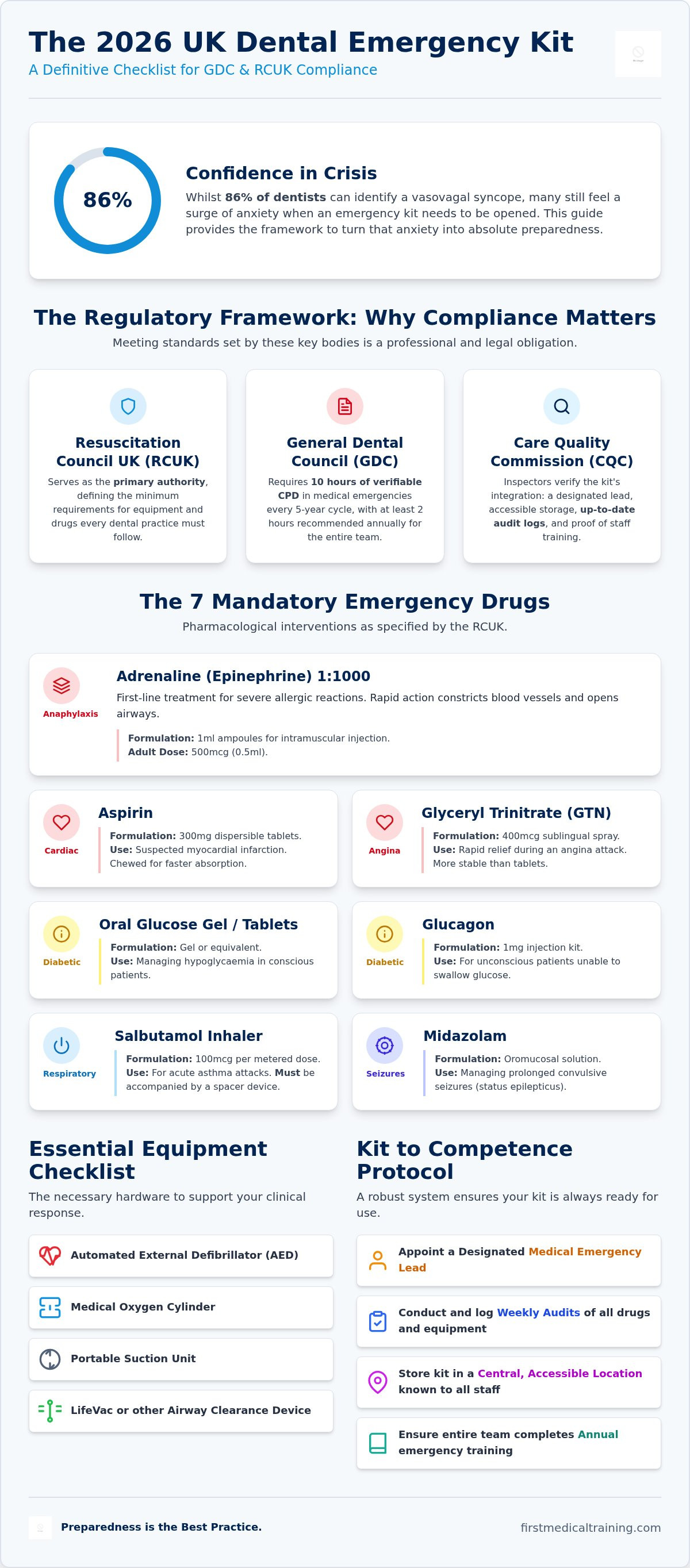
Did you know that whilst 86% of dentists can identify a vasovagal syncope, a significant number still feel a surge of anxiety when the emergency kit actually needs to be opened? It is a common concern amongst dental professionals who want to provide the highest standard of care but feel overwhelmed by shifting regulations. We understand that keeping your dental emergency kit list uk fully compliant can feel like chasing a moving target, especially with the looming pressure of a CQC inspection and the confusion of differing drug requirements.
This guide provides the definitive 2026 checklist to ensure your practice meets every GDC and RCUK standard with absolute certainty. You will gain a clear, tick-box framework for your next audit and the confidence that your team is prepared for any crisis. We will break down the mandatory seven emergency drugs, the essential airway hardware like the LifeVac, and the specific training, such as our Medical Emergencies in a Dental Practice Course, required to turn a box of equipment into a life-saving response.
Key Takeaways
- Learn how to align your practice with the latest 2026 GDC and RCUK standards to ensure you are fully prepared for your next CQC inspection.
- Access the complete dental emergency kit list uk covering the seven mandatory drugs, from Adrenaline to Glucagon, required for immediate clinical response.
- Identify essential equipment requirements, including AED specifications and the role of the LifeVac device in modern airway management.
- Establish a robust maintenance routine with weekly audits and a designated Medical Emergency Lead to prevent the risk of expired drugs or faulty hardware.
- Understand the vital link between your physical kit and the annual Medical Emergencies in a Dental Practice Course required to maintain team confidence.
UK Regulatory Standards for Dental Emergency Kits
Compliance with the dental emergency kit list uk is a legal obligation under Regulation 12 of the Health and Social Care Act 2008. This regulation mandates that providers must ensure the safety of service users, which includes having the right equipment and drugs available to manage medical crises. The Resuscitation Council UK (RCUK) serves as the primary authority, defining the minimum requirements that every practice must follow. Before reviewing the hardware, it's helpful to consider what is a dental emergency? and how these scenarios dictate your practice's preparedness.
The GDC Standards for the Dental Team
The General Dental Council (GDC) places a professional duty on all registrants to be competent in managing medical emergencies. This isn't a requirement limited to the dentist; it extends to every member of the team, including dental nurses, hygienists, and even reception staff. To maintain registration, dental professionals must complete at least 10 hours of verifiable CPD in medical emergencies every five-year cycle, with a strong recommendation for at least two hours of training annually. We often find that practices which treat this as a collective responsibility, rather than a solo task, perform significantly better during high-pressure incidents. Staying current with RCUK training updates ensures your team’s skills remain as sharp as the equipment in your kit.
CQC Inspection: What They Look For
When the Care Quality Commission (CQC) visits, they don't just check if you have a kit; they evaluate how well it's integrated into your practice’s daily operations. Inspectors look for a designated "Medical Emergency Lead" who takes ownership of the dental emergency kit list uk. They will verify that your emergency provisions are stored in a central, easily accessible location known to all staff. Don't be surprised if an inspector asks a receptionist to locate the AED or show them where the medical oxygen is stored. They will also scrutinise your audit logs to ensure drugs haven't exceeded their expiry dates and that equipment, such as portable suction units, is fully functional. Evidence of staff competence, through certificates from courses like our Medical Emergencies in a Dental Practice training, is critical for demonstrating compliance during these inspections.
The Mandatory Emergency Drugs List for UK Dentists
Your dental emergency kit list uk must contain seven mandatory drugs as specified by the Resuscitation Council UK. Whilst the hardware is critical, the pharmacological interventions are often what stabilise a patient before the ambulance arrival. Adhering to the General Dental Council standards ensures your practice remains a safe environment for both routine and complex procedures. Every clinician should be intimately familiar with the location and dosage of these medications, as seconds count during a cardiac or respiratory crisis.
Managing Anaphylaxis and Cardiac Events
Adrenaline (Epinephrine) 1:1000 is the first-line treatment for anaphylaxis. It's vital to stock 1ml ampoules to allow for the standard 500mcg adult dose, delivered via intramuscular injection. For paediatric patients, the dose varies by age, so your team must be confident in calculating and drawing up the correct volume under pressure. Aspirin must be the 300mg dispersible variety. We don't use standard tablets because dispersible formats are absorbed much faster through the buccal mucosa when chewed, which is critical during a suspected myocardial infarction. Similarly, Glyceryl Trinitrate (GTN) spray is preferred over tablets because it's more stable and easier to administer sublingually during an angina attack. A single 400mcg dose can often provide rapid relief, but your team should know when to repeat the dose if symptoms persist.
Diabetic and Respiratory Emergencies
Hypoglycaemia is a frequent risk in the dental chair, especially for patients who have fasted before treatment. Your kit requires both oral glucose gel for conscious patients and a 1mg Glucagon injection kit for those who are unconscious or unable to swallow. There's often debate amongst teams about Glucagon storage. Whilst it lasts longer in a fridge, it can be kept at room temperature for up to 18 months, which is often more practical for immediate access in a central kit. For respiratory distress, a Salbutamol inhaler (100mcg per metered dose) is mandatory. You must include a spacer device; without it, very little medication reaches the lungs of a patient struggling to breathe effectively. Finally, Midazolam oromucosal solution is required for managing status epilepticus. Because these drugs have strict expiry dates and specific administration routes, regular checks and refresher training are essential. If you want to ensure your team can handle these medications with total certainty, consider enrolling them in our Medical Emergencies in a Dental Practice Course.
Essential Medical Emergency Equipment Checklist
While the mandatory drugs provide the pharmacological response to a crisis, the hardware in your dental emergency kit list uk dictates how effectively those medications are delivered. Relying on the Resuscitation Council UK equipment list ensures your practice meets the minimum clinical standards for survival. However, simply owning the equipment isn't enough. You must ensure every piece of kit is functional, accessible, and that your team possesses the practical skills to use it under pressure.
Airway and Breathing Equipment
Oxygen is the most frequently used drug in a medical emergency, and your kit must include a portable cylinder with a pressure reduction valve and a flowmeter capable of delivering 15 litres per minute. To manage a non-breathing patient, you need self-inflating bag-valve-mask (BVM) apparatus in both adult and child sizes. Don't rely solely on BVMs; pocket masks with oxygen ports are essential for single-operator resuscitation. Your kit should also stock a full range of oropharyngeal airways (sizes 0, 1, 2, 3, and 4) to maintain patency in unconscious patients. We strongly recommend adding the LifeVac Anti-Choking Device to your surgery. Standard protocols can sometimes fail, and having a non-invasive suction tool provides an extra layer of safety during a choking event. This is particularly relevant in dental settings where small components or debris can easily obstruct an airway.
Circulation and Monitoring Tools
An Automated External Defibrillator (AED) is a mandatory requirement for all clinical areas. It's not enough to just have the unit; you must verify that both adult and paediatric pads are in-date and that the battery status is checked weekly. Many practices overlook the necessity of a blood glucose monitoring kit. Given that hypoglycaemia is a common emergency in dentistry, having a functional glucometer is mandatory for accurate diagnosis before administering Glucagon. Your dental emergency kit list uk must also include single-use sterile syringes and needles. We recommend stocking 21G (green) and 23G (blue) needles to ensure you can administer intramuscular Adrenaline or Glucagon swiftly. If your team feels hesitant about using these tools, our specialized AED Training Course or the broader Medical Emergencies in a Dental Practice Course can bridge the gap between owning the hardware and feeling competent to act.
Finally, ensure your kit contains independently powered portable suction. In the event of a power failure or if a patient vomits during resuscitation, your chair-side suction will not be sufficient. High-volume suction catheters must be kept with the portable unit to ensure you can clear the airway instantly. Regular practice sessions where staff actually handle the BVM and assemble the oxygen mask are the best way to ensure these tools perform when they are truly needed.
Maintenance, Storage, and Expiry Date Management
Having the correct items on your dental emergency kit list uk is only half the battle. To meet CQC Regulation 17 regarding good governance, you must implement a rigorous maintenance schedule that ensures every drug and piece of hardware is ready for immediate use. We recommend appointing a dedicated "Medical Emergency Lead" within the practice. This individual takes professional ownership of the kit, ensuring that vital checks aren't missed amongst the daily bustle of clinical appointments. This role is essential for maintaining the quiet confidence that your practice is prepared for any eventuality.
Organising Your Emergency Kit
Standardisation saves lives during a crisis. Most compliant practices opt for a centralised "Green Bag" or a dedicated emergency trolley. This should be kept in a neutral, easily accessible area known to all staff, including part-time clinicians and receptionists. Clear signage is mandatory; use the standard white-on-green AED symbol to mark the location. Within the kit, prioritise latex-free equipment and single-use items to minimise cross-contamination and allergy risks. This structured approach removes the "human factor" of panic, as every team member knows exactly where to find the life-saving tools without searching through multiple drawers or rooms.
The Audit Trail for CQC
During an inspection, the CQC will look for a robust paper trail that proves your equipment is regularly monitored. You should maintain a comprehensive emergency preparedness checklist to document your weekly audits. These checks must be methodical and recorded clearly. Key tasks include:
- Verifying that the AED "ready" indicator is flashing or showing a green tick daily.
- Checking oxygen cylinder pressure levels to ensure they are sufficient for at least 30 minutes of delivery at 15 litres per minute.
- Inspecting drug packaging for damage, moisture, or signs of tampering.
- Testing the independently powered suction unit to ensure the battery is holding a full charge.
If you find that your team is struggling to implement these protocols effectively, our Emergency Equipment and training packages can help establish the necessary systems and confidence.
Expired drugs are one of the most common reasons for failing a CQC inspection. Establish a replenishment protocol that triggers a reorder at least one month before a drug reaches its expiry date. Never wait until the date has passed to find a replacement. Dispose of expired medications through a licenced clinical waste contractor; they must never be thrown into general waste or poured down a sink. By treating your dental emergency kit list uk as a living resource that requires constant oversight, you ensure your practice remains compliant, professional, and prepared to save lives.
From Kit to Competence: Training Your Dental Team
A perfect kit is just a box of expensive hardware and chemicals without a team that can deploy it under pressure. Whilst your dental emergency kit list uk ensures you have the physical resources, your competence ensures those resources actually save lives. We've seen many practices pass an equipment audit only to struggle during a real-life crisis because the team hasn't practised the physical flow of an emergency response. It's the transition from owning a kit to mastering it that defines a safe practice.
Annual training is a non-negotiable requirement for all dental professionals. Whilst Basic Life Support (BLS) provides the foundation, Dental Immediate Life Support (ILS) is tailored to your specific environment. It covers the use of airway adjuncts, medical oxygen, and the administration of emergency drugs found in your kit. Simulating scenarios is the most effective way to build this skill set. Your team should move seamlessly from syncope management, the most common incident in the chair, to the high-stakes coordination required for a cardiac arrest.
Meeting GDC CPD Requirements
Choosing the right medical emergencies in dental practice course is critical for both compliance and clinical safety. The GDC requires verifiable CPD that includes clear learning outcomes and a certificate from a reputable provider. We recommend in-practice training because it allows your team to rehearse in their actual clinical environment. Using your own oxygen cylinders, AED, and suction units during a drill builds a level of familiarity that an external classroom cannot replicate. It ensures that every staff member, from the senior dentist to the newest receptionist, knows their specific role when an emergency is called.
Building Clinical Confidence
Confidence is born from repetition. Regular role-play and emergency drills transform a panicked reaction into a calm, methodical response. These sessions should involve every member of the team to ensure clear communication and leadership roles are established before they are needed. We also encourage practices to consider the mental health of the team whilst under the stress of an emergency. A well-led debrief after a drill can be just as important as the drill itself. To ensure you are meeting the highest standards for the coming year, book your cardiac arrest management training to ensure 2026 compliance. By aligning your dental emergency kit list uk with rigorous, hands-on training, you create an environment where patient safety is a lived reality, not just a policy on a shelf.
Elevating Your Practice Preparedness for 2026
Maintaining a compliant dental emergency kit list uk is about more than just checking boxes for the CQC; it's about the safety and trust of every patient who sits in your chair. By aligning your mandatory drug stock with robust hardware like the LifeVac and ensuring a disciplined audit trail, you remove the guesswork from crisis management. However, the hardware only reaches its full potential when paired with a team that has rehearsed their response until it becomes second nature.
Since 2006, we've acted as a trusted partner to dental practices across the country. Our industry veterans specialise in Dental ILS and the supply of essential life-saving equipment. To ensure your team is ready for any eventuality with GDC-compliant verifiable CPD, Book your accredited Medical Emergencies in a Dental Practice Course today. You've invested in the right tools; now invest in the clinical confidence to use them. Your team's readiness is the ultimate safeguard for your community.
Frequently Asked Questions
Is an AED mandatory for UK dental practices in 2026?
Yes, an Automated External Defibrillator (AED) is a mandatory requirement for all clinical areas in a dental practice in 2026. This standard is set by the Resuscitation Council UK and enforced by the CQC. Your unit must be functional, easily accessible, and equipped with both adult and paediatric pads. It isn't enough to just own one; your team must be trained to use it confidently during a cardiac arrest scenario.
How often should the dental emergency kit be checked?
You should perform a formal audit of your emergency equipment and drugs every week. This check ensures that all items on your dental emergency kit list uk are in-date and that the oxygen cylinder is sufficiently pressurised. Additionally, you must check the AED status indicator every single day to verify the battery and pads are ready for use. Keeping a clear, signed log of these checks is essential for proving compliance during inspections.
Do I need to store Glucagon in the fridge?
Whilst Glucagon can be stored in a fridge to extend its shelf life, it can also be kept at room temperature for up to 18 months. Many practices find room temperature storage more practical because it allows the drug to be kept within the central emergency kit rather than in a separate clinical fridge. Always record the date it was removed from the fridge to ensure it is replaced before that 18-month limit expires.
What are the GDC requirements for medical emergency training?
The General Dental Council (GDC) requires all registrants to be competent in managing medical emergencies. You must complete at least 10 hours of verifiable CPD in this area over each five-year cycle. It's strongly recommended that you undertake at least two hours of this training every year. This ensures your skills, such as performing CPR or using airway adjuncts, remain current and that your team can coordinate effectively when a real crisis occurs.
Can I use a standard first aid kit instead of a dental emergency kit?
No, a standard first aid kit is insufficient for a dental practice. Whilst a BS8599-1 compliant first aid kit is required for workplace injuries, it doesn't contain the mandatory emergency drugs, medical oxygen, or airway management tools required by the RCUK. To meet GDC and CQC standards, you must maintain a specific dental emergency kit list uk that includes items like Adrenaline, Midazolam, and an AED, which aren't found in general workplace kits.
What is the minimum amount of oxygen required for a dental surgery?
Your practice must have enough medical oxygen to deliver a flow rate of 15 litres per minute for at least 30 minutes. This usually requires a Size D cylinder. It's vital that the cylinder is equipped with a pressure reduction valve and a flowmeter. You must also have a non-rebreather mask with a reservoir bag available. Checking the pressure levels weekly is a key part of ensuring you don't run out during a prolonged incident.
Should dental receptionists be trained in medical emergencies?
Yes, every member of the dental team, including receptionists and administrative staff, should receive medical emergency training. Receptionists are often the first people to encounter a patient in distress or the ones responsible for calling an ambulance. The GDC standards for the dental team apply to all staff members to ensure a coordinated and effective response. Training together as a complete unit builds a culture of safety and ensures everyone knows their specific role.
What happens if a drug in my kit expires?
If a drug expires, it must be replaced immediately and must not be used for patient care. Using expired medication is a significant clinical risk and will result in a failure during a CQC inspection. You should dispose of the expired drug through a licensed clinical waste contractor; never throw them in the general waste. Implementing a Medical Emergency Lead to track dates one month in advance prevents these gaps in your practice's emergency preparedness.