

Dental ILS Refresher Course: Maintaining Clinical Excellence in 2026

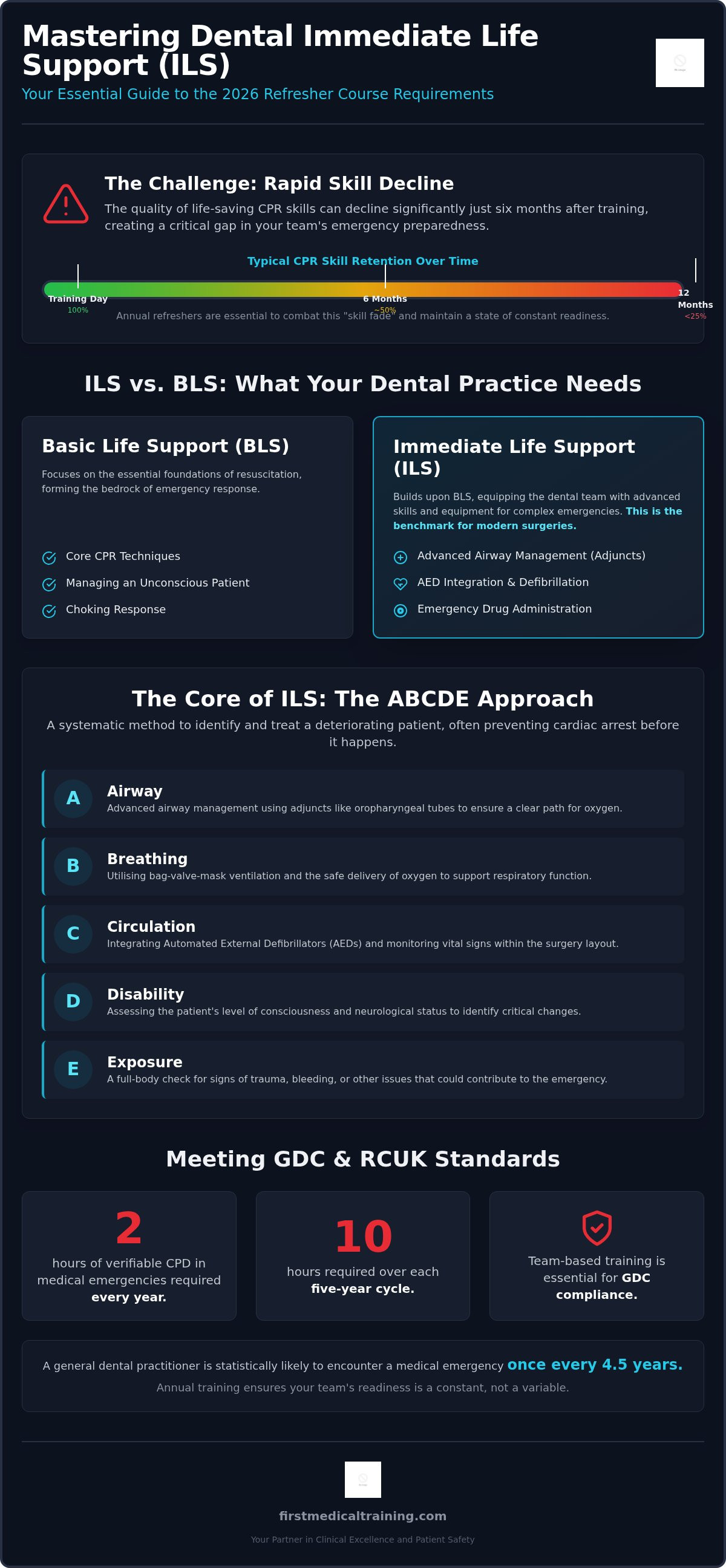
Did you know that the quality of life-saving CPR skills can begin to decline significantly just six months after your last training session? For a busy dental team, the gap between annual certifications can often lead to a nagging uncertainty about whether you're truly prepared for a high-stakes clinical emergency. You likely already recognise that staying compliant isn't just about ticking a box for the GDC; it's about the peace of mind that comes from knowing every member of your team can act instinctively when seconds count.
We understand the challenge of coordinating specialist training whilst managing a full appointment book. This guide to your dental ils refresher course provides a clear, professional pathway to mastering the 2026 Immediate Life Support protocols and navigating the intersection of RCUK and GDC requirements. We will show you how to build a team that feels confident using airway adjuncts and AEDs, ensuring you meet your verifiable CPD obligations for the current cycle. From understanding the ABCDE approach to streamlining your certification process, we've outlined everything you need to maintain clinical excellence and protect your patients with quiet, seasoned confidence.
Key Takeaways
- Understand the critical clinical distinctions between Basic Life Support (BLS) and the advanced airway management protocols required for Immediate Life Support (ILS).
- Learn how a regular dental ils refresher course prevents "skill fade" and ensures your practice remains fully compliant with GDC and RCUK standards for 2026.
- Discover practical steps for auditing your surgery’s emergency drugs and equipment to ensure your team is prepared for any medical crisis.
- Identify strategies to coordinate team-wide training efficiently, minimising disruption to your appointment book whilst maximising collective clinical confidence.
- Find out how to obtain verifiable CPD certificates that demonstrate your commitment to patient safety and professional development.
What is a Dental ILS Refresher Course?
Immediate Life Support serves as the critical clinical bridge between basic resuscitation and advanced medical intervention. For dental professionals, a dental ils refresher course isn't merely a repeat of past lessons; it's a structured update designed to ensure your response remains sharp and evidence-based. While Basic Life Support (BLS) focuses on the fundamentals of CPR, ILS equips the team to handle more complex scenarios using specialised equipment. Understanding What is Intermediate Life Support? helps clarify why this level of training is now the benchmark for modern surgeries.
The distinction between an initial certification and an annual refresher lies in the refinement of existing skills. An initial course builds the foundation, whereas the refresher addresses the reality that resuscitation skills can begin to decline within six months of training. By 2026, the Resuscitation Council UK (RCUK) and the General Dental Council (GDC) have increasingly emphasised the need for a co-ordinated team response that goes beyond simple chest compressions. This is particularly vital in practices providing sedation or treating patients with complex medical histories.
The Core Components of Dental ILS
The curriculum centres on the systematic ABCDE approach (Airway, Breathing, Circulation, Disability, Exposure). This allows the clinician to identify a deteriorating patient before they reach cardiac arrest, potentially preventing a crisis altogether. Key practical elements include:
- Advanced airway management using adjuncts like oropharyngeal tubes and bag-valve-mask ventilation.
- Integration of Automated External Defibrillators (AEDs) within the specific layout of a dental surgery.
- Safe delivery of oxygen and the administration of emergency drugs as part of a structured resuscitation attempt.
GDC Compliance and Verifiable CPD
Meeting regulatory standards is a primary concern for any registrant. The GDC classifies medical emergencies as a "highly recommended" topic for Continuing Professional Development. Specifically, the GDC recommends that dental professionals complete a minimum of two hours of verifiable CPD in medical emergencies every year, contributing to a total of 10 hours over each five-year cycle.
Participating in a team-based dental ils refresher course ensures that everyone, from the lead clinician to the dental nurse, understands their specific role in a crisis. This collective training is essential for issuing verifiable certificates that satisfy GDC inspectors during practice audits. Because a general dental practitioner is statistically likely to encounter a medical emergency once every four and a half years, these annual refreshers ensure that your team's readiness remains a constant, rather than a variable.
Why Your Team Needs an Annual ILS Refresher
Complacency is often the silent enemy of clinical safety. While your team might go years without a major incident, the Resuscitation Council UK Quality Standards are clear: skills must be updated at least annually. This isn't just a regulatory hurdle; it's a response to the fact that resuscitation proficiency begins to erode significantly within six months of training. A regular dental ils refresher course ensures that when a crisis finally occurs, your team doesn't have to "remember" what to do; they simply act. It bridges the gap between theoretical knowledge and the instinctive, high-speed response required in a dental surgery.
The most common objection we hear is that a practice hasn't faced a crisis in years. While this might feel like a testament to safety, it often masks a growing vulnerability. Readiness isn't about what happened yesterday; it's about the patient in your chair tomorrow. Beyond the legal mandate, there's an ethical obligation to provide the highest standard of care. Investing in annual training builds a culture where safety is woven into the daily fabric of the practice, rather than being a panicked afterthought amongst staff members.
Identifying the Deteriorating Patient
Recognising the subtle signs of a patient in distress is far more effective than reacting to a full cardiac arrest. Early warning signs, such as changes in skin colour, breathing patterns, or level of consciousness, are critical indicators that require immediate assessment. Distinguishing between common syncope and a life-threatening cardiac event is a core skill covered in our syncope management dental training. Early intervention using the ABCDE approach often prevents the need for chest compressions entirely, keeping the patient stable until help arrives.
Team Dynamics During a Crisis
Clinical skill is only half the battle; the other half is coordination. In a high-stress environment, clear communication is vital to prevent "bystander apathy" or duplicated efforts. A structured dental ils refresher course defines specific roles: who fetches the AED, who manages the airway, and who coordinates with emergency services whilst others provide care. This clarity reduces the cognitive load on the lead clinician, allowing them to focus on clinical decision-making. Regular, realistic drills also help to desensitise the team to the "panic" phase of an emergency, replacing fear with a methodical, practiced response.
Staying current with these protocols is the best way to protect your patients and your professional reputation. If you want to ensure your surgery is truly prepared for the year ahead, consider booking an accredited dental training session to bring your whole team up to speed.
Dental ILS vs. BLS: Which is Right for Your Practice?
Choosing between Basic Life Support (BLS) and Immediate Life Support (ILS) often comes down to the complexity of your clinical environment. While BLS provides the essential foundations of chest compressions and rescue breaths, a dental ils refresher course elevates your team's capability to include advanced airway management and the use of adjuncts. For practices treating an ageing population or those with multi-morbidities, the ability to manage a patient with more than just manual CPR is a vital component of clinical excellence. It transforms the team from bystanders into active clinical responders who can utilise the full range of emergency equipment available in a modern surgery.
Practices offering conscious sedation are under stricter mandates. The Intercollegiate Advisory Committee on Sedation in Dentistry (IACSD) and the GDC make it clear that ILS is the minimum standard for the sedation team. This ensures that if a patient’s respiratory or cardiovascular status is compromised, the team has the skills to intervene effectively before the situation becomes irreversible. Even in non-sedation practices, upskilling your dental nurses to ILS level is a high-value investment; it creates a robust "double-check" system where the nurse can anticipate the dentist's needs, from preparing the AED to managing the airway, without needing direct instruction during a high-pressure event.
When BLS is Not Enough
Standard first aid is designed for the layperson in a public setting. In contrast, your surgery is a clinical space equipped with oxygen, suction, and airway adjuncts. Relying solely on BLS ignores the professional tools at your disposal. Understanding the GDC's CPD requirements is essential here; they emphasise that training must be relevant to your specific role. Dentists and clinical staff should refer to our guide on GDC CPD requirements for dentists to ensure their annual training aligns with these professional expectations for 2026.
Choosing the Correct Level for Your Staff
Not every team member needs the same level of training, but a cohesive approach is best for practice-wide safety. While your clinical staff benefit most from a dental ils refresher course, your reception and administrative team might be better served by a blend of BLS and an first aid at work for dental practices. This strategy ensures that non-clinical staff can manage fainting or minor injuries in the waiting room, whilst the clinical team remains focused on the chairside crisis. This tiered approach to training maximises your budget whilst ensuring every person in the building knows exactly how to contribute to a successful outcome.
Organising Your In-Practice Refresher Day
Organising a full-team training day requires meticulous planning to ensure the practice remains functional whilst providing a focused environment for learning. A successful dental ils refresher course begins long before the trainer arrives at your surgery. By following a structured preparation plan, you can minimise patient disruption and ensure your team gains the maximum clinical benefit from the session. It's about transforming a compliance requirement into a valuable team-building exercise that reinforces your commitment to patient safety.
Start by blocking out the surgery schedule well in advance. Coordinating a time when all clinical and administrative staff are present is the most efficient way to build team-wide confidence. You should also provide your staff with any pre-course reading materials at least a week before the session. This allows the in-person training to focus on high-impact, hands-on simulations rather than basic theory. When everyone arrives with a baseline understanding of the 2026 protocols, the practical drills become significantly more effective.
The Emergency Kit Audit
Your refresher day is the perfect opportunity to verify that your life-saving tools are fit for purpose. Check the expiry dates on your adrenaline ampoules and ensure your emergency oxygen cylinders are full and functional. The AED requires particular attention; verify that the battery is charged and the pads are well within their use-by date. For a comprehensive review of your requirements, consult our guide on dental practice emergency preparedness. This audit ensures that the equipment you use during training is the same equipment you would rely on in a real crisis.
Maximising the Training Impact
To truly embed these skills, training should take place within the actual clinical environment. Conducting "mock arrest" drills in the treatment rooms allows the team to navigate the physical constraints of the surgery, such as moving the dental chair or accessing the emergency kit in a confined space. Hands-on participation with mannequins is essential for mastering airway adjuncts and effective chest compressions. After the simulations, hold a structured debriefing session. Use this time to update your practice's emergency protocols based on the day's insights, ensuring that every team member leaves the session feeling empowered and ready to act.
Ready to secure your practice's safety for 2026? Book your in-practice training session with our expert team today to ensure your team is fully prepared.
Trust First Medical Training Ltd for Your 2026 ILS Refresher
First Medical Training Ltd has been a cornerstone of healthcare education since 2006. With two decades of experience, we've established ourselves as a trusted partner for dental practices across the United Kingdom. Choosing a dental ils refresher course with us means you aren't just meeting a regulatory requirement; you're gaining access to a wealth of clinical expertise tailored specifically for the dental environment. We understand the unique pressures of a busy surgery, which is why our approach is designed to be as seamless and supportive as possible.
Our nationwide delivery model means we bring the training directly to your centre or surgery. There's no need for your team to travel, which minimises downtime and allows for simulations in the actual rooms where emergencies would occur. Our instructors are more than just teachers; they are professionals with real-world emergency medical experience. They bring a level of practical insight that only comes from years of managing crises in the field, ensuring your team learns from those who have actually performed the life-saving procedures they teach.
Beyond the ILS Course
Maintaining excellence in 2026 involves more than just physical resuscitation skills. We offer a holistic range of solutions, including Mental Health First Aid for Dental Practices, which supports the wellbeing of your staff in an increasingly demanding profession. We also provide integrated equipment solutions, supplying life-saving tools like the LifeVac anti-choking device and high-specification AEDs. This ensures your equipment is as current as your training. We don't just issue a certificate and leave; we provide ongoing support and send annual reminders to ensure you never miss your next refresher.
Book Your Practice Refresher Today
The booking process is straightforward, whether you manage a single surgery or a national dental group. We coordinate with your practice manager to find a date that works for your whole team, ensuring everyone can participate without disrupting patient care. Upon completion of your dental ils refresher course, we provide instant access to verifiable CPD certificates. These documents are essential for your GDC records and practice audits, providing immediate proof of your commitment to professional standards.
Book your Dental ILS Refresher Course with First Medical Training Ltd and ensure your team is prepared to save lives with confidence.
Prepare Your Practice for Clinical Excellence in 2026
Maintaining high clinical standards requires more than just a certificate; it demands a team that can act with precision during a medical emergency. By completing a specialist dental ils refresher course, you ensure your staff are not only compliant with GDC requirements but are genuinely capable of using advanced airway adjuncts and AEDs. We've explored how annual training bridges the gap between theory and the high-pressure reality of the dental chair, ensuring that professional readiness remains a constant in your surgery.
Since 2006, First Medical Training Ltd has provided GDC-aligned training led by instructors with frontline medical experience. Our nationwide in-practice delivery model makes it easy to coordinate sessions without disrupting your surgery's daily rhythm. Don't wait for a crisis to test your team's readiness. Secure your team’s 2026 compliance with our Dental ILS Refresher Course and gain the peace of mind that comes with expert preparation. Taking this proactive step protects your patients, your staff, and your professional reputation. First Medical Training Ltd acts as your dependable guide in maintaining a safe, confident, and highly skilled clinical environment.
Frequently Asked Questions
How often do dental professionals need to take an ILS refresher course?
You should complete an ILS refresher every 12 months to maintain clinical proficiency. The GDC recommends a minimum of two hours of verifiable CPD in medical emergencies annually, contributing to a total of 10 hours over a five-year cycle. This frequency ensures that life-saving skills remain sharp and that your practice stays fully compliant with current safety standards for 2026.
Does the Dental ILS course count towards my GDC verifiable CPD hours?
Yes, our dental ils refresher course provides verifiable CPD hours that align with GDC requirements. Upon successful completion, we issue certificates that specify the learning outcomes and the number of hours earned. This documentation is essential for your professional portfolio and serves as evidence during practice inspections or audits by the Care Quality Commission (CQC) or the GDC.
Can dental nurses take the ILS refresher or is it only for dentists?
Dental nurses are encouraged to participate in ILS training alongside dentists. A team-based approach is vital during a medical crisis, as nurses often play a key role in managing the airway or preparing emergency drugs. Training the entire clinical team together ensures everyone understands their specific responsibilities, leading to a more coordinated and effective response when seconds count.
What is the difference between BLS and ILS for dental practices?
Basic Life Support (BLS) focuses on manual CPR and AED use, whereas Immediate Life Support (ILS) introduces advanced techniques. This includes the systematic ABCDE assessment and the use of airway adjuncts like oropharyngeal tubes. ILS is designed for clinical environments where professional equipment is available, allowing for a more sophisticated level of patient care than standard first aid.
Do we need to provide our own emergency equipment for the training day?
We bring all the necessary training mannequins and AED trainers to your surgery. However, we also recommend having your own emergency kit and oxygen cylinders available during the session. Practising with the specific tools you have on-site helps your team become familiar with their location and operation, ensuring a more realistic and practical learning experience for every member of staff.
Is the ILS refresher course valid for sedation-certified practices?
Yes, this dental ils refresher course meets the specific requirements for practices providing conscious sedation. The Intercollegiate Advisory Committee on Sedation in Dentistry (IACSD) mandates that all members of the sedation team must be trained to at least ILS level. Our curriculum ensures your team is prepared to manage the respiratory and cardiovascular complications that can occasionally arise during sedation.
What happens if a staff member fails the practical assessment?
Our instructors provide immediate, supportive feedback to help any staff member who struggles with a specific technique. The goal of the refresher is to build confidence, not to catch people out. If someone cannot demonstrate a core skill, we will work with them during the session to ensure they reach the required standard before the course concludes and certificates are issued.
How long does a typical Dental ILS refresher session take to complete?
A typical refresher session takes approximately three to four hours to complete, depending on the size of your team. This timeframe allows for a concise theory update followed by extensive hands-on practice. We focus on efficiency to minimise disruption to your appointment book whilst ensuring every participant has enough time to master the practical simulations and airway management techniques.