

Group First Aid Training for Dental Staff: Ensuring Team Compliance and Patient Safety in 2026

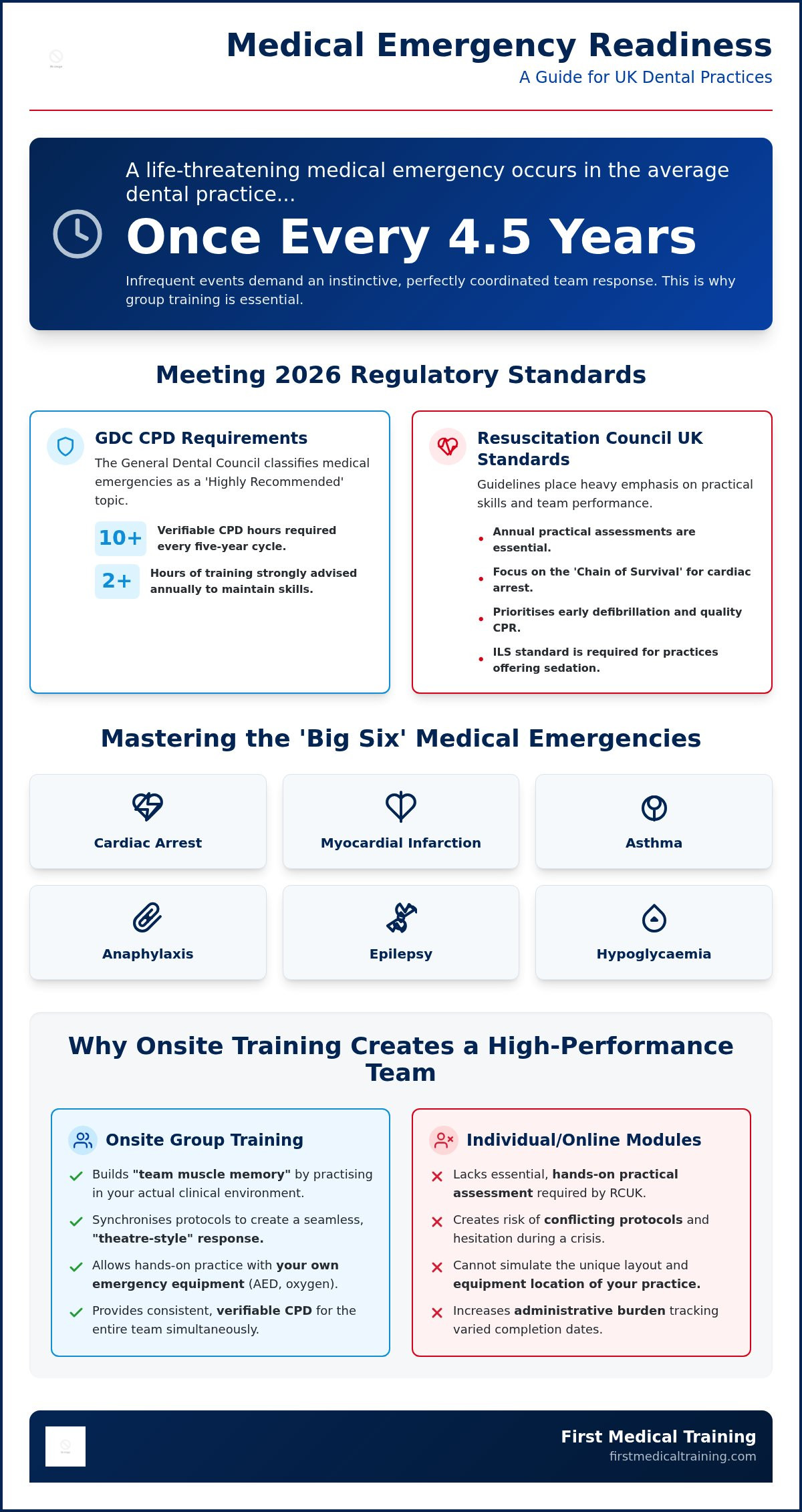
The average dental practitioner encounters a life-threatening medical emergency once every four and a half years. While these incidents are rare, their infrequent nature is exactly why your team’s response must be instinctive and perfectly coordinated. We understand that coordinating onsite medical emergency training for dental practices can feel like a significant logistical hurdle, especially when you are trying to ensure everyone from the reception desk to the surgery is fully prepared for a CQC or GDC inspection.
You can transform your annual compliance from a stressful box-ticking exercise into a session that builds genuine clinical confidence. This guide explains how to organise comprehensive training that meets 2026 GDC requirements and the latest Resuscitation Council UK standards. You will learn how to secure verifiable CPD hours for the entire team and develop a high-performance response culture. We will show you how to ensure that if a patient collapse does occur, every staff member acts with the calm, professional precision required to save a life.
Key Takeaways
- Understand why the GDC classifies medical emergency training as a "Highly Recommended" topic and how to meet the required CPD hours within your five-year cycle.
- Discover how onsite medical emergency training for dental practices builds "team muscle memory" by allowing your staff to practice life-saving protocols in their actual clinical environment.
- Master the management of the "Big Six" medical emergencies, including cardiac arrest and anaphylaxis, while ensuring your emergency drugs kit and oxygen equipment are fully compliant.
- Learn how to coordinate a whole-team training day that provides verifiable CPD hours for everyone from receptionists to surgeons, ensuring total practice readiness for CQC inspections.
- Optimise your practice management by selecting training dates that minimise clinical downtime and leverage the cost-effectiveness of group-based learning.
The Regulatory Framework: Why Group First Aid Training is Essential in 2026
In the dental environment, group first aid training isn't just about basic wound care; it's about high-stakes interventions in the clinical chair. While a clinician focuses on what constitutes a dental emergency, such as a fractured tooth or acute pulpitis, the entire team must be ready for a systemic crisis like anaphylaxis or cardiac arrest. Onsite medical emergency training for dental practices bridges the gap between individual knowledge and team execution. It ensures that every staff member, from the front-of-house team to the lead clinician, understands their specific role when the emergency alarm sounds. By training as a unit, you eliminate the risk of conflicting protocols. If a nurse has trained elsewhere from the dentist, their methods for managing a medical crisis might differ, leading to hesitation. Group training synchronises these efforts, creating a "theatre-style" response where everyone moves with purpose and certainty.
GDC CPD Requirements for Dental Professionals
The General Dental Council (GDC) categorises medical emergencies as a "Highly Recommended" topic. For 2026, the expectation remains that all dental professionals complete at least 10 hours of verifiable CPD in this area every five-year cycle. To maintain clinical safety, the GDC strongly advises at least two hours of this training every year. Team-based learning is the preferred method because emergencies are never managed in isolation. When you book onsite medical emergency training for dental practices, you ensure the entire team receives consistent, verifiable hours simultaneously. This collective approach satisfies the gdc cpd requirements medical emergencies while proving to regulators like the CQC that your practice is well-led and safe. It also simplifies the administrative burden for practice managers, as all certificates share the same completion date and learning outcomes.
Resuscitation Council UK Standards
The 2026 Resuscitation Council UK (RCUK) guidelines place heavy emphasis on annual practical assessments. It isn't enough to watch a video; you must demonstrate competence with an Automated External Defibrillator (AED) and airway management equipment. Current standards focus on the "Chain of Survival," prioritising early defibrillation and high-quality chest compressions. Training in your own surgery allows the team to locate oxygen cylinders and suction units in seconds rather than minutes. These standards are the benchmark for CQC inspections, which look for evidence that staff can apply their knowledge in a real-world setting. Dental practices providing conscious sedation must ensure staff are trained to Dental Immediate Life Support (ILS) standards to manage deeper levels of respiratory depression or airway obstruction effectively. This higher level of training includes advanced airway adjuncts and a deeper understanding of reversible causes of cardiac arrest, ensuring patient safety remains the absolute priority during complex procedures.
Core Components of a Medical Emergencies in a Dental Practice Course
Effective training must move beyond theory to address the physical realities of the clinical environment. A comprehensive course focuses on the "Big Six" medical emergencies: cardiac arrest, myocardial infarction, asthma, anaphylaxis, epilepsy, and hypoglycaemia. While these conditions are covered in standard first aid, their management in a dental chair requires a specialised approach. Professionals need to know how to handle a crisis whilst a patient is reclined and potentially mid-procedure. Onsite medical emergency training for dental practices ensures that these scenarios are rehearsed in the exact rooms where they might occur, using the practice's own layout to perfect the team's response.
Clinical Scenario Training
Managing a patient collapse requires immediate, decisive action. If a patient experiences syncope or anaphylaxis during treatment, the clinical team must clear the airway and manage the patient's position without hesitation. This involves more than just medical knowledge; it requires a rehearsed protocol for clearing instruments and lowering the dental chair to the supine position. Our medical emergencies in dental practice course prioritises these high-pressure simulations. By practicing these transitions, staff develop the muscle memory needed to stay calm. This hands-on experience is what transforms a group of individuals into a high-performance response team capable of maintaining patient safety under duress.
Equipment and Drug Familiarisation
The speed of a team's response is often dictated by their familiarity with the emergency drugs kit and oxygen administration equipment. It is vital that every staff member, including non-clinical personnel, knows the exact location of the AED and the emergency drugs. Training should include a review of OSHA's Emergency Action Plan Standard principles to ensure the practice has a structured disaster recovery and emergency response framework. Key components of this familiarisation include:
- Oxygen Administration: Practical sessions on assembling regulators and selecting the correct mask flow rates.
- Drug Identification: Ensuring all staff can identify and retrieve Adrenaline, Midazolam, and Glyceryl Trinitrate (GTN) quickly.
- AED Deployment: Hands-on practice with the practice's own defibrillator to ensure no time is lost during a cardiac arrest.
- Anti-Choking Protocols: Integrating devices like the LifeVac into the standard choking algorithm for maximum efficacy.
Regularly auditing these tools is just as important as the training itself. We recommend implementing weekly checklists to monitor expiry dates and equipment integrity. If you want to ensure your team is fully equipped for any eventuality, you can view our full range of dental emergency equipment and training options to find a solution that fits your surgery's specific needs.
The Strategic Benefits of Onsite Group Training vs Online Modules
The shift from individual online modules to group-based learning represents a significant upgrade in clinical safety. While digital certificates prove theoretical knowledge, they cannot replicate the physical reality of a medical crisis. Onsite medical emergency training for dental practices allows your team to develop "muscle memory" by practicing protocols in the very corridors and surgeries where they work. There is no substitute for physically handling your own oxygen cylinder or navigating the practice layout with an AED. Beyond the clinical advantages, booking a single trainer for the entire staff is a pragmatically cost-effective decision. It eliminates the administrative headache of tracking individual expiry dates and ensures that everyone, from the lead surgeon to the part-time receptionist, is on the same page.
Team Dynamics in a Crisis
In a real-world emergency, speed is dictated by clear communication. Online training often fails because it treats emergency response as an individual task rather than a coordinated team effort. During a group session, we define specific roles: who is responsible for calling 999, who fetches the emergency kit, and who maintains the airway. This structured approach is a core part of our dental practice emergency preparedness framework. When everyone knows their position, the "bystander effect" is eliminated, and the team functions as a disciplined unit. Practicing these high-stress handovers in your own environment ensures that no time is lost to confusion or hesitation.
Mental Health First Aid for Dental Teams
The dental profession carries unique stressors, from managing patient anxiety to meeting rigorous clinical targets. Collective training days provide an excellent opportunity to address workplace wellbeing amongst the staff. We integrate elements of mental health awareness to help teams identify early signs of burnout or chronic anxiety in their colleagues. A supportive surgery culture isn't just better for the staff; it directly improves patient care. By discussing these challenges openly during a group session, you build a more resilient team that can support one another through both clinical emergencies and the daily pressures of modern dentistry. This holistic approach to professional development is particularly important for clinics like Greenlane Dental Practice that provide high-end cosmetic services such as Invisalign Leigh, as it boosts morale and fosters a sense of shared responsibility for the practice's success.
Planning a successful training day requires balancing clinical productivity with regulatory necessity. The most effective managers typically schedule onsite medical emergency training for dental practices during dedicated staff development days or Friday afternoons to minimise the impact on patient appointments. Before the trainer arrives, gather a list of all staff members' full names and GDC registration numbers. Having this data ready ensures that verifiable CPD certificates are issued promptly without administrative delays. Clear the clinical areas and ensure the waiting room is available; these spaces are essential for realistic role-play scenarios that test the team's ability to respond in situ.
Maximising Training Efficiency
Efficiency is about more than just time; it's about comprehensive coverage. Many practices choose to combine their annual medical emergencies refresher with an emergency first aid at work course for dental practices. This dual approach covers both clinical crises and general workplace accidents in a single session. It's vital to include non-clinical staff, such as receptionists and administrators, in these drills. They are often the first to identify a patient in distress in the waiting area. Training as a complete unit ensures that the hand-off between the front desk and the clinical team is seamless and professional.
Post-Training Compliance and Audit
Once the session concludes, the focus shifts to long-term compliance. Store all training certificates in a centralised digital folder that is easily accessible during a surprise CQC inspection. Inspectors look for evidence that training is not just completed, but that it is current and involves the whole team. Use this opportunity to audit your emergency equipment and update your practice’s training matrix. Establishing a fixed annual date for your refresher training creates a culture of continuous readiness. If you are ready to streamline your compliance, you can book your onsite training session with our expert team today.
Why First Medical Training is the Trusted Partner for Dental Groups
Selecting a training provider is a decision that impacts your regulatory standing and, more importantly, your clinical safety. First Medical Training Ltd has served as a specialist mentor to the dental profession since 2006. We don't provide generic workplace courses; we deliver a seasoned perspective born from twenty years of dedicated medical education. Our national delivery model ensures that your surgery receives onsite medical emergency training for dental practices from experts who truly understand the complexities of a clinical environment. We pride ourselves on being a dependable guide, helping you translate rigorous GDC and CQC requirements into actionable, life-saving skills that your team can apply with absolute certainty.
Beyond the Certificate
Compliance is a continuous commitment rather than a yearly tick-box exercise. First Medical Training Ltd supports practice managers by offering a comprehensive safety ecosystem that extends far beyond the training day. As established suppliers of LifeVac anti-choking devices and Automated External Defibrillators (AEDs), we ensure your team trains with the precise equipment they'll rely on during a patient collapse. Our advice on equipment maintenance and expiry date management helps you maintain a state of permanent readiness. We also recognise that a high-performance team needs more than just clinical skills. By integrating Mental Health First Aid for dental teams into our offerings, we help you support staff wellbeing and manage the unique pressures of the dental profession. Our training packages are never static; they evolve constantly to reflect the latest GDC standards and Resuscitation Council UK guidelines.
Booking Your Team Training
The journey toward clinical excellence should be straightforward and stress-free. First Medical Training Ltd has refined the booking process to respect the busy schedules of practice managers and principals. From your initial enquiry, we provide a bespoke quote for onsite medical emergency training for dental practices that reflects the specific headcount and clinical requirements of your dental group. Whether you need a focused session on medical emergencies or a more advanced Dental ILS course for sedation-providing practices, we handle the logistics so you don't have to. Once the date is set, our expert trainers come to you, providing the onsite certification that proves your team's competence. You can take the first step toward a more confident, compliant surgery by contacting our team for a consultation. It's time to move beyond basic compliance and direct your team towards clinical excellence today.
Elevating Clinical Excellence Through Team Preparedness
Ensuring your surgery is ready for a medical crisis requires more than just meeting a regulatory requirement; it demands a culture of collective readiness. By moving away from isolated online learning and embracing onsite medical emergency training for dental practices, you provide your staff with the instinctive coordination needed to manage life-threatening events with precision. From mastering the "Big Six" emergencies to synchronising your front-of-house and clinical responses, group-based training transforms compliance into a powerful asset for patient safety. Your patients deserve that certainty.
First Medical Training Ltd has been a specialist mentor to the profession since 2006, offering national onsite delivery and GDC-aligned verifiable CPD that respects your surgery's busy schedule. You can secure your practice's compliance with professional group first aid training from First Medical Training Ltd and gain the peace of mind that comes with a truly prepared team. It's an investment that ensures you're ready for the challenges of 2026 and beyond. We look forward to helping you build a safer, more resilient surgery environment.
Frequently Asked Questions
Is group first aid training mandatory for all dental staff annually?
Annual training is considered essential for clinical safety and regulatory compliance. The GDC classifies medical emergencies as a "Highly Recommended" topic, advising a minimum of two hours of verifiable CPD every year. While the five-year cycle requires 10 hours total, the CQC views the annual practical refresher as a mandatory standard for a well-led practice. Onsite medical emergency training for dental practices ensures the whole team meets these requirements simultaneously.
What is the difference between BLS and Dental ILS for my team?
Basic Life Support focuses on high-quality CPR and AED use for the general public. Dental Immediate Life Support (ILS) is a higher level of certification designed specifically for healthcare environments. It includes advanced airway management techniques and the identification of reversible causes of cardiac arrest. Practices providing conscious sedation are required to have staff trained to ILS standards to manage potential respiratory depression or airway obstruction effectively during procedures.
Do dental receptionists need the same first aid training as clinical staff?
Yes, non-clinical staff play a vital role in the "Chain of Survival." Receptionists are frequently the first to identify a patient collapse in the waiting area or during initial contact. Training the whole team together ensures that the transition from identifying an emergency to clinical intervention is seamless. CQC inspectors look for evidence that every staff member, regardless of their clinical status, has participated in annual practical emergency drills.
Can we host the training at our dental surgery to save on costs?
Hosting training at your own surgery is the most efficient way to certify a large team. Booking a single trainer for a group is significantly more cost-effective than sending individuals to external courses. More importantly, training in situ allows your staff to practice with their own equipment and navigate the specific layout of your practice. This practical approach builds greater confidence than generic off-site sessions or online modules.
How many verifiable CPD hours will my staff receive from a group course?
A typical onsite medical emergency training for dental practices session provides between three and four hours of verifiable CPD. This exceeds the GDC's annual recommendation of two hours, helping your team stay well ahead of their five-year cycle requirements. Each attendee receives a certificate that clearly states the learning outcomes and the number of hours earned, which simplifies the administrative process for your practice's training matrix and GDC audits.
Does the training include use of the emergency drugs kit?
Yes, familiarisation with the emergency drugs kit is a core component of our curriculum. The session covers the identification and administration protocols for the "Big Six" drugs, including Adrenaline, Midazolam, and Glyceryl Trinitrate. Staff practice the practical assembly of oxygen cylinders and regulators, ensuring they can deliver life-saving medication and oxygen without hesitation during a real-world crisis. Understanding the location and use of these tools is critical for clinical safety.
What happens if a staff member misses the group training day?
If a staff member misses the collective training day, they remain non-compliant until they complete an equivalent practical assessment. Regulatory bodies require every individual to have up-to-date, hands-on training. You should arrange a catch-up session or ensure they attend a local course to maintain your practice's overall compliance. We recommend keeping a clear log of attendance to identify any gaps before your next GDC audit or CQC inspection.
Is Mental Health First Aid now a requirement for dental practices?
While not currently a mandatory GDC requirement, Mental Health First Aid is increasingly recognised as a vital skill for modern dental teams. It helps staff support colleagues facing burnout and assists in managing patients with severe dental anxiety. We include mental health awareness in our broader training packages to foster a supportive workplace culture. Prioritising wellbeing alongside clinical skills creates a more resilient team and improves the overall quality of patient care.