

Managing Medical Emergencies in Dental Surgery: The Complete 2026 Guide

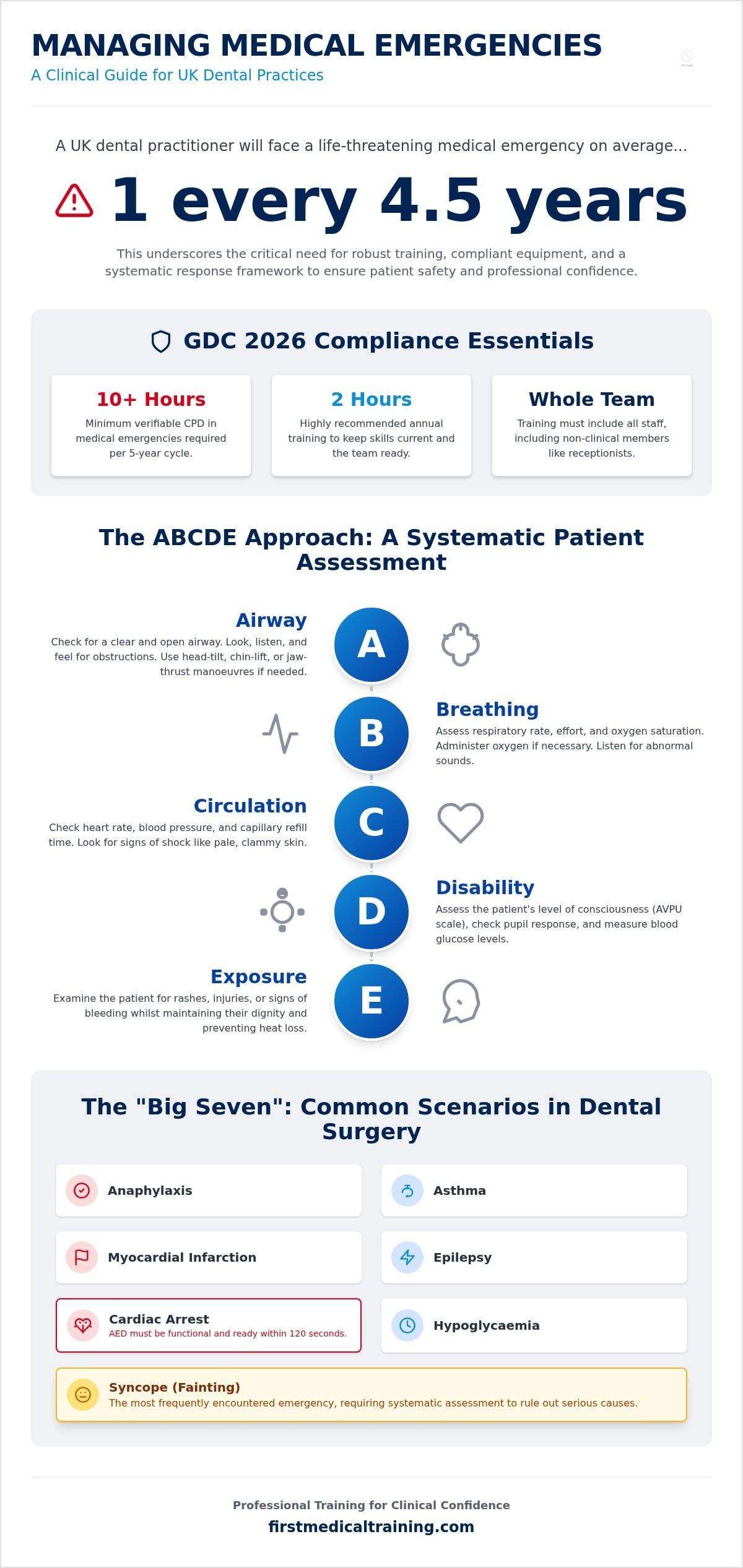
Did you know that the average UK dental practitioner will face a life-threatening medical emergency in their surgery approximately once every four and a half years? It is a sobering statistic that highlights the vital importance of managing medical emergencies in dental surgery with clinical precision. You likely feel the weight of this responsibility, perhaps worrying about whether your team will act correctly under pressure or if you have fully kept up with the 2026 GDC CPD requirements. It is natural to feel a sense of anxiety when considering high-pressure crises and complex drug dosages.
We believe that emergency preparedness shouldn't be a source of stress, but a foundation of professional confidence. This guide will help you master the clinical protocols and team roles necessary to handle any crisis. We'll provide a clear framework for response, ensuring your practice kit is compliant with the latest Resuscitation Council UK guidelines whilst demystifying the essential equipment you need on hand. By following this structured approach, you'll gain the tools to protect your patients and your practice, all whilst securing your mandatory verifiable CPD hours through an accredited training programme.
Key Takeaways
- Understand the 2026 GDC requirements for annual CPD and the statutory duty of care that governs every dental professional in the UK.
- Master the universal ABCDE framework to perform rapid, systematic patient assessments whilst maintaining a calm clinical environment.
- Ensure your practice remains compliant by correctly managing the statutory emergency drug kit and oxygen cylinders, including mandatory expiry checks.
- Learn how to coordinate your team during a crisis by assigning specific roles to ensure precision when managing medical emergencies in dental surgery.
- Discover why in-practice Dental Immediate Life Support (ILS) training is the preferred standard for building team cohesion and clinical readiness.
Regulatory Standards and the Reality of Dental Emergencies in 2026
Every dental professional in the UK holds a statutory duty of care to their patients that extends far beyond clinical treatment. This responsibility includes being fully prepared for the sudden onset of life-threatening conditions during a routine appointment. In 2026, GDC compliance regarding medical emergency preparedness is defined by the maintenance of a fully equipped drug kit, a functional AED, and a team that has completed verifiable annual training. While defining dental emergencies often involves acute pain or trauma, the clinical reality is that systemic medical crises can occur at any moment in the chair. Preparing for these moments is not just a regulatory hurdle; it's a fundamental part of patient safety.
GDC CPD Requirements for Medical Emergencies
The GDC categorises medical emergencies as a "highly recommended" CPD topic, reflecting its critical nature. To maintain registration, which carries an Annual Retention Fee of £698 in 2026, professionals must complete a minimum of 10 hours of verifiable CPD in this area every five-year cycle. It's highly recommended that at least two of these hours are completed annually to ensure skills remain fresh. Understanding how gdc cpd requirements for dentists have evolved is essential for practice managers. Modern standards now prioritise a whole-team approach. Regulatory audits frequently look for evidence that non-clinical staff, including receptionists, understand their specific roles during a crisis. This collective readiness ensures that managing medical emergencies in dental surgery is a coordinated effort rather than a chaotic response.
Common Scenarios in the Modern Dental Surgery
Managing medical emergencies in dental surgery requires familiarity with the "big seven" conditions: asthma, anaphylaxis, cardiac arrest, myocardial infarction, epilepsy, hypoglycaemia, and syncope. Whilst cardiac arrests are rare, the requirement for an Automated External Defibrillator (AED) to be functional and ready within 120 seconds is now mandatory for every UK practice. Diabetic emergencies are also on the rise, necessitating precise protocols for managing hypoglycaemia. Despite these complex risks, syncope management dental training remains the most frequent practical requirement for teams. Simple faints account for the majority of incidents, yet they still require a systematic assessment to rule out more serious underlying causes.
The 2026 landscape demands that teams move beyond basic awareness. You must be able to identify these scenarios rapidly and deploy the correct protocols without hesitation. By integrating regular training into your practice culture, you turn regulatory compliance into a practical, life-saving skill set.
The ABCDE Approach: A Systematic Framework for Patient Assessment
When a patient collapses, the clinical environment shifts instantly from routine to high-stakes. In these moments, the "Human Factor" often dictates the outcome. Adrenaline can lead to cognitive tunnel vision, where a practitioner might focus on a minor symptom whilst missing a major respiratory failure. The ABCDE approach acts as a cognitive anchor, providing a reliable sequence that prioritises life-saving interventions. This systematic framework is the universal clinical standard for managing medical emergencies in dental surgery because it ensures you address the most immediate threats to life first.
Maintaining a calm environment is essential. As the clinician, your steady reliability sets the tone for the entire team. Use direct, clear instructions and avoid shouting. This Clinical guide to dental emergencies reinforces that a structured assessment reduces errors during the critical first minutes. Throughout the process, ensure someone is documenting every observation and the exact time of drug administration; this data is vital for the paramedic handover. Effective training, such as our Medical Emergencies in a Dental Practice Course, helps teams practice these movements until they become second nature.
Airway and Breathing Management Protocols
The first priority is ensuring a patent airway. You must distinguish between partial and complete obstruction. If a patient is making "crowing" noises or using accessory muscles, they are struggling. Use the "Look, Listen, Feel" method: look for chest movement, listen for breath sounds, and feel for air on your cheek. In the dental chair, suction is your primary tool for clearing fluids, whilst the head-tilt and chin-lift manoeuvre remains the gold standard for opening the airway. Monitor the respiratory rate and use pulse oximetry to get an objective measure of oxygen saturation levels.
Circulation, Disability, and Exposure
Once breathing is assessed, move to circulation. Check the capillary refill time by pressing a fingernail for five seconds; colour should return within two. Assess pulse strength and rate at the carotid or radial artery. For "Disability", use the AVPU scale (Alert, Voice, Pain, Unresponsive) to quickly gauge consciousness levels. Finally, "Exposure" involves checking for rashes or injuries. When preparing for AED pad placement, you must ensure patient dignity whilst acting with speed. This systematic assessment ensures that no critical symptom is overlooked during the pressure of a real-world crisis.
Essential Emergency Drugs and Equipment for Dental Surgeries
Having established the ABCDE framework, the next pillar of safety is the physical readiness of your emergency kit. Managing medical emergencies in dental surgery effectively is impossible without a well-maintained, statutory drug kit and functional oxygen delivery systems. In 2026, the GDC and CQC expect a level of preparedness that goes beyond having the items on site; they require a rigorous maintenance schedule. Every drug must be within its expiry date, and every piece of equipment must be tested to ensure it functions the moment a crisis begins.
The Statutory Emergency Drug Kit
Your practice must hold the "Big 7" drugs, centrally located and easily portable. Adrenaline (1:1000) remains the frontline treatment for anaphylaxis, with a standard adult dose of 0.5mg administered intramuscularly into the anterolateral thigh. For respiratory and cardiac issues, your kit should include Salbutamol inhalers, Glyceryl Trinitrate (GTN) spray, and 300mg Aspirin tablets. Managing hypoglycaemic crises requires both oral glucose and 1mg of Glucagon for intramuscular injection when the patient is unable to swallow. Monthly audits of these drugs are essential to prevent the catastrophic discovery of an expired vial during a resuscitation attempt.
Advanced Life-Saving Equipment
The presence of an Automated External Defibrillator (AED) is now a mandatory requirement for all UK dental practices. It isn't enough to simply own a device; it must be checked daily to ensure the battery and pads are ready for immediate use. Effective cardiac arrest management in dental practice relies on the team's ability to deploy the AED within two minutes of a collapse.
Oxygen safety is equally critical. You should maintain at least one 'CD' size cylinder equipped with a pressure reduction valve and a flowmeter. For a non-breathing patient, oxygen should be delivered at a flow rate of 15 litres per minute through a Bag-Valve-Mask (BVM) to achieve maximum concentration. Whilst pocket masks are useful, the BVM is the clinical standard for providing high-quality ventilation. Additionally, modern surgeries are increasingly adopting the LifeVac anti-choking device as a non-invasive backup for cases where standard abdominal thrusts fail. Having these tools ready ensures that when you move from assessment to intervention, your equipment supports your clinical expertise and helps in managing medical emergencies in dental surgery with precision.
Coordinating the Team: Roles and Responsibilities During a Crisis
Managing medical emergencies in dental surgery is a high-performance team drill that requires every staff member to know their exact position before a crisis occurs. A dentist cannot maintain an airway, calculate drug dosages, and coordinate an ambulance arrival simultaneously. Successful outcomes depend on a pre-defined hierarchy where roles are assigned and rehearsed during calmer periods. By establishing a clear chain of command, you ensure that the clinical response is methodical rather than reactive.
The "Emergency Leader", typically the most senior clinician, takes charge of the ABCDE assessment and directs the overall care. Simultaneously, the "Runner", often a dental nurse, is responsible for fetching the emergency drug kit and the AED. They must be able to locate and deliver this equipment within the mandatory 120-second window. To ensure your team acts with this level of precision, you can book our Medical Emergencies in a Dental Practice Course for tailored in-practice training.
The Role of the Dental Nurse and Receptionist
The receptionist serves as the vital link between the surgery and emergency services. They must provide the 999 operator with the practice address, the patient's age, and their current status using the ABCDE findings. Beyond the phone call, their responsibilities include clearing the practice entrance, opening security doors for paramedics, and managing other patients in the waiting room to maintain a calm atmosphere. Inside the surgery, the nurse supports the clinician by preparing drugs, monitoring the patient's vitals, and recording the exact timings of every intervention for the paramedic handover.
The Psychology of Crisis Management
Effective teams must overcome "bystander apathy", a psychological phenomenon where individuals wait for others to act during a crisis. We advocate for closed-loop communication; when the leader gives an instruction, the team member repeats it back to confirm they have understood and are taking action. This technique significantly reduces errors in high-pressure environments. Once the emergency has passed, a structured debriefing is essential. This session allows the team to discuss the event, support each other's wellbeing, and identify any logistical improvements for the future.
Unannounced "mock drills" are the only way to build true muscle memory amongst the staff. These sessions expose hidden weaknesses in your response plan, such as a blocked corridor or a misplaced oxygen key, before a real life is at stake. Regular practice ensures that managing medical emergencies in dental surgery becomes a disciplined, automatic response for every member of the practice.
Ensuring Clinical Confidence Through Professional Dental CPD Training
Hands-on, in-practice training remains the gold standard for 2026. Whilst online modules provide a theoretical foundation, they can't replicate the physical experience of navigating your specific surgery during a crisis. When managing medical emergencies in dental surgery, your team must know exactly where the drugs are stored and how to operate the oxygen cylinders in your specific rooms. Training in your own environment builds a level of clinical confidence that external sessions simply can't match.
It's also vital to distinguish between Basic Life Support (BLS) and Dental Immediate Life Support (ILS). BLS covers the fundamentals, but ILS is the clinical standard for healthcare professionals. It incorporates advanced airway management and the specific drug protocols required in a dental setting. This specialised training ensures your practice moves beyond basic awareness into true clinical readiness, providing a bridge between regulatory theory and life-saving application.
Maintaining Verifiable CPD for GDC Compliance
The GDC requires 10 hours of medical emergencies CPD over a five-year cycle, with at least two hours completed annually. You must record and reflect on this training to ensure it remains verifiable. Modern practices are now also incorporating Mental Health First Aid to support the emotional needs of patients and staff alike. Having these records organised and accessible is essential for any CQC or HIW inspection, as it provides clear evidence of your practice's safety culture and commitment to professional standards.
Choosing the Right Course for Your Team
When selecting a provider, look for a medical emergencies in dental practice course that is tailored to the dental environment. The instructor should help you integrate your specific equipment, such as the LifeVac or AED, into your team's workflow. Ensure that all staff, including part-time members and receptionists, are included in the certification. This whole-team approach to managing medical emergencies in dental surgery doesn't just meet regulatory requirements; it significantly boosts practice morale and patient trust, ensuring every member of the team feels empowered to act.
Securing Clinical Excellence and Patient Safety
Mastering the ABCDE approach and maintaining a statutory drug kit are the first steps toward professional readiness. However, true confidence comes from a team that communicates with precision and understands their specific roles within the surgery. By integrating regular mock drills and specialised Dental ILS training, you transform regulatory requirements into a practical, life-saving culture. Managing medical emergencies in dental surgery shouldn't be a source of anxiety; it should be a well-rehearsed extension of your clinical care.
Our expert trainers bring real-world medical experience directly to your practice, delivering bespoke training that focuses on your specific layout and equipment. You'll gain GDC-compliant verifiable CPD whilst building a more cohesive, capable team. Don't leave your emergency response to chance. Book Your In-Practice Medical Emergencies Course Today and ensure your practice is prepared for any crisis with steady reliability. You have the skills; we provide the framework to use them when they matter most.
Frequently Asked Questions
How often must a dental team undergo medical emergency training?
Dental teams should undergo medical emergency training at least once every year to meet the GDC "highly recommended" standards. This ensures that life-saving skills remain fresh and that any new staff members are fully integrated into your practice's specific protocols. Whilst the five-year CPD cycle allows for some flexibility, annual in-practice sessions are essential for maintaining the muscle memory required to act effectively during a real-world crisis.
What emergency drugs are mandatory for a UK dental practice in 2026?
UK dental practices are required to stock seven mandatory emergency drugs: Adrenaline (1:1000), Aspirin (300mg), Glucagon (1mg), Glyceryl Trinitrate (GTN) spray, buccal Midazolam, Salbutamol, and Medical Oxygen. These must be stored in a portable, easily accessible kit. Regular monthly audits are necessary to check expiry dates and ensure that all medications are ready for immediate use when managing medical emergencies in dental surgery.
Can a dental nurse administer emergency drugs?
Yes, a dental nurse can administer emergency drugs if they are trained and competent to do so, typically under the direction of the clinician or following established practice protocols. In a life-threatening situation, such as anaphylaxis, the priority is the timely administration of Adrenaline. Professional training ensures that nurses feel confident in preparing dosages and administering life-saving medication whilst the dentist focuses on airway management and assessment.
Is an AED a legal requirement for a dental surgery?
An Automated External Defibrillator (AED) is a mandatory requirement for every UK dental practice in 2026. The Resuscitation Council UK and GDC standards specify that the device must be functional and ready to use within 120 seconds of a suspected cardiac arrest. Practices must also ensure that all staff members are trained to operate the AED and that the device undergoes documented daily status checks to ensure battery readiness.
How do I manage a patient who collapses in the waiting room vs the chair?
Regardless of the location, you should immediately apply the ABCDE approach to assess the patient. If the collapse occurs in the chair, lower the backrest to a supine position to aid cerebral blood flow. In the waiting room, ensure the area is cleared of bystanders and move the patient to the floor if they are unresponsive. In both scenarios, the "Runner" must be dispatched immediately to fetch the emergency kit.
What is the role of the receptionist during a medical emergency?
The receptionist acts as the vital communications hub during a crisis. Their primary responsibility is to call 999 and provide precise details, including the patient's status and the practice's exact location. They also manage the waiting room to maintain calm amongst other patients and ensure that the practice entrance is clear for paramedics. Their role is essential for managing medical emergencies in dental surgery by coordinating external help.
Do we need specific training for the LifeVac anti-choking device?
Specific training is highly recommended to ensure the LifeVac anti-choking device is deployed correctly during an airway obstruction. Training helps staff understand when to transition from standard back blows and abdominal thrusts to using the device. Integrating this into your annual medical emergencies course ensures the whole team is familiar with the equipment and can act without hesitation if a patient's airway is completely obstructed and standard manoeuvres fail.
How many hours of CPD should I log for medical emergency training?
You should log a minimum of 10 hours of verifiable CPD in medical emergencies over every five-year cycle. The GDC highly recommends that at least two of these hours are completed annually to ensure your skills remain current. When you attend an accredited course, ensure you receive a certificate that clearly states the number of verifiable hours and the specific learning outcomes to satisfy regulatory audit requirements during an inspection.