

Mental Health First Aid for Dentists: 2026 Buying Guide

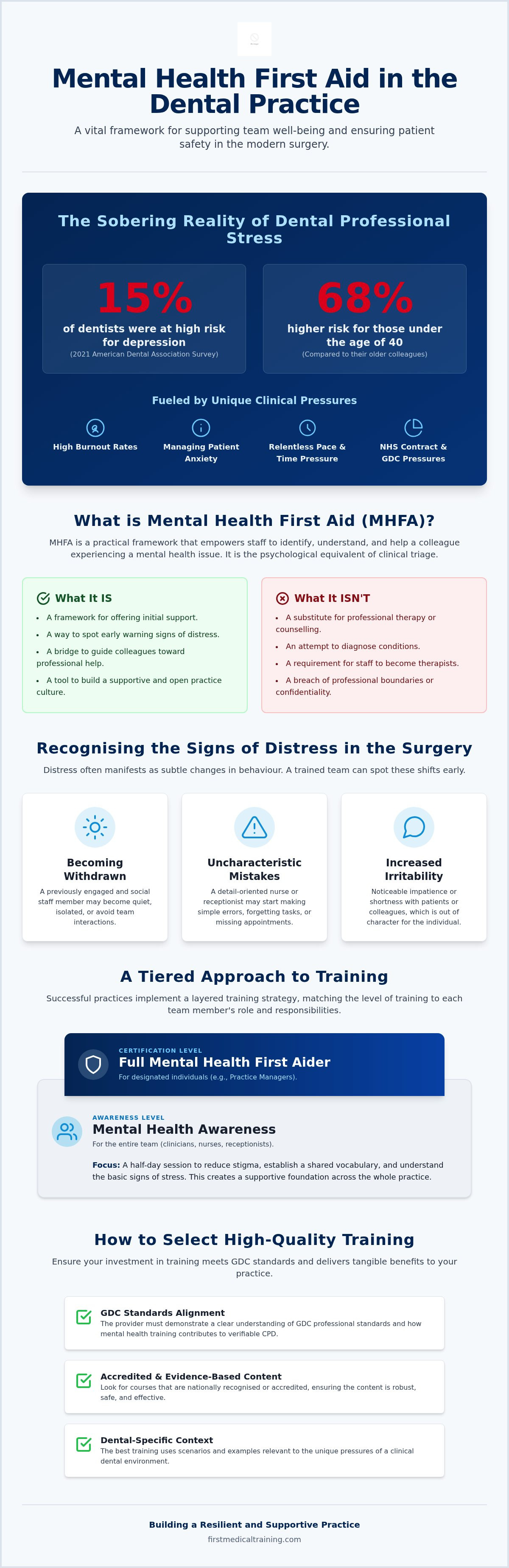
A 2021 American Dental Association survey revealed that 15% of dentists were at high risk for depression, whilst those under 40 faced an even higher risk of 68%. These statistics highlight a sobering reality within the modern surgery. High levels of burnout and the constant pressure of managing patient anxiety don't just affect clinical performance; they impact the very heart of your team. Integrating mental health first aid for dental professionals into your practice is no longer just a supportive gesture, it's a vital step in maintaining a safe and functional clinical environment.
You likely already recognise that a resilient team is your practice's greatest asset, yet finding the right training often feels like another complex administrative task. We understand the challenge of balancing GDC professional standards with the practicalities of a busy clinical diary. This 2026 guide simplifies that process, promising to show you exactly how to select high-quality training that meets your CPD requirements. We'll explore clear criteria for choosing a provider, help you distinguish between awareness and full certification, and ensure your staff feel empowered to support one another through any crisis.
Key Takeaways
- Recognise how specific clinical pressures and patient anxieties contribute to professional burnout within the modern dental surgery.
- Differentiate between training tiers to ensure every staff member, from receptionists to clinicians, receives the appropriate level of support.
- Evaluate training providers based on their understanding of GDC standards and their ability to deliver accredited mental health first aid for dental professionals.
- Implement a practical well-being audit to identify support gaps and strategically assign mental health roles within your practice.
- Streamline your professional development by selecting courses that combine clinical relevance with essential mental health literacy and resilience.
Why Mental Health First Aid is Vital for Dental Professionals
The modern dental surgery operates at a relentless pace. Between the need for absolute clinical precision and the emotional weight of managing patient phobias, the mental load on your team is immense. This is where Mental Health First Aid (MHFA) becomes an essential tool rather than a luxury. Mental Health First Aid is a practical framework for identifying and supporting colleagues in distress. It isn't about turning your Practice Manager into a therapist. Instead, it provides a structured way to offer initial support and guide a colleague toward professional help before a situation reaches a breaking point.
The stressors facing dental teams in 2026 are unique. Recruitment shortages and shifting NHS contract pressures have left many surgeries running at maximum capacity with little room for error. When you add the regulatory weight of GDC standards and the daily intensity of surgical procedures, it's clear why mental health first aid for dental professionals is now a priority. A trained First Aider acts as a vital point of contact, spotting the early warning signs that others might miss in the rush of a busy morning clinic. They provide the psychological equivalent of clinical triage, ensuring that no member of the team has to struggle in silence.
The Impact of Staff Well-being on Patient Care
A team that feels supported performs better. It's a simple clinical reality. When staff members suffer from burnout or chronic fatigue, their cognitive focus wanes, which directly increases the risk of medical errors. Ensuring your team is mentally resilient is as crucial to patient safety as your clinical protocols. There is a significant overlap here with physical preparedness; just as you follow the GDC CPD requirements for medical emergencies to handle cardiac arrests or anaphylaxis, MHFA prepares you for psychological crises that could otherwise disrupt patient care. Clinical excellence doesn't happen in a vacuum; it requires a team that is both physically and mentally ready to respond.
Recognising the Signs of Distress in the Surgery
Distress doesn't always look like an emotional outburst. In a dental setting, it often manifests as subtle changes in behaviour amongst dental nurses or receptionists. You might notice a previously diligent staff member becoming withdrawn, making uncharacteristic mistakes, or showing increased irritability with patients. Effective mental health first aid for dental professionals teaches your team how to spot these shifts early. By creating a culture where mental health is discussed as openly as physical first aid, you empower your staff to de-escalate patient anxiety more effectively, as they are no longer struggling with their own unaddressed stress. This openness builds a stronger, more cohesive unit capable of providing consistent care.
Comparing Mental Health First Aid Course Levels
Choosing the right level of training for your team requires a strategic approach. It's not necessary for every staff member to become a fully qualified First Aider; doing so might even be counterproductive for a busy surgery's workflow. Instead, successful practices implement a tiered hierarchy of training that matches the responsibilities of each role. This structure typically ranges from half-day awareness sessions to comprehensive multi-day certifications, ensuring that support is available without overextending your resources. In 2026, the focus has shifted toward ensuring every hour spent in training translates into verifiable CPD, keeping your practice compliant whilst building genuine resilience. This resilience is often underpinned by physical health, with many professionals turning to Lift 365 for tailored coaching to help them handle the physical and mental demands of their careers.
Mental Health Awareness Courses
Establishing a baseline of literacy across the entire practice is the first step toward a healthier workplace. A half-day awareness course is ideal for the whole team, from dental nurses to the front-of-house staff. These sessions focus on reducing the stigma often associated with psychological distress and provide a shared vocabulary for discussing well-being. This foundational knowledge is a key component of continuing professional development in dentistry. It ensures that everyone understands the basic signs of stress and knows how to support their peers in a professional manner.
Full Mental Health First Aider Certification
For designated well-being leads, such as a Practice Manager or a Senior Associate, a more intensive certification is required. This level of mental health first aid for dental professionals provides the skills needed for crisis intervention. It covers how to handle acute distress safely and how to signpost colleagues toward professional clinical help. The high prevalence of burnout in our sector makes having at least one certified First Aider a practical necessity. You can find more comprehensive dentist mental health resources to understand the scale of this challenge. Investing in full certification ensures that when a crisis occurs, your practice has a seasoned responder ready to act with confidence. This certification remains valid for three years, after which a refresher is required to maintain the status of a First Aider.
Identifying which staff members are best suited for these roles is a critical management decision. A Practice Manager often serves as the ideal First Aider due to their oversight of the entire team, whilst clinicians might prefer the awareness level to balance their heavy clinical load. If you're ready to strengthen your team's resilience, you might consider booking Mental Health First Aid for Dental Practices to ensure your surgery is fully prepared.
What to Look for in a Dental Mental Health Training Provider
Selecting a provider for mental health first aid for dental professionals requires more than a simple search for the lowest price. You need a partner that understands the specific regulatory and clinical environment of UK dentistry. Look for accreditation from recognised bodies like MHFA England or the Royal Society for Public Health. Beyond the badge, consider how the provider handles the "dental context." A trainer who discusses stress in a generic office setting won't resonate with a dental nurse dealing with a packed NHS diary or a dentist performing complex endodontics under intense time pressure.
Delivery format is equally vital for a functioning surgery. A busy practice cannot easily shut down for multiple days without significant financial and patient-care implications. Blended learning, which combines self-paced online modules with live instructor-led sessions, offers the flexibility needed to maintain operations whilst ensuring high-quality education. Additionally, evaluate the post-course support. High-quality providers offer resources such as the FDI mental health toolkit for dental workplaces to help you translate classroom theory into a lasting practice culture.
Verifiable CPD and Regulatory Compliance
For any training to be worthwhile, it must meet the GDC’s requirements for verifiable CPD. Ensure the provider issues certificates that clearly state learning outcomes and are mapped to GDC development outcomes, specifically Outcome C for management and leadership. This documentation is essential for your annual declaration and professional portfolio. Just as you would verify the credentials for first aid certification for dental professionals, you must ensure your mental health training is robust enough to withstand a GDC audit. A certificate without clearly defined learning objectives is of little use in a regulated environment.
Expertise of the Instructors
The background of your instructor is the single biggest factor in the quality of the training. In a medical environment, you benefit most from trainers who have a clinical or emergency response background. They understand the high-stakes nature of healthcare and can provide realistic scenarios that reflect the daily pressures of a dental practice. When evaluating mental health first aid for dental professionals, ask about the trainer's experience within the healthcare sector. A seasoned mentor who understands clinical protocols will build far more confidence in your team than a generalist instructor who lacks experience in medical settings. This clinical perspective ensures the training is practical, relatable, and immediately applicable to your surgery's needs.
How to Organise Mental Health Training for Your Practice
Implementing mental health first aid for dental professionals requires a structured roll-out to ensure the training translates into a safer workplace. It shouldn't be a reactive measure taken only after a staff member reaches a breaking point. Instead, it should be integrated into your surgery's standard operating procedures. This starts with a well-being audit to identify current gaps in support. Look at your sickness records and conduct anonymous surveys to understand the specific pressures your team faces. Once you have this data, you can select the right staff members for specific roles. A Practice Manager is often the ideal candidate for a full First Aider role, as they have the oversight necessary to implement changes across the entire team.
Scheduling is the next critical step. To avoid adding to the very stress you are trying to alleviate, ensure training occurs during protected time. This means blocking out the clinical diary so staff can focus entirely on the course without the distraction of patient care. Finally, your MHFA protocols should be integrated into your formal dental practice emergency preparedness plan. Treating a psychological crisis with the same level of procedural discipline as a medical emergency ensures a consistent and professional response every time.
Budgeting for Mental Health Training
Creating a Mental Health Policy
Your training should inform a formal practice policy that outlines exactly how mental health is managed within the surgery. This document needs to be clear, accessible, and communicated to every team member during their induction. It should detail who the designated First Aiders are and how staff can access support without fear of judgment. A policy is only effective if it remains a living document; review it annually alongside your other clinical protocols to ensure it reflects the current needs of your team. If you're ready to start this process, you can book your Mental Health First Aid training today to secure your practice's well-being lead.
Standout Mental Health First Aid Courses for Dental Teams
First Medical Training Ltd has curated a specialised collection of courses that address the unique pressures of the clinical environment. Our mental health first aid for dental professionals programme isn't a generic corporate package; it's a targeted suite of modules designed for the realities of modern surgery life. We offer a tiered approach that allows you to equip your entire team with essential awareness whilst providing designated leads with the intensive skills needed for crisis intervention. This structured path ensures that your practice's well-being strategy is both comprehensive and sustainable.
The "Mental Health Awareness" module serves as an ideal starting point for general staff. It focuses on building a baseline of literacy, ensuring that every nurse, receptionist, and associate can recognise the subtle signs of distress amongst their peers. For practice leads and managers, our "Mental Health First Aider" course provides a deeper dive into crisis management and professional signposting. We also offer specialised workshops focused on resilience and stress management, which are particularly effective for teams facing high-volume workloads or complex surgical demands. You can browse our full range of Mental Health First Aid courses for dental professionals to find the right fit for your surgery.
Why Choose First Medical Training Ltd?
We've been industry veterans since 2006, specifically focusing on the dental sector's unique training needs. Our background in medical emergencies and life support means we don't just teach theory; we teach practical, life-saving confidence. We understand the gravity of GDC compliance and the necessity of clinical precision. Every course we deliver aims to foster compassion and expertise, ensuring your team feels empowered to act in a crisis. This long-standing history makes us a trusted partner for dental practices nationwide, providing the clinical confidence required to maintain a safe and supportive surgery.
Next Steps for Your Practice
Getting started is a straightforward process designed to respect your clinical diary. We recommend booking a consultation to discuss your team’s specific needs and identifying which staff members require which level of training. Our blended learning modules allow your staff to complete self-paced online work before attending live, instructor-led sessions, minimising the impact on your surgery's throughput. By taking these steps, you're not just meeting a regulatory requirement; you're building a sustainable culture of care. Secure your team’s well-being with our specialised mental health training today and ensure your practice remains resilient for the challenges of 2026 and beyond.
Strengthening Your Team’s Resilience
Investing in your team's psychological safety is a strategic decision that pays dividends in staff retention and clinical excellence. By implementing the tiered approach we've discussed, from initial well-being audits to role-specific support, you ensure that help is always accessible without disrupting the clinical diary. Prioritising accredited providers who understand specific GDC outcomes and the unique pressures of the NHS environment is essential for maintaining professional standards. Since 2006, First Medical Training Ltd has acted as a specialist dental training expert, providing the accredited CPD for dental professionals required to navigate these challenges with confidence.
We invite you to view our Mental Health First Aid Course Collection to see how we can support your practice. Integrating mental health first aid for dental professionals into your surgery transforms the workplace into a more supportive, resilient, and compliant environment. Your commitment to well-being doesn't just protect your staff; it ensures your patients receive care from a team that is mentally prepared and professionally empowered for the future of dentistry.
Frequently Asked Questions
Is mental health first aid training a mandatory GDC requirement?
Mental health first aid is not currently a mandatory GDC requirement, though it is strongly recommended as part of a practice's commitment to staff well-being. Whilst not a core subject like medical emergencies, it directly supports GDC Development Outcome C. This training helps you meet professional standards by fostering a safe and effective working environment for the entire clinical team.
How many CPD hours do mental health first aid courses provide?
The number of verifiable CPD hours depends on the specific course level you choose for your team. Typically, a Mental Health Awareness module provides around 4 hours of CPD, whilst a full Mental Health First Aider certification offers approximately 15 to 16 hours. Always ensure your provider issues a certificate that clearly states the learning outcomes to satisfy GDC annual requirements.
Can dental receptionists and nurses take mental health first aid training?
Yes, every member of the dental team can and should participate in mental health first aid for dental professionals. Receptionists are often the first point of contact for anxious patients, making these skills invaluable for front-of-house management. Nurses also benefit significantly, as they work closely with clinicians and are often the first to spot signs of burnout amongst their colleagues.
What is the difference between a mental health awareness course and a first aider course?
A mental health awareness course is a half-day session designed to establish a baseline of literacy and reduce stigma across the team. In contrast, the First Aider course is a multi-day certification that equips designated leads with the skills for crisis intervention. Whilst awareness courses focus on recognition, First Aider training provides a structured framework for providing initial support and signposting to professional clinical help.
How often should mental health first aid training be refreshed?
It is recommended that you refresh your mental health first aid training every three years. Much like physical first aid, your skills and knowledge can fade over time, and new clinical protocols often emerge. Attending a refresher course ensures that your Practice Manager or well-being lead remains confident and capable of responding to psychological crises effectively.
Can mental health first aid training be delivered online for dental teams?
Mental health first aid training can be delivered through a blended learning format that combines online pre-work with live, instructor-led sessions. This approach is particularly effective for busy surgeries, as it minimises clinical downtime whilst maintaining the high quality of the training. It allows staff to engage with the theoretical elements at their own pace before joining a virtual or face-to-face workshop.
What happens if a staff member needs support but we don’t have a first aider?
If your practice lacks a trained First Aider, you should immediately signpost the staff member to external professional resources such as their GP or specialist charities. However, without a designated point of contact, situations often escalate before help is sought. Investing in mental health first aid for dental professionals ensures your team has an internal support system that can provide immediate, practical assistance before a situation becomes critical.
How does MHFA training help with managing anxious dental patients?
MHFA training provides your team with advanced communication and de-escalation skills that are directly applicable to patient care. By understanding the physiological and psychological signs of distress, your staff can better manage patient phobias and reduce the tension in the surgery. This creates a calmer environment for both the patient and the clinician, ultimately improving the overall quality of care delivered.