
Emergency Oxygen Training for Dental Professionals: The 2026 Clinical Guide

What if the oxygen cylinder you view as a practice safety net actually becomes a source of panic during a genuine clinical crisis? It is a sobering thought, but many clinicians feel a lingering anxiety about equipment failure or confusing flow rates when seconds count. You likely recognise that staying current with emergency oxygen training dental requirements is vital, yet the pressure to meet GDC verifiable CPD standards whilst managing a busy surgery can feel like a heavy burden.
We understand these challenges and believe that preparedness should build confidence, not stress. This clinical guide is designed to help you master the essential protocols and equipment management needed to protect your patients and your professional standing. By the end of this article, you will have a clear roadmap for implementing the ABCDE assessment, handling cylinders with ease, and ensuring your entire team is ready to act with precision and calm in 2026.
Key Takeaways
- Understand why high-flow oxygen is the essential first-line treatment for most dental medical emergencies and how to apply it using the ABCDE assessment.
- Identify the critical components of a compliant emergency oxygen kit, including the functional differences between portable CD cylinders and larger static units.
- Discover why the hands-on emergency oxygen training dental professionals receive is vital for building the muscle memory required to operate equipment during a crisis.
- Master the practical steps of "cracking" a cylinder and selecting the correct delivery mask to manage severe hypoxaemia effectively.
- Ensure full GDC compliance and team-wide competency through structured, simulation-based learning that translates theory into clinical confidence.
The Vital Role of Emergency Oxygen in Modern Dental Practice
In the high-pressure environment of a dental surgery, oxygen is the most critical drug in your emergency kit. Emergency oxygen therapy serves as a decisive intervention for severe hypoxaemia, a condition where blood oxygen levels drop to dangerous levels during a medical crisis. Whilst many incidents in the chair are minor, the ability to rapidly administer high-flow oxygen can mean the difference between a swift recovery and a catastrophic outcome. Having robust emergency oxygen training dental protocols ensures that your team doesn't just have the equipment, but possesses the clinical "muscle memory" to use it effectively when every second counts.
Beyond the clinical necessity, there's a profound psychological advantage to being prepared. A team that can move with purpose during a crisis projects confidence to the patient and their family. This level of readiness safeguards your professional reputation and ensures patient safety remains the absolute priority. Hesitation during an emergency can lead to avoidable complications and long-term damage to the practice's standing. It's about creating an atmosphere of safety where patients feel protected and staff feel empowered.
Why Oxygen is the "Gold Standard" for Dental Emergencies
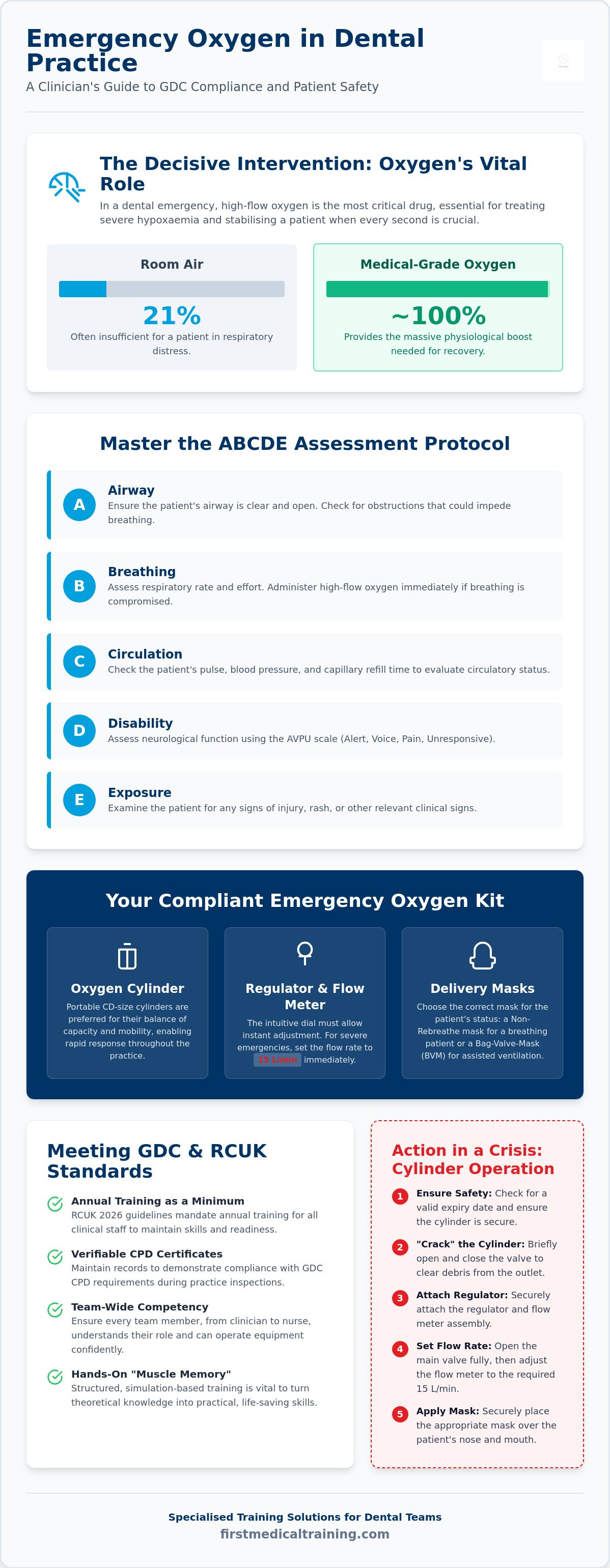
Most medical emergencies in the dental chair involve some degree of respiratory or circulatory compromise. During these events, the body's demand for oxygen increases whilst its ability to distribute it often decreases. Room air only provides approximately 21% oxygen. This is frequently insufficient to support a patient in distress. By contrast, medical-grade Oxygen therapy delivers concentrations nearing 100%, providing a massive boost to tissue oxygenation. This high-flow delivery is non-negotiable in scenarios such as anaphylaxis, where the airway may be narrowing, or severe syncope that fails to resolve quickly. It provides the physiological buffer needed until the patient stabilises or emergency services arrive.
Regulatory Compliance: GDC and Resuscitation Council UK
The General Dental Council (GDC) is clear about the expectations for dental professionals. You have a professional and legal obligation to maintain the skills and equipment necessary to manage medical emergencies. Under the latest Resuscitation Council UK (RCUK) 2026 guidelines, annual training is the minimum standard for all clinical staff. This is not merely a box-ticking exercise; it is a core component of your GDC CPD requirements medical emergencies pillar. Maintaining verifiable CPD certificates is essential for practice inspections and demonstrates a commitment to the highest standards of patient care. Regular emergency oxygen training dental sessions ensure that every staff member, from the lead clinician to the newest dental nurse, understands their role in the ABCDE assessment and can operate the cylinder without hesitation.
Essential Equipment and Delivery Systems for Dental Teams
Having the right gear is only half the battle; knowing how to deploy it under pressure is where true competency lies. A standard Emergency equipment for dental offices setup must include a medical oxygen cylinder, a high-flow regulator, and a range of delivery masks. For most practices, the CD-sized portable cylinder is the preferred choice. It offers a balance between oxygen capacity and portability, allowing staff to move it quickly between surgeries or into the waiting area. Static units, whilst providing more volume, are often too cumbersome for the rapid response required during a crisis.
The regulator and flow meter are the "engine room" of your oxygen delivery. In a high-stress scenario, these components must be intuitive. Modern regulators allow for simple dial-adjusted flow rates, typically ranging from 1 to 15 litres per minute (L/min). It is essential that your emergency oxygen training dental sessions include hands-on time with these specific dials. Understanding how to set the flow to 15L/min instantly ensures the patient receives the high concentration of oxygen required during severe medical emergencies. If you find your current kit is ageing, you can find compliant Emergency Equipment to ensure your surgery remains fully prepared.
Non-Rebreathe Masks vs. Bag-Valve-Masks (BVM)
Choosing the correct mask depends entirely on the patient's respiratory effort. For a patient who is breathing but requires support, a non-rebreathe mask with a reservoir bag is the clinical standard. This should be set at 15L/min to ensure the bag remains inflated. If the patient stops breathing or their effort is inadequate, you must transition to a Bag-Valve-Mask (BVM). This device allows the team to provide positive pressure ventilation, which is a cornerstone of cardiac arrest management in dental practice. Every kit must contain both adult and paediatric sizes for both mask types to ensure clinical readiness for all patient demographics.
Cylinder Safety and Troubleshooting
Equipment failure is often a result of poor maintenance rather than mechanical fault. Regularly checking the "use-by" date and the pressure gauge is a simple yet vital task for the designated first aid lead. A common pitfall is the "whistling" regulator, usually caused by a perished O-ring or a loose connection. If you encounter this, ensure the regulator is seated correctly and the seal is intact. Practice "cracking" the cylinder—opening the valve slightly and closing it again before attaching the regulator—to clear any debris from the outlet. Always store cylinders in a clean, dry area away from oil, grease, or ignition sources to maintain a safe clinical environment.
Clinical Indications and the ABCDE Assessment Protocol
Adopting a systematic approach is the only way to ensure nothing is missed during a medical crisis. The ABCDE protocol serves as the universal language for emergency response, providing a structured framework that guides the dental team from the first moment of patient distress. This methodical sequence ensures that life-threatening conditions are identified and treated in order of priority. Effective emergency oxygen training dental professionals receive focuses heavily on this assessment, as it dictates exactly when and how oxygen should be deployed.
The first priority is always Airway. Oxygen is a vital tool, but it is entirely ineffective if the patient's airway is obstructed. Clinicians must ensure the airway is patent using a head-tilt, chin-lift or jaw-thrust before attempting delivery. Once the airway is clear, move to Breathing. Here, you assess the rate, rhythm, and depth of respiration. If the patient shows signs of respiratory distress or cyanosis, high-flow oxygen at 15L/min is indicated. Medical oxygen is widely recognised as one of the essential emergency drugs in dentistry, acting as a primary intervention for almost all systemic emergencies.
The assessment continues with Circulation, where the team monitors pulse quality and skin colour whilst oxygen is being administered. Following this, Disability involves checking consciousness levels using the AVPU scale (Alert, Voice, Pain, Unresponsive). Finally, Exposure requires a quick check for rashes, which might indicate anaphylaxis, or medical alert jewellery that could provide clues to an underlying condition. This logical flow prevents "tunnel vision" and ensures the team remains focused on the patient's immediate physiological needs.
Managing Patient Collapse: When to Administer Oxygen
Patient collapse is a common concern in the surgery, ranging from simple syncope (fainting) to suspected myocardial infarction. In cases of simple syncope, oxygen is often used to speed up recovery once the patient is positioned supine with legs elevated. However, for suspected cardiac events or severe chest pain, high-flow oxygen is a critical component of the initial management. For a deeper look at these specific scenarios, refer to our guide on patient collapse dental surgery training and ILS protocols.
The Chronic Obstructive Pulmonary Disease (COPD) Myth
A common misconception persists that oxygen is inherently dangerous for all patients with COPD due to the "hypoxic drive" theory. Whilst it is true that long-term, uncontrolled oxygen therapy can be problematic for these patients, the rules change in an acute emergency. If a patient with COPD is experiencing a life-threatening crisis in your chair, life-saving oxygen takes absolute priority. Do not withhold high-flow oxygen if the patient is severely hypoxaemic. The rule of thumb for the dental team is simple: treat the emergency first and allow hospital staff to manage long-term oxygen titration later.
Structured Training: Building Competence and Confidence
Theory provides the foundation, but clinical competence is forged through physical practice. Whilst online modules offer a convenient way to digest information, they cannot replicate the tactile experience of handling a medical oxygen cylinder. Hands-on emergency oxygen training dental professionals undergo is essential because it builds the muscle memory required to act without hesitation. In a crisis, your brain should not be trying to remember a diagram; your hands should already know how to "crack" the cylinder valve and secure the mask. This physical familiarity reduces the cognitive load on the clinician, allowing for better decision-making.
Effective simulation training involves more than just a quick demonstration. The 2026 clinical landscape shows a significant shift towards standardised, hands-on simulation to assess and improve readiness. You should regularly organise "mock" emergencies within your own surgery to ensure that the layout of your emergency kit is familiar to everyone. These drills should be unannounced and varied, covering different rooms and scenarios. This ensures that the GDC-registered professional leading the response can rely on a team that is both calm and technically proficient, regardless of where the incident occurs.
Role Allocation During a Dental Emergency
Chaos is the enemy of effective resuscitation. By pre-assigning roles, you transform a group of individuals into a high-functioning emergency team. The First Responder, typically the dentist or nurse at the chairside, initiates the ABCDE assessment immediately. Simultaneously, the Oxygen Lead retrieves the cylinder, checks the pressure, and prepares the delivery system according to the patient's breathing status. Finally, the Scribe/Runner documents every intervention and timing whilst contacting emergency services. This structured approach ensures that no task is overlooked and that the patient receives seamless, professional care.
Maintaining Verifiable CPD Standards
To meet GDC requirements, your training must be "verifiable". This means it must have clear learning outcomes, a mechanism for feedback, and a certificate of completion from a recognised provider. You should record all internal emergency drills in your practice compliance folder, noting the date, the staff present, and the specific scenario practised. Integrating your emergency oxygen training dental sessions with comprehensive bls training for dental professionals creates a robust safety culture within the surgery. To ensure your team is fully compliant and confident, consider booking our Medical Emergencies in a Dental Practice Course today.
First Medical Training Ltd: Specialised Solutions for Dental Teams
First Medical Training Ltd understands that the emergency oxygen training dental teams receive must be grounded in the practical realities of their specific surgery. Since our founding in 2006, we've developed a heritage of excellence, combining international expertise with a deep understanding of UK regulatory standards. We don't believe in a "one size fits all" approach. Instead, we offer bespoke education that bridges the gap between theoretical GDC requirements and the fast-paced environment of a modern dental practice. Our "Medical Emergencies in a Dental Practice Course" stands as the comprehensive choice for teams who refuse to compromise on patient safety.
Our expert trainers are seasoned professionals who travel directly to your practice. This ensures the training is not just a lecture but a contextualised experience. By training in your own clinical space, we can identify potential bottlenecks in your response and ensure every staff member knows exactly where the emergency equipment is stored. This level of tailored instruction is why First Medical Training Ltd has become a trusted partner for dental professionals across the country, providing the steady reliability you need to manage a crisis with confidence.
Why In-Practice Training Wins
The primary advantage of in-practice training is the ability to use your own equipment. There's little value in practising on a simulator that differs from the cylinders or AEDs you actually have on-site. We tailor our simulation drills to your surgery layout and team size, ensuring that your dental practice emergency preparedness is tested in a realistic setting. This approach eliminates confusion during a real emergency, as your team will have already rehearsed the exact movements required within your specific rooms and corridors.
Booking Your 2026 Compliance Course
Our 2026 curriculum is meticulously designed to cover the full spectrum of emergency response, including Basic Life Support (BLS), Immediate Life Support (ILS), and specialised oxygen administration. We provide the tools and knowledge necessary for your team to feel reassuringly confident when faced with a medical crisis. Beyond the clinical skills, we ensure you receive the verifiable CPD certification required for your compliance folders. Don't leave your practice's readiness to chance. Contact First Medical Training Ltd today to book a group session and ensure your team meets the highest standards of emergency oxygen training dental care.
Securing Your Practice's Clinical Readiness for 2026
Mastering the ABCDE protocol and gaining the physical confidence to operate oxygen equipment are non-negotiable steps for modern patient safety. High-flow oxygen remains your primary tool for managing severe hypoxaemia whilst ensuring full GDC compliance. Transitioning from theoretical knowledge to practical, hands-on competency ensures that your team acts with precision when every second counts. Investing in robust emergency oxygen training dental professionals can trust is a commitment to clinical excellence and patient care.
Since 2006, First Medical Training Ltd has provided accredited education that bridges the gap between regulatory requirements and real-world application. Our expert-led in-practice simulations allow you to train with your own equipment in your specific surgery environment, resulting in GDC-aligned verifiable CPD for your entire team. Don't wait for a crisis to test your readiness. Take the proactive step to protect your patients and empower your staff today.
Book Your Medical Emergencies in a Dental Practice Course and gain the peace of mind that comes from being truly prepared. You have the skills to provide exceptional care; First Medical Training Ltd is here to ensure you have the confidence to save lives.
Frequently Asked Questions
Is emergency oxygen training mandatory for all dental staff?
Yes, annual training is a core requirement for all clinical staff under GDC and Resuscitation Council UK standards. This ensures the entire team is prepared to handle severe medical crises. Undertaking regular emergency oxygen training dental professionals require is essential for maintaining verifiable CPD and ensuring patient safety remains the highest priority in your surgery.
What is the recommended oxygen flow rate for a dental emergency?
High-flow oxygen should be administered at 15 litres per minute (L/min) for most acute medical emergencies. This rate is delivered using a non-rebreathe mask with a reservoir bag to ensure the patient receives the highest possible concentration of oxygen. It is vital to check that the reservoir bag is partially inflated before placing the mask on the patient to guarantee effective delivery.
How often should a dental practice check its emergency oxygen cylinder?
You should check your emergency oxygen cylinder at least once a week as part of your practice safety protocols. These checks must verify that the cylinder is sufficiently full, the pressure gauge is in the green zone, and the equipment is within its use-by date. Recording these checks in a dedicated logbook provides a clear audit trail for clinical inspections.
Can a dental nurse administer oxygen before the dentist arrives?
Yes, a dental nurse can and should initiate oxygen administration if they are trained and the patient’s condition requires it. Since oxygen is a life-saving drug in an emergency, waiting for a dentist could lead to avoidable delays in care. Modern emergency oxygen training dental courses empower all team members to act as competent first responders within the ABCDE framework.
What is the difference between a variable flow and fixed flow oxygen regulator?
A variable flow regulator allows the clinician to select different oxygen delivery rates, whereas a fixed flow regulator provides only one preset speed. Most dental emergency kits utilise variable flow regulators, typically offering settings from 1 to 15L/min. This flexibility is important for managing different clinical scenarios, though 15L/min remains the standard for acute emergencies.
Do we need a different oxygen mask for paediatric dental patients?
Yes, every dental practice must stock both adult and paediatric-sized oxygen masks. A paediatric mask is specifically designed to create an airtight seal around a child’s smaller facial features. Without a proper seal, the concentration of oxygen delivered is significantly reduced, which can compromise the effectiveness of the intervention during a paediatric respiratory crisis.
What should we do if the oxygen cylinder is empty during an emergency?
If you discover a cylinder is empty during a crisis, you must immediately prioritise high-quality Basic Life Support (BLS) and call 999. Whilst oxygen is a critical tool, effective chest compressions and rescue breaths with room air are still life-saving. This scenario highlights why weekly equipment checks and having a backup cylinder are vital components of practice management.
How many hours of CPD does emergency oxygen training provide?
The number of CPD hours depends on the specific course, but a comprehensive medical emergencies session typically provides between 3 and 6 hours of verifiable CPD. This training covers the essential pillars of BLS, ILS, and oxygen administration. Always ensure your training provider issues a certificate that clearly states the learning outcomes to satisfy GDC requirements.