

First Aid Training for Dental Staff: 2026 GDC Guide

Effective dental first aid is a coordinated clinical response, not just an individual's certificate. You likely feel the weight of responsibility that comes with patient safety, yet the ever-evolving GDC requirements can feel like a moving target. It's perfectly natural to worry about how your team might react during a real-life medical emergency or to feel overwhelmed by the logistics of organising whole-practice training sessions whilst managing a busy diary. You want to know that if a patient collapses in the waiting room, every member of staff will act with calm, practised precision.
This guide will clarify exactly what is required for first aid training for dental staff in 2026, ensuring your practice isn't just ticking boxes but is genuinely crisis-ready. We have spent two decades acting as a seasoned mentor to the industry, and we're here to demystify the latest standards. We will break down the GDC's current CPD requirements, define specific team roles in a crisis, and show you how to secure verifiable certificates with minimal disruption to your clinic. By the end of this article, you'll have a clear roadmap to full compliance and a team that feels empowered to save lives.
Key Takeaways
- Understand the 2026 GDC 'Scope of Practice' requirements and why 10 hours of verifiable CPD remains the essential benchmark for patient safety.
- Identify the appropriate training levels for your team, ensuring clinicians and reception staff alike meet the necessary BLS or ILS standards.
- Implement a robust culture of preparedness by organising regular emergency drills and maintaining your medical emergency kit to professional standards.
- Master the clinical response for high-stakes scenarios such as anaphylaxis and cardiac arrest to ensure a swift, coordinated team reaction.
- Learn how comprehensive first aid training for dental staff provides the verifiable evidence and practical skills required for full GDC compliance.
Understanding GDC Requirements for Dental First Aid Training
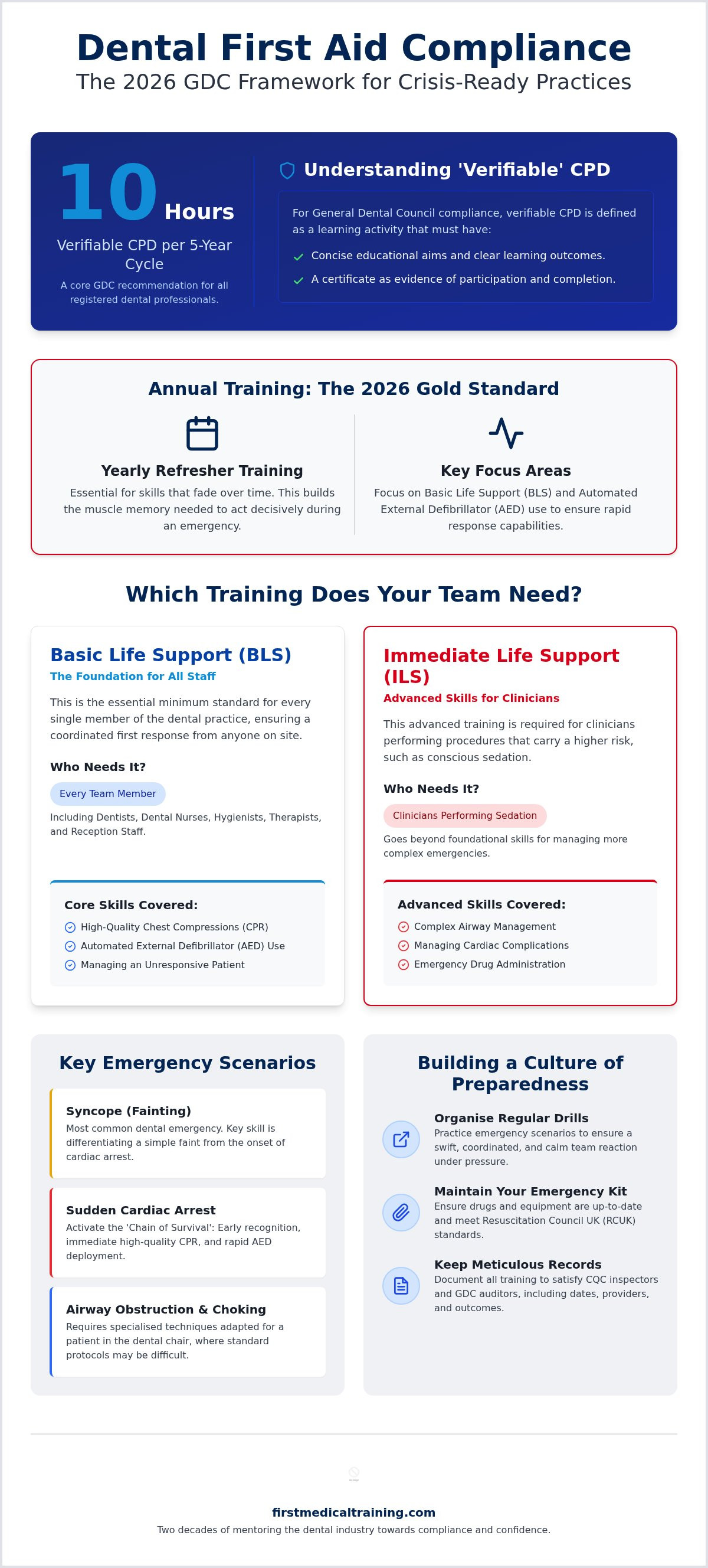
The GDC 'Scope of Practice' is more than a professional guideline; it's a clear mandate that every registered dental professional must be competent in managing medical emergencies. This requirement applies to everyone from the principal dentist to the dental nurse. To uphold this standard, the GDC recommends that registrants complete at least 10 hours of verifiable CPD in medical emergencies per five-year cycle. This ensures that the entire practice remains a safe environment for patients, even during the most stressful clinical events.
Clinical standards in the UK are largely defined by the Resuscitation Council UK (RCUK). Their 'Quality Standards' for primary dental care provide the blueprint for what constitutes an effective emergency response. These standards cover everything from the contents of your emergency drug kit to the specific techniques used during CPR. Adhering to these national protocols isn't just about compliance; it's about providing the highest level of patient care.
Annual Resuscitation Standards for 2026
Whilst the GDC looks at five-year cycles, the clinical reality is that skills fade. Yearly refresher training in Basic Life Support (BLS) and Automated External Defibrillator (AED) use is considered the gold standard for 2026. These annual sessions build the muscle memory required to act without hesitation. To satisfy CQC inspectors or GDC auditors, you must maintain meticulous records of this training, including the date, the provider, and the specific learning outcomes achieved by each staff member.
Verifiable CPD in the context of UK dental regulations is defined as any learning activity with concise educational aims and clear outcomes that provides a certificate as evidence of participation.
GDC Recommended CPD vs Mandatory Training
Confusion often arises between 'highly recommended' GDC subjects and statutory workplace requirements. Medical emergencies are a 'highly recommended' topic, meaning they must be prioritised within your Personal Development Plan. You can explore the specific nuances in our guide to GDC CPD requirements for medical emergencies. This ensures your first aid training for dental staff meets both professional and regulatory expectations.
Not all training is equal across the team. Whilst every member of the practice should be proficient in BLS, those involved in conscious sedation require more advanced skills. In these cases, Dental Immediate Life Support (ILS) training is necessary. This deeper level of first aid training for dental staff equips clinicians with the expertise to manage complex airway obstructions or cardiac complications that go beyond foundational life support.
Essential Medical Emergency Scenarios in the Dental Surgery
Emergency situations in the dental chair are high-pressure events that require immediate, decisive action. Whilst most patient interactions are routine, the administration of local anaesthesia or the physical stress of a procedure can trigger a range of medical crises. Effective first aid training for dental staff ensures that these scenarios are met with a coordinated clinical response rather than panic. Your team must be prepared to handle everything from minor faints to life-threatening obstructions.
Syncope and Cardiac Arrest Protocols
Recognising the difference between a simple faint and a life-threatening cardiac event is a fundamental skill. Syncope is the most frequent emergency in dental practices, often triggered by anxiety or pain. However, if a patient doesn't regain consciousness quickly, the team must be prepared to transition to a cardiac arrest protocol. You can find detailed steps on this in our guide to syncope management dental training.
In the event of sudden cardiac arrest, the 'Chain of Survival' must begin immediately. This includes early recognition, high-quality chest compressions, and the rapid deployment of an Automated External Defibrillator (AED). Every second counts. Practice drills should focus on the speed of retrieving the AED and the clarity of communication amongst the team to ensure no time is lost during the initial collapse.
Managing Airway Obstructions and Choking
Choking presents a unique challenge in the dental surgery. Standard protocols like back slaps are often difficult to perform effectively whilst a patient is reclined in a dental chair. Gravity can work against you, making it easier for a foreign body, such as a crown, a bridge, or an implant component, to migrate further down the airway. This clinical environment requires specialised techniques beyond general first aid.
Modern equipment like the LifeVac anti-choking device is now a vital addition to a practice's emergency kit. It's a non-invasive suction device designed to clear an airway when traditional methods fail or are impractical due to the patient's position. For a comprehensive approach to these risks, many practices choose to enrol in a Medical Emergencies in a Dental Practice Course to ensure their equipment and skills are fully integrated.
Beyond physical obstructions, staff must also be vigilant for medical conditions that mimic airway issues. Anaphylaxis following local anaesthesia can cause rapid airway swelling and respiratory distress. Similarly, hypoglycaemia in diabetic patients during lengthy procedures can lead to confusion or loss of consciousness. Training must cover the administration of adrenaline and the prompt use of oral glucose to manage these metabolic and allergic crises effectively before they escalate.
Comparing BLS, ILS, and EFAW: Which Training Does Your Team Need?
Not all first aid training for dental staff is created equal. Whilst every team member needs a baseline competency, the GDC and the Health and Safety Executive (HSE) have different expectations based on clinical risk and workplace safety. Choosing the right combination ensures your practice is both legally compliant and clinically safe. Basic Life Support (BLS) is the absolute foundation. It provides the essential skills for CPR and AED use that every single person in the building must possess, from the principal dentist to the part-time cleaner.
The Role of Dental Immediate Life Support (ILS)
Dental Immediate Life Support (ILS) Training takes the team beyond simple resuscitation. It focuses on advanced airway management, the administration of emergency oxygen, and the critical role of team leadership during a medical crisis. For practices offering conscious sedation or complex oral surgery, ILS is the preferred standard. It provides the clinical depth required to manage a deteriorating patient before the ambulance arrives. Online modules can't replicate the pressure of a physical assessment; real clinical confidence comes from hands-on practice with the equipment you'll actually use in your own surgery.
EFAW for Non-Clinical Staff
We often focus so heavily on the dental chair that we forget the waiting room. Receptionists and administrative staff are usually the first responders to non-clinical incidents. Providing first aid at work for dental practices ensures these team members can handle slips, trips, or falls amongst patients and visitors. This training satisfies the Health and Safety (First-Aid) Regulations 1981, which apply to any UK workplace. It's about protecting the people behind the desk as much as the patients in the surgery.
You don't have to close the practice for multiple days to achieve this. A well-organised training provider can blend these requirements into a single, bespoke session. This approach allows the whole team to train together for the foundational elements, before clinicians move into more advanced ILS modules whilst administrative staff focus on workplace-specific scenarios. It's an efficient way to ensure that first aid training for dental staff is relevant to every individual's specific role and provides the necessary verifiable CPD certificates for the whole practice in one visit.
Building a Culture of Emergency Preparedness in Your Practice
True clinical preparedness is a continuous process, not a once-a-year event. It requires a living culture where every staff member knows their specific role instinctively. Medical emergency drills are the cornerstone of this approach. Instead of just discussing theory, your team should physically move through the surgery, retrieving the oxygen and AED as if a real collapse had occurred. This muscle memory is what prevents the "freeze" response during a crisis. It's also vital to foster a 'no-blame' environment. When a near-miss occurs, use it as a learning opportunity. Reviewing emergency responses openly helps identify gaps in your first aid training for dental staff before they lead to a clinical failure.
Emergency Equipment and Drug Kit Maintenance
Your emergency kit is only as good as its last check. It's best practice to perform weekly inspections of your drug kit and AED. A missing vial of Adrenaline or an expired bottle of Glyceryl Trinitrate (GTN) can turn a manageable situation into a tragedy. Routine checks ensure that you're never caught off guard by equipment failure or depleted stock. Ensure your checklist includes:
- Adrenaline (1:1000): Essential for anaphylaxis management.
- Aspirin (300mg): For suspected myocardial infarction.
- Glucagon: For severe hypoglycaemic episodes when oral glucose isn't possible.
- Oxygen: Ensure cylinders are full and the flow rate is functional.
Check that AED pads are within their expiry date and that the battery status light is green. For a structured approach to your surgery's safety, download our dental practice emergency preparedness checklist to keep your surgery compliant.
Mental Health First Aid for Dental Teams
The psychological impact of a medical emergency is often overlooked in traditional clinical training. Dental professionals face unique stressors, from high-stakes clinical precision to 'compassion fatigue'. If a patient collapses or suffers a severe reaction, the emotional toll on the team can be significant. This is why Mental Health First Aid for Dental Practices is becoming an essential part of the 2026 training landscape. It provides the tools to support colleagues after traumatic events.
By training staff to identify signs of burnout and acute stress amongst colleagues, you improve both patient safety and staff retention. Integrating wellbeing into your annual training calendar shows that you value the human element of care. A team that feels supported is a team that remains calm under pressure. To ensure your practice is fully equipped for both physical and mental crises, consider booking our comprehensive Medical Emergencies in a Dental Practice Course.
Professional Training Solutions with First Medical Training
First Medical Training Ltd has been a trusted partner for the dental profession since 2006. With two decades of experience, we act as a seasoned mentor, bridging the gap between rigorous GDC regulations and practical clinical skills. We understand that first aid training for dental staff is most effective when it's delivered in the environment where you actually work. Our in-practice sessions allow your team to rehearse scenarios using your own emergency drug kits, oxygen cylinders, and AEDs. This approach builds a level of realism that online modules or external classrooms simply cannot match.
Our commitment to your practice's readiness goes beyond education. We're a direct supplier of specialised life-saving equipment, including the LifeVac anti-choking device and high-quality AEDs. This ensures you have access to the latest technology to protect your patients. Once the training is complete, First Medical Training Ltd provides a streamlined certification process. Your verifiable CPD records will be updated promptly, ensuring you're always prepared for a CQC inspection or a GDC audit.
Why Choose Our Medical Emergencies in a Dental Practice Course?
Our instructors aren't just trainers; they're experts who understand the unique pressures of a busy dental surgery. They know that your time is precious and that your training needs to be high-impact and relevant. The curriculum for our medical emergencies in dental practice course is fully updated for 2026 standards. It covers all GDC-recommended clinical scenarios, from anaphylaxis management to the latest resuscitation protocols. We focus on the human element of care, ensuring your team feels empowered rather than overwhelmed by the technicalities of emergency response.
National Coverage for Your Dental Group
First Medical Training Ltd provides national UK coverage, offering scalable solutions for everyone from single-surgery private practices to large dental corporate groups. Our trainers travel to you, ensuring consistently high standards of first aid training for dental staff regardless of your location. This logistical convenience makes it easier than ever to organise whole-team training without the need for staff to travel. It's an efficient way to ensure that your entire practice remains compliant and crisis-ready.
Contact us today to organise your team's 2026 annual update. Whether you need a refresher on Basic Life Support or a comprehensive ILS session, we're here to guide you through the process with the quiet confidence of an industry veteran. Our methodical approach ensures that your journey from regulatory requirement to professional readiness is as smooth as possible.
Securing Your Practice's Future Readiness
Maintaining GDC compliance for 2026 is about more than just ticking boxes; it's about the safety of every patient who enters your surgery. We have explored how specific roles, from the front desk to the clinical chair, require distinct but integrated skills. Whether you're managing a sudden cardiac arrest or a complex airway obstruction, the quality of your first aid training for dental staff determines the outcome of the crisis. Annual updates ensure that these life-saving skills remain sharp and that your verifiable CPD records are always current.
First Medical Training Ltd has been a trusted partner in this journey since 2006. We provide national UK coverage, bringing expert instruction directly to your practice to ensure maximum realism and minimal disruption. It's time to move from regulatory confusion to clinical confidence. Book your GDC-compliant medical emergencies course today and empower your team to act with precision when it matters most. You have the tools and the knowledge to create a safer environment for everyone; we're here to help you master them.
Frequently Asked Questions
Is annual first aid training a mandatory requirement for GDC registration?
Annual updates for medical emergencies are highly recommended by the GDC to ensure clinical competence. Whilst the GDC measures verifiable CPD over a five-year cycle, the Resuscitation Council UK and the CQC expect to see evidence of yearly training. Maintaining these annual refreshers is the most reliable way to demonstrate that you're keeping your skills up to date. It ensures that every registrant remains capable of managing a crisis as part of their professional duty of care.
What is the difference between BLS and Dental ILS training?
Basic Life Support (BLS) focuses on the foundational skills of chest compressions, rescue breaths, and the use of an Automated External Defibrillator (AED). Dental Immediate Life Support (ILS) Training is an advanced curriculum designed for clinicians. It includes airway management using adjuncts, the administration of emergency oxygen, and team leadership during a resuscitation attempt. ILS is particularly essential for practices providing conscious sedation or complex surgical procedures where the risk of patient deterioration is higher.
Does our dental receptionist need to attend the medical emergencies training?
Yes, every member of the dental team, including receptionists and administrative staff, must be competent in managing medical emergencies. The GDC 'Scope of Practice' applies to all registrants, and non-clinical staff are often the first responders if a patient collapses in the waiting area. Training ensures they can recognise a deteriorating patient, call for emergency services, and support the clinical team effectively. This whole-team approach is vital for a coordinated and successful emergency response.
How many hours of verifiable CPD do we earn for a dental first aid course?
The amount of verifiable CPD earned depends on the specific duration and depth of the course. A standard session for first aid training for dental staff typically provides between three and six hours of verifiable CPD. The GDC recommends a minimum of 10 hours per five-year cycle specifically for medical emergencies. By attending annual updates, your team will comfortably exceed this requirement whilst ensuring their life-saving skills remain sharp and compliant with all 2026 standards.
What emergency drugs are required in a UK dental practice in 2026?
In 2026, UK dental practices must maintain a specific emergency drug kit as defined by the Resuscitation Council UK and the BNF. This kit must include Adrenaline (1:1000), Aspirin (300mg), Glucagon, Glyceryl Trinitrate (GTN) spray, Midazolam (buccal), and Salbutamol. You also need a portable oxygen cylinder with the appropriate flow meter and masks. It's essential to check expiry dates weekly and ensure all staff know exactly where these medications are stored and how to use them safely.
Can we conduct our dental first aid training online or must it be in-person?
Whilst theoretical knowledge can be gained online, the GDC and Resuscitation Council UK emphasise the necessity of practical, hands-on training. Skills like high-quality chest compressions, AED placement, and airway management require physical practice to build muscle memory. In-person training allows your team to use their own equipment in their actual clinical environment. This practical assessment is the only way to ensure that staff are truly crisis-ready and capable of performing life-saving procedures under extreme pressure.
How often should we check our AED and emergency oxygen cylinders?
You should conduct formal checks on your AED and emergency oxygen cylinders at least once a week. This involves verifying that the AED battery status light is green and that the pads are within their expiry date. For oxygen, you must ensure the cylinder is full and the flow rate is functional. Recording these checks in a dedicated logbook provides the necessary evidence for CQC inspectors that your practice is maintaining its emergency equipment to a safe standard.
What happens if our practice fails a CQC inspection regarding emergency preparedness?
Failing to demonstrate emergency preparedness can lead to a breach of Regulation 12 regarding safe care and treatment. The CQC may issue a requirement notice or a warning notice, mandating urgent improvements. In severe cases of non-compliance, they have the power to impose fines or even suspend the practice's registration. Ensuring your first aid training for dental staff is up to date and your equipment is well-maintained is the best way to avoid these serious regulatory consequences.