

Mental Health Awareness for Dental Professionals: A Guide to Wellbeing and Patient Safety in 2026

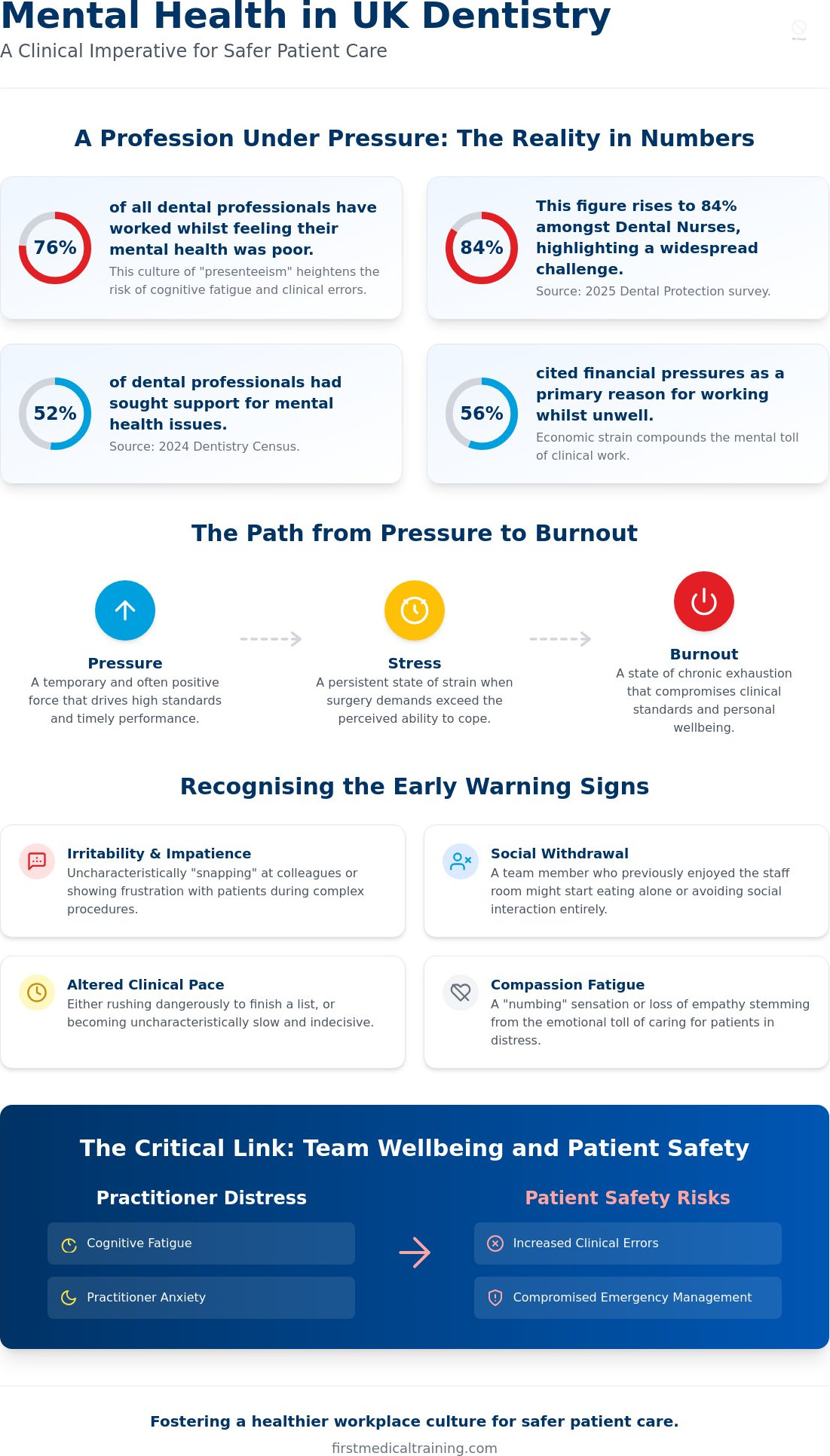
Did you know that 76% of dental professionals have admitted to working whilst feeling their mental health wasn't strong enough to be in the surgery? According to a 2025 Dental Protection survey, this figure rises to a staggering 84% amongst dental nurses. It's a sobering reality in an industry where high patient expectations and the weight of GDC or CQC regulations are constant. Prioritising mental health awareness dental professionals is no longer an optional extra; it's a fundamental pillar of clinical safety and professional longevity.
You likely understand the exhaustion that comes from back-to-back appointments and managing fearful patients, all whilst maintaining the precision required for clinical excellence. This guide will show you how to recognise the early signs of burnout and manage workplace stress effectively. We'll explore how implementing Mental Health First Aid can protect your team and improve patient outcomes. We will examine the latest 2026 trends in wellbeing to help you build a healthier workplace culture, reduce staff turnover, and restore your clinical confidence.
Key Takeaways
- Identify the physical and emotional markers of burnout to prevent chronic exhaustion from compromising your clinical standards and personal wellbeing.
- Understand why mental health awareness dental professionals is the first line of defence against cognitive errors and patient safety risks in high-pressure environments.
- Learn how to implement a Mental Health First Aid framework to provide immediate, structured support for colleagues experiencing distress within the surgery.
- Discover how to integrate accredited wellbeing training into your 2026 GDC CPD cycle to meet regulatory expectations whilst fostering a healthier workplace culture.
- Explore the critical link between practitioner anxiety and the effective management of medical emergencies to improve overall practice resilience and clinical confidence.
The Importance of Mental Health Awareness for Dental Professionals
Mental health awareness in the dental surgery isn't just a buzzword; it's a clinical necessity. To understand the scale of the challenge, we must first ask: What is mental health? It encompasses our emotional, psychological, and social wellbeing, affecting how we think, feel, and act when facing a complex clinical procedure or a difficult patient interaction. Within the context of high-pressure clinical environments, mental health awareness dental professionals is the ability to recognise, support, and signpost psychological distress.
Dentistry is uniquely demanding. Unlike many healthcare colleagues, dental practitioners often work in relative isolation within the confines of a small surgery. You're constantly managing "fearful" patients whose phobias can create a high-cortisol environment for the entire team. By 2026, the General Dental Council (GDC) and CQC have shifted their focus, increasingly expecting practice owners to demonstrate holistic staff care as a core component of a well-led practice. A resilient team is no longer a luxury; it's an ethical and professional obligation.
Current Statistics: Mental Health in UK Dentistry
The numbers tell a stark story. The 2024 Dentistry Census indicated that 52% of dental professionals had sought support for mental health issues. Even more concerning is the rise of "presenteeism", where staff members attend work despite being mentally unwell. A 2025 survey by Dental Protection found that 76% of professionals worked when their mental health was poor, a figure that rises to a staggering 84% amongst dental nurses. This culture of "soldiering on" creates a dangerous environment where cognitive fatigue can lead to clinical errors. Financial pressures were cited by 56% of these professionals as a primary reason for working whilst unwell, though you can learn more about Mortgages for Doctors and how their specialist remortgage advice for medical professionals can help ease this burden.
The Stigma Challenge in the Surgery
Many clinicians fear that admitting to mental health struggles will trigger a "fitness to practise" investigation. This anxiety often keeps professionals silent whilst they move closer to exhaustion. However, the GDC supports wellbeing and encourages practitioners to seek help early. Open dialogue doesn't just help the individual; it protects the register status of the entire team by preventing the mistakes that lead to regulatory intervention. Building mental health awareness dental professionals ensures that your practice remains a safe environment for both the staff and the public. When we break the silence, we reduce the risk of long-term burnout and improve the quality of care provided to every patient who walks through the door.
Recognising the Signs: Stress, Burnout, and Compassion Fatigue
In a clinical setting, pressure is often a positive force. it drives us to meet the next appointment on time and maintain high standards. However, when the demands of the surgery exceed your perceived ability to cope, it transforms into chronic stress. For many, this marks the beginning of burnout. High-quality mental health awareness dental professionals requires us to spot these nuances before they impact patient safety or personal health. Whilst pressure is a temporary response to a task, stress is a persistent state of emotional or mental strain that doesn't disappear when the surgery door closes.
Compassion fatigue is another specific challenge prevalent in dentistry. Unlike general burnout, it stems from the emotional toll of caring for patients in distress. When you spend your day absorbing the anxiety of "fearful" patients, your own emotional reserves can run dry. This often manifests as a "numbing" sensation or a loss of empathy. If you or a colleague are struggling, finding mental health support is a vital first step in reclaiming your wellbeing. Recognising these "red flags" is a skill that must be cultivated across the entire team.
Emotional and Behavioural Red Flags
Behavioural changes are often the first indicators of a crisis. You might notice a colleague who is usually patient becoming uncharacteristically irritable or "snapping" at dental nurses during complex procedures. Withdrawal is another common sign; a team member who previously enjoyed the staff room might start eating alone or avoiding social interaction entirely. Changes in clinical speed are also significant. A practitioner might start rushing dangerously to finish a list, or conversely, become uncharacteristically slow and indecisive. These shifts often signal that the individual is struggling to process the cognitive load of the day.
Physical Signs of Chronic Stress
The body often reacts to stress before the mind acknowledges it. In dentistry, there's a profound link between work stress and musculoskeletal pain. Whilst poor posture is a factor, chronic tension often exacerbates back and neck issues. Sleep disturbances are equally critical; a lack of restorative sleep directly impacts clinical focus and decision-making during the day. Furthermore, a system flooded with cortisol due to constant stress becomes less effective at fighting off infection. If you notice yourself or a team member suffering from frequent "minor" illnesses, it's often a sign that the body is struggling to cope with the mental environment. Taking a proactive approach through a Mental Health First Aid for Dental Practices course can provide the tools needed to identify these signs early and intervene effectively.
The Critical Link Between Team Wellbeing and Patient Safety
Patient safety is often viewed through the lens of sterilisation protocols and clinical accuracy. However, the psychological state of the dental team is a primary determinant of risk. When a clinician is under extreme stress, the brain enters a state of "cognitive tunnel vision". This narrowed focus causes you to miss subtle clinical cues or diagnostic details that would be obvious in a relaxed state. A resilient mind is just as vital as a sharp scalpel in surgery. By prioritising mental health awareness dental professionals can mitigate these human factors before they lead to an adverse event.
A calm clinician is far better equipped to manage a fearful or aggressive patient. When you project steady reliability, it de-escalates patient anxiety, making the procedure safer and more efficient. Conversely, practitioner anxiety is often sensed by the patient, creating a feedback loop of tension that increases the likelihood of a clinical complication. Position mental health as a core component of your dental practice emergency preparedness to ensure the team remains functional when it matters most.
Human Factors and Clinical Error
Fatigue and chronic stress significantly impair fine motor skills. In procedures like endodontics or surgical extractions, even a minor tremor or a lapse in concentration can lead to iatrogenic injury. Beyond technical execution, stress erodes "non-technical skills" such as communication and leadership. A stressed dentist might give unclear instructions to a nurse, leading to a breakdown in the four-handed dentistry workflow. Resources like the FDI Mental Health in Dentistry Toolkit provide essential frameworks for understanding how these psychological pressures impact daily practice.
Managing Medical Emergencies Under Pressure
A team's ability to respond to a crisis is directly linked to their mental readiness. If a practitioner is already at their emotional limit, their ability to lead during a cardiac arrest or anaphylaxis event is compromised. Anxiety triggers the "fight or flight" response, which can lead to panic rather than the methodical execution of protocols. When you attend a medical emergencies in a dental practice course, you're learning the technical steps, but mental health awareness dental professionals ensures you can actually apply them under fire.
Effective cardiac arrest management in dental practice requires a clear head and a steady hand. It's also vital to implement "debriefing" sessions after any traumatic clinical event. Talking through the scenario as a team helps process the adrenaline and prevents the development of long-term trauma or PTSD. This structured support ensures that one bad day doesn't turn into a career-ending burnout cycle.
Implementing Mental Health First Aid in the Dental Surgery
Physical first aid is a non-negotiable standard in every UK practice, yet psychological crises often occur without a structured response plan. Implementing Mental Health First Aid (MHFA) provides your team with a clear, actionable framework to support one another whilst maintaining clinical focus. By designating a Mental Health First Aider, you ensure there's a trained individual capable of identifying the subtle shifts in behaviour discussed in previous sections. This role isn't about providing therapy; it's about acting as a steady, reliable bridge to professional support.
The core of this intervention is the ALGEE action plan. This five-step approach allows a practitioner or manager to intervene safely and effectively. First, approach the person and assess for any immediate risk of harm. Listen non-judgementally, giving them space to speak without offering premature clinical advice. Give reassurance and information, then encourage them to seek professional help through resources like the Addiction Centre. Finally, encourage self-help and other support strategies. This methodical process mirrors the structured nature of emergency medical protocols, ensuring that mental health awareness dental professionals is applied with precision and care.
The Role of the Mental Health First Aider
A common concern amongst dental teams is the boundary of the MHFAider role. It's vital to differentiate between "listening" and "counselling". A Mental Health First Aider doesn't diagnose or treat; they provide initial support and signpost to experts. Confidentiality is paramount to build trust, but it's not absolute. If a colleague's mental state poses a direct risk to patient safety, the MHFAider must follow established safeguarding and GDC protocols. Integrating this role into your staff wellbeing training for dental practices ensures everyone understands these boundaries from the outset.
Creating a "Wellbeing Culture" in the Practice
Frameworks are most effective when supported by a healthy workplace culture. Normalise mental health by including a quick "wellbeing check-in" during your morning huddles. This doesn't need to be an intensive session; a simple acknowledgement of the day's pressures can lower the team's collective cortisol levels. Additionally, look at your physical environment. The staff room should be a genuine sanctuary for rest, free from clinical equipment or patient files. Finally, foster a "gratitude culture". Recognising a colleague's hard work after a difficult extraction or a long day with a fearful patient significantly reduces workplace toxicity and builds resilience.
To equip your team with these life-saving skills, consider enrolling in our accredited Mental Health First Aid for Dental Practices course today.
Formal Training: Meeting GDC CPD Requirements for Wellbeing
Meeting regulatory standards in 2026 requires more than just clinical excellence; it demands a documented commitment to team resilience. Whilst the General Dental Council (GDC) mandates specific core subjects, integrating mental health awareness dental professionals into your development plan is now a highly recommended practice. The GDC’s Enhanced CPD scheme requires dentists to complete 100 hours and dental nurses to complete 50 hours of verifiable CPD over a five-year cycle. Crucially, the "10 in 2" rule mandates that at least 10 hours of verifiable CPD must be completed in any two consecutive years. Including wellbeing training in these hours ensures your team remains consistent in their professional development.
Documenting this training is essential for demonstrating compliance during CQC or HIW inspections, particularly under the "Well-led" domain. Inspectors look for evidence that a practice supports its staff and has systems in place to manage workplace stress. By providing accredited training, you aren't just ticking a box; you're creating a paper trail of professional care that protects your practice's reputation. This proactive approach aligns perfectly with the GDC CPD requirements for medical emergencies, as a mentally prepared team is far more likely to follow life-saving protocols accurately.
Verifiable CPD and Mental Health
While there isn't a fixed number of hours mandated for "soft skills," dedicating a portion of your annual CPD to wellbeing is a strategic move. Verified CPD in mental health demonstrates a commitment to the highest standards of professional conduct. Whilst online modules offer convenience, in-practice training is far more effective for emotional and sensitive topics. It allows for role-playing and open discussion that digital platforms simply can't replicate. This face-to-face interaction helps de-stigmatise mental health struggles amongst the team, fostering a culture where staff feel safe to speak up before a crisis occurs.
Why Choose First Medical Training?
We've spent 20 years specialising in the dental sector, so we understand the unique pressures you face. Our Mental Health First Aid for Dental Practices course isn't a generic healthcare programme. It's specifically tailored to address the isolation of the surgery, the anxiety of managing "fearful" patients, and the weight of regulatory oversight. We act as your partner in compliance, bridging the gap between rigorous GDC requirements and the human element of clinical care.
Dentistry is a high-stakes profession. Don't wait for burnout to impact your patient safety or staff retention. Contact us today to book a consultation and develop a practice wellbeing strategy that keeps your team healthy, compliant, and confident in their roles.
Securing Clinical Excellence Through Wellbeing
Building a resilient practice requires more than just clinical skill; it demands a proactive approach to the psychological health of your entire team. We've explored how recognising the early signs of stress and implementing structured support frameworks can prevent the cognitive fatigue that leads to clinical error. By prioritising mental health awareness dental professionals can ensure that patient safety remains at the heart of every procedure.
Formal training is the most effective way to transition from awareness to action. Since 2006, First Medical Training has provided accredited CPD designed specifically for the dental sector. Our specialised curriculum addresses the unique stressors of the surgery, offering practical solutions that work in a real-world clinical environment. With national UK coverage, we're ready to help your practice meet its GDC requirements whilst fostering a culture of genuine care.
Don't wait for the next crisis to evaluate your team's wellbeing. Book your Mental Health First Aid for Dental Practices course today and take the first step toward a healthier, more confident workplace. You have the power to create a surgery where both your staff and your patients feel truly safe and supported.
Frequently Asked Questions
Is mental health awareness a mandatory GDC CPD requirement?
Mental health awareness is not currently a mandatory core topic like medical emergencies, but the GDC highly recommends it for all registrants. It counts as verifiable CPD and can be included in your required hours for the five-year cycle. Prioritising mental health awareness dental professionals helps you meet the GDC standards for a well-led practice and ensures you are fit to practise safely.
How can I tell the difference between a busy colleague and one with a mental health problem?
The primary indicator is a persistent change in behaviour rather than a temporary reaction to a heavy clinical list. A busy colleague might be frantic during a rush but returns to their usual self once the appointments are finished. A colleague in distress often shows sustained signs of withdrawal, irritability, or a decline in clinical focus that doesn't improve when the workload decreases.
What should I do if I think my clinical skills are being affected by stress?
You must prioritise patient safety and seek professional support immediately if you feel your judgement is compromised. Admitting that stress is affecting your performance is a responsible, professional action that protects both your patients and your register status. Speak to your practice manager or a Mental Health First Aider to discuss temporary adjustments whilst you access the necessary help to recover.
Can a dental nurse be a Mental Health First Aider for the whole practice?
Yes, a dental nurse is often the ideal person for this role as they frequently act as the central link between all team members. The ability to be a Mental Health First Aider depends on empathy and specific training rather than clinical hierarchy. Having a nurse in this position ensures that mental health awareness dental professionals is embedded at every level of the surgery workflow.
How do we manage patient safety if a team member needs time off for mental health?
Patient safety is best served by ensuring that every clinician in the surgery is mentally fit to work, even if this requires rescheduling appointments. If a team member needs time off, the practice should utilise locum cover or adjust the diary to prevent the remaining staff from becoming overstretched. A short-term reduction in capacity is always preferable to the clinical risks associated with practitioner burnout.
What are the most common mental health triggers in a dental surgery?
Common triggers include the emotional drain of managing "fearful" patients, the physical isolation of the surgery, and the pressure of back-to-back appointments. Regulatory anxiety regarding GDC or CQC inspections also plays a significant role. Identifying these triggers allows the practice to implement better scheduling and supportive dialogue, reducing the likelihood of chronic stress developing amongst the team.
Does First Medical Training provide certificates for wellbeing courses?
Yes, First Medical Training provides verifiable CPD certificates for all our wellbeing and Mental Health First Aid courses. These certificates serve as formal evidence of your commitment to staff wellbeing and professional development. They are essential for your CPD portfolio and can be presented during CQC or HIW inspections to demonstrate that your practice meets the "Well-led" criteria.