

2026 Guide: Risk Assessment for Dental Emergencies

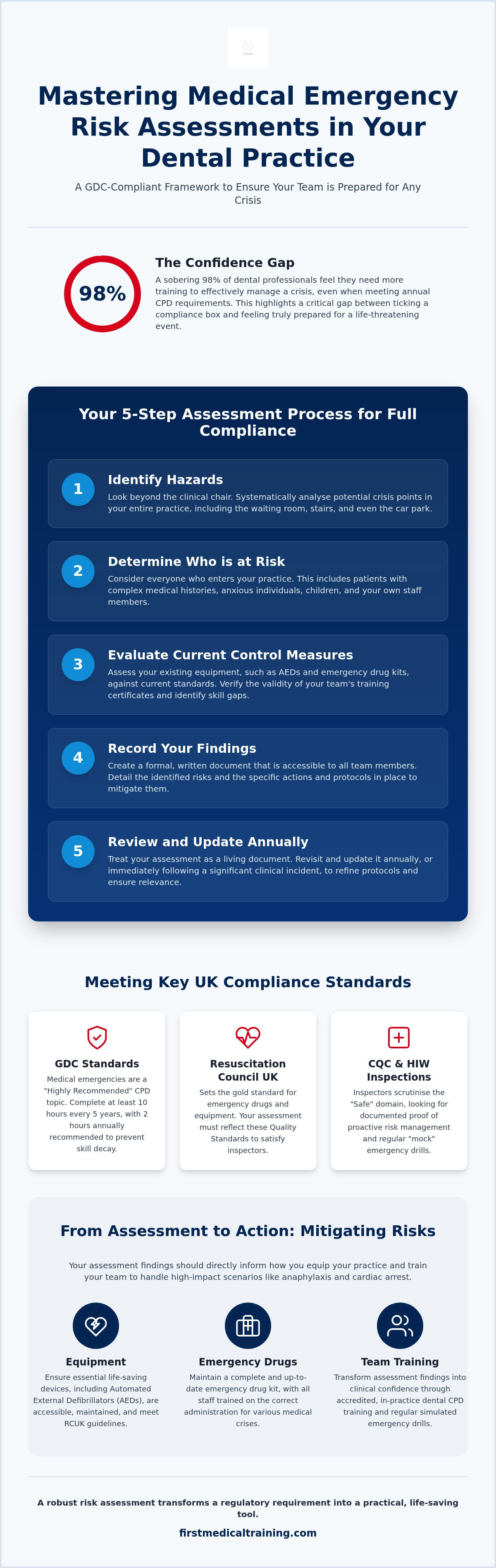
Did you know that 98% of dental professionals feel they need more training to manage a crisis effectively, even when they meet their annual CPD requirements? It's a sobering statistic that highlights the gap between ticking a compliance box and feeling truly prepared for a life-threatening event. We understand that keeping up with evolving GDC and Resuscitation Council UK standards can feel like a moving target, especially when a robust risk assessment for medical emergencies in dental practice is essential for your next inspection.
When you're managing a busy clinical environment, the fear of failing a CQC or HIW inspection adds a layer of stress you simply don't need. This guide will help you master the process of conducting a GDC-compliant assessment to ensure your team is ready for any medical crisis. We'll provide a clear, actionable framework for identifying surgery risks and achieving full compliance with 2026 UK regulations, giving your staff the confidence they need to act when every second counts.
Key Takeaways
- Understand the mandatory link between clinical governance and the 2026 GDC Standards to ensure your practice remains fully compliant.
- Follow a step-by-step framework to conduct a comprehensive risk assessment for medical emergencies in dental practice, covering both patients and staff.
- Learn to identify and prioritise high-impact scenarios such as anaphylaxis and cardiac arrest through structured hazard analysis.
- Determine exactly which emergency drugs and equipment, including AEDs, are necessary to mitigate the specific risks identified in your surgery.
- Discover how to transform your assessment findings into clinical confidence through accredited, in-practice dental CPD training.
Understanding the GDC Requirements for Medical Emergency Risk Assessments
The 2026 UK dental framework makes it clear that being prepared for a crisis isn't optional. A robust risk assessment for medical emergencies in dental practice serves as your blueprint for safety, defining how you identify and manage life-threatening events before they occur. This document is a cornerstone of clinical governance. It bridges the gap between the GDC Standards for the Dental Team and the practical reality of running a busy surgery. While it's easy to focus on what is a dental emergency in terms of clinical tooth pain, a medical emergency assessment prioritises systemic crises like cardiac arrest, asthma attacks, or anaphylaxis.
Written assessments are vital for CQC and HIW inspections. Inspectors scrutinise the "Safe" domain of your practice, looking for evidence that you've proactively managed potential threats. They don't just want to see a standard drug kit; they want to see the logic behind your equipment choices and how you've prepared your staff for specific scenarios. Annual reviews are essential to keep this document relevant. Regular updates ensure your professional indemnity remains valid and that your protocols reflect the latest 2026 guidance. Without a documented review, your practice remains vulnerable during both regulatory audits and legal challenges.
The Role of Enhanced CPD in Risk Management
The GDC classifies medical emergencies as a "Highly Recommended" topic. For the current 2026 cycle, you're required to complete at least 10 hours of verifiable CPD every five years. We recommend at least two hours annually to prevent skill decay and keep your team's response fluid. Your staff training records should directly link back to your risk assessment. For example, if you've identified a high number of medically compromised patients in your local demographic, your CPD should focus on managing complex medical histories. This targeted approach transforms a regulatory burden into a practical safety tool.
Regulatory Bodies and Compliance Standards
Compliance involves aligning with multiple bodies simultaneously. The Resuscitation Council UK (RCUK) sets the gold standard for emergency drugs and equipment. Your assessment must reflect these Quality Standards to satisfy CQC or HIW inspectors. They'll look for documented proof that your gdc cpd requirements medical emergencies are fully met and that your emergency equipment is fit for purpose. To maintain a compliant practice, consider the following requirements:
- RCUK Standards: Ensuring your drug kits and AEDs meet current UK resuscitation guidelines.
- CQC Expectations: Providing evidence of regular "mock" emergency drills based on your risk findings.
- Indemnity Alignment: Confirming that your risk mitigation strategies satisfy the requirements of your professional dental defence organisation.
By treating your risk assessment as a living document rather than a static piece of paperwork, you build a culture of safety that protects both your patients and your professional reputation.
Step-by-Step: Conducting Your Dental Practice Risk Assessment
Creating a robust risk assessment for medical emergencies in dental practice requires a methodical walk-through of your clinical environment. It isn't just a paperwork exercise; it's a strategic review of your team's ability to save a life. By following a structured five-step process, you can ensure no detail is overlooked.
- Step 1: Identify hazards. Look beyond the clinical chair. Consider the waiting room, stairs, and even the car park to identify potential crisis points.
- Step 2: Determine who is at risk. This includes patients with complex medical histories, anxious individuals, and your own staff members.
- Step 3: Evaluate current control measures. Assess your existing equipment, such as AEDs, and the validity of your team's training certificates against current standards.
- Step 4: Record your findings. Create a formal document that is accessible to all team members, detailing the risks and the specific actions taken to mitigate them.
- Step 5: Review and update. Revisit the document annually or immediately following a significant clinical incident to refine your protocols.
Recording your findings ensures your risk assessment for medical emergencies in dental practice is a living document that can be referenced during an audit or a real-life crisis.
Identifying Practice-Specific Hazards
Every practice has unique physical and clinical challenges. You must analyse how specific treatments, such as complex oral surgery or intravenous sedation, impact a patient’s physiology. Environmental factors are equally critical. If your surgery is on a second floor without a lift, how will paramedics reach a collapsed patient? Assessing these logistical hurdles is a core part of meeting the GDC requirements for medical emergencies. You might find that your layout necessitates specific airway management equipment or additional staff training to manage a safe evacuation whilst waiting for emergency services.
Evaluating Patient Vulnerabilities
A robust medical history is your most effective risk mitigation tool. In 2026, the prevalence of multi-morbidity in the UK population means your team must be adept at identifying subtle red flags. A high-risk patient in 2026 is defined as any individual with complex systemic health conditions, multiple co-morbidities, or severe dental phobia that significantly increases the likelihood of a physiological crisis during treatment. Managing these risks involves more than just reading a form; it requires clinical judgement and clear communication within the team. If your assessment reveals a high volume of vulnerable patients, booking a tailored medical emergencies in dental practice course ensures your team's skills match the actual risks they face daily.
Identifying High-Risk Scenarios: From Anaphylaxis to Cardiac Arrest
A comprehensive risk assessment for medical emergencies in dental practice must move beyond generalisations to address specific clinical threats. Identifying high-risk scenarios requires a deep understanding of how dental interventions interact with a patient's underlying health. By categorising these risks, you can create targeted response protocols that move from reactive panic to structured clinical action. This process is a vital component of a professional dental practice risk assessment, as it allows you to prioritise training based on the likelihood and severity of potential events.
Cardiac and Respiratory Crisis Scenarios
Cardiac arrest in the dental chair is a low-frequency but high-impact event. Your team must distinguish between a myocardial infarction, where the heart muscle is damaged by lack of blood flow, and a cardiac arrest, where the heart stops pumping entirely. Having a clear protocol for cardiac arrest management in dental practice ensures that every second is used effectively, from the first chest compression to the delivery of an AED shock. Respiratory distress is often more common, with triggers for anaphylactic shock including latex, specific antibiotics, or local anaesthetics. Identifying these triggers during the medical history phase is your first line of defence against a systemic collapse.
Neurological and Diabetic Emergencies
Neurological events, particularly epilepsy and syncope, are amongst the most frequent crises encountered in primary care. Whilst fainting might seem routine, poor management can lead to secondary injuries or prolonged recovery. Investing in syncope management dental training helps your team recognise the prodromal signs before a patient loses consciousness. Similarly, diabetic emergencies require rapid intervention. Hypoglycaemia can present as confusion or aggression, which staff might misinterpret as dental anxiety. Your risk assessment should specify the location of glucose gel and ensure all staff are trained to recognise the rapid onset of a "hypo" in a fasted or stressed patient.
Choking and Airway Obstruction
The hazards of treating patients in a reclined position are significant, particularly when using small components like endodontic files, crowns, or implant drivers. An inhaled foreign body can quickly escalate into a complete airway obstruction. Using a dental practice emergency preparedness approach means rehearsing the management of choking and ensuring airway equipment is always within reach. By acknowledging these surgery-specific risks, you transform your risk assessment for medical emergencies in dental practice from a static document into a functional safety tool that protects your patients during every procedure.
Mitigating Risks Through Equipment, Drugs, and Team Training
Once you've completed your risk assessment for medical emergencies in dental practice, the next logical step is translating those findings into a tangible safety net. This involves more than just buying a standard kit. It requires a bespoke approach to your practice's specific needs. For instance, if your surgery sees a high volume of paediatric patients, your equipment must reflect that demographic, particularly regarding AED pads and drug dosages. Your written assessment serves as the justification for every item in your emergency bag.
The Automated External Defibrillator (AED) is no longer an optional luxury; it's a primary mitigation tool. In 2026, all primary dental care facilities must have immediate access to an AED, and your team must be proficient in its use. Integrating modern life-saving equipment like the LifeVac anti-choking device into your protocols provides a critical layer of protection against airway obstructions, especially when treating patients in a reclined position. To ensure total readiness, you must organise regular equipment checks. Assigning a dedicated staff member to audit oxygen cylinder levels, drug expiry dates, and AED battery status weekly ensures you remain compliant and prepared.
Essential Emergency Equipment for 2026
Equipment is only as effective as the people using it. Adopting a "Pit Crew" model ensures that everyone knows their role the moment a crisis occurs. Assigning specific duties like the "runner" to fetch the emergency bag, the "caller" to contact emergency services, and the "responder" to manage the patient reduces the chaos of a real-life event. Mock drills are essential for building this scenario fluency and reducing human error during high-stress moments.
Don't forget your non-clinical staff; they play a vital role in managing the waiting room and guiding paramedics to the surgery. Ensuring your reception and administrative team have completed an accredited first aid at work for dental practices programme ensures the entire team acts as a cohesive unit. If you're ready to strengthen your practice's safety protocols, you can view our full range of GDC-compliant training and equipment to find the right fit for your team.
Implementing Your Findings: The Role of Accredited Dental CPD
A completed risk assessment for medical emergencies in dental practice is a powerful document, but its true value is realised only when your team can translate those written protocols into instinctive actions. In-practice training is the gold standard for preparedness because it moves beyond theory and into the physical reality of your clinical environment. By rehearsing in your own surgery, using your own oxygen cylinders and drug kits, your team builds the scenario fluency required to manage a crisis without hesitation. This hands-on approach ensures that the protocols you've documented are actually workable in a high-pressure situation.
Choosing a medical emergencies in dental practice course that directly reflects the findings of your assessment ensures your education is relevant and impactful. If your practice focuses on complex oral surgery or sedation, opting for Dental Immediate Life Support (ILS) Training provides a more advanced level of preparedness for high-risk clinical environments. First Medical Training supports UK practices by delivering these bespoke, accredited solutions directly to your doorstep, ensuring your team isn't just compliant, but genuinely capable of saving a life.
Tailoring Training to Your Practice Risk Profile
Generic training often fails to address the unique logistical challenges of your specific surgery layout. When a professional instructor evaluates your practice during a training session, they can identify potential bottlenecks, such as the distance between the clinical chair and the AED or the accessibility of the emergency bag in a multi-surgery building. This evaluation allows you to refine your risk assessment for medical emergencies in dental practice based on expert feedback. Creating a culture of clinical confidence through regular, high-quality education ensures every member of the team, from the lead clinician to the newest receptionist, understands their role in a life-saving intervention.
Maintaining Compliance Records
Documented evidence is a non-negotiable requirement for GDC and CQC compliance. First Medical Training provides the necessary certification and verifiable CPD hours required for your professional portfolio, serving as clear evidence of proactive risk mitigation. These records demonstrate to regulatory bodies that you've taken reasonable steps to protect your patients and maintain professional standards. Annual hands-on training is superior to theoretical online modules because it allows for the physical rehearsal of life-saving skills and the immediate correction of technique by an expert instructor. By prioritising accredited, in-practice training, you bridge the gap between regulatory paperwork and real-world clinical readiness.
Securing Your Practice's Future Readiness
A robust risk assessment for medical emergencies in dental practice is more than a regulatory hurdle; it is your team's most valuable tool for patient safety. By identifying specific clinical hazards and aligning your equipment with your surgery's unique profile, you move from reactive stress to structured clinical confidence. We've seen how bridging the gap between static paperwork and hands-on rehearsal creates a culture of readiness that protects both your patients and your professional reputation.
First Medical Training has supported UK dental teams with accredited training delivered by industry veterans since 2006. We provide national coverage for convenient in-practice sessions, ensuring your verifiable CPD meets all 2026 GDC requirements without the need for travel. Our expert instructors help you refine your protocols in the very environment where you work every day.
Book your GDC-compliant Medical Emergencies in a Dental Practice Course today and take the final step in your compliance journey. You've built the framework; now let us help you empower your team to act with certainty when it matters most.
Frequently Asked Questions
Is a risk assessment for medical emergencies a legal requirement for UK dental practices?
Yes, conducting a risk assessment for medical emergencies in dental practice is a mandatory requirement for UK practices. The General Dental Council (GDC) and the Care Quality Commission (CQC) expect a documented strategy to manage clinical risks. Failing to have one violates clinical governance standards. It ensures you have the correct drugs and equipment for your specific patient demographic. Without it, you cannot demonstrate that your practice is "Safe" during a regulatory audit.
How often should a dental practice review its medical emergency risk assessment?
You should review your assessment at least once a year or immediately after any significant clinical incident. A review is also necessary if there are major changes to your team, surgery layout, or the types of treatments you offer. Regular updates ensure your protocols remain aligned with the latest Resuscitation Council UK guidelines. Keeping this document current is vital for maintaining your professional indemnity and ensuring team readiness for evolving clinical risks.
What are the most common medical emergencies that must be included in the assessment?
Your assessment must cover high-frequency and high-impact events. These include syncope, which is the most common emergency, as well as asthma attacks, anaphylaxis, and cardiac arrest. You should also address hypoglycaemia in diabetic patients, epileptic seizures, and choking. By identifying these specific scenarios, you can ensure your drug kits and staff training are tailored to the actual risks your patients face during treatment in 2026.
Does the GDC require specific training hours for medical emergencies in 2026?
The GDC requires a minimum of 10 hours of verifiable CPD in medical emergencies within every five-year cycle. They strongly recommend that at least two of these hours are completed annually to prevent skill decay. This is classified as a "Highly Recommended" topic. We suggest in-practice training sessions to meet these requirements. This allows your team to rehearse life-saving skills in their own clinical environment using their specific emergency equipment.
What emergency equipment is considered essential for a UK dental surgery?
Essential equipment includes a portable oxygen cylinder capable of a 15-litre per minute flow rate and an Automated External Defibrillator (AED). You also need airway adjuncts, such as pocket masks and self-inflating bags, along with a standard set of emergency drugs like Adrenaline (1:1000) and Glyceryl trinitrate spray. Modern practices also integrate anti-choking devices like the LifeVac to manage airway obstructions effectively during procedures where patients are reclined.
Can a dental receptionist be included in the medical emergency risk assessment?
Yes, non-clinical staff like receptionists should always be included in your risk assessment for medical emergencies in dental practice. They are often the first to spot a patient collapsing in the waiting room or a relative in distress. Assigning them clear roles, such as calling emergency services or directing paramedics, is part of the "Pit Crew" model. Their involvement ensures a coordinated, practice-wide response that improves patient outcomes during a crisis.
What happens if a dental practice fails to produce a risk assessment during an inspection?
Failing to produce a valid risk assessment during a CQC or HIW inspection can lead to a "Requires Improvement" or "Inadequate" rating. Inspectors view the absence of this document as a significant breach of safety standards. It suggests that the practice hasn't proactively considered patient risks or verified that emergency equipment is fit for purpose. This can trigger follow-up inspections or even formal enforcement actions against the practice's registration.
Should mental health crises be included in a dental medical emergency risk assessment?
Yes, including mental health crises in your risk assessment is increasingly important for holistic patient care. Patients with severe dental phobia or pre-existing conditions may experience panic attacks or acute distress that requires a structured response. First Medical Training offers specialised Mental Health First Aid for dental teams to help staff manage these situations. Addressing psychological well-being alongside physical emergencies ensures your team is prepared for the full spectrum of patient needs.